Shared research quarters bring two former lab partners full circle
BY ANDREW VOWLES
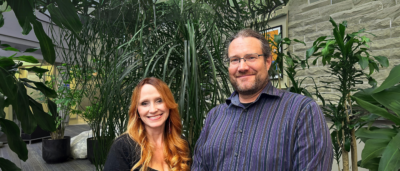
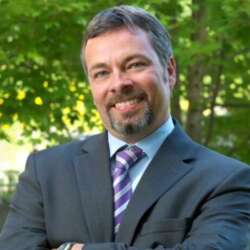
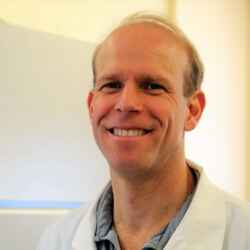
They're back together. Nearly 20 years after they began sharing research space in the Chemistry and Microbiology (C&M) Building, microbiology professors Joe Lam and Chris Whitfield have merged operations in a single 2,000-square-foot laboratory on the top floor of the new science complex.
“Merged” might be too strong a word. They do study different bugs and diseases, after all. And their respective research groups each inhabit one side of the spacious lab bristling with machinery and glassware. (A clue that you're on the Whitfield side is the rock tune pumping from a bench-top radio). But to a casual observer, it's difficult to imagine the invisible line separating the two sides.
Both researchers study cell surfaces of disease-causing bacteria. Lam, who holds a Canada Research Chair in Cystic Fibrosis and Microbial Glycobiology, studies a microbe that causes lung infections in people with cystic fibrosis. As holder of the Canada Research Chair in Molecular Microbiology, Whitfield works with pathogens, particularly E. coli, that cause gut infections.
Different bugs, different diseases. Indeed, they've co-authored only three papers in two decades. But they have enough in common — including lab methods and equipment — that it made sense to consider moving into a single lab in the new science complex this fall.
Besides, the pair had shared lab quarters before. “We know we can work together well,” says Lam.
He came to Guelph's Department of Microbiology midway through 1984, about six months before Whitfield's arrival. In 1985, when former colleague Bruce Sells moved his research to the then-new Department of Molecular Biology and Genetics in the Axelrod Building, they decided to share his relatively larger vacated lab.
Both research groups grew quickly, something they attribute partly to having shared not just space and facilities but also research ideas and insights. By 1990, they took separate labs, although they continued to share facilities and equipment in their adjoining space on the second floor of the C&M Building.
It was during design discussions for the new science complex that they decided to move back together.
Most labs in Phase 1 of the new building, which officially opened last week, are shared among faculty members in the new Department of Molecular and Cellular Biology. Formed this year and chaired by Whitfield, the department includes microbiologists, biochemists, molecular biologists and botanists.
The “yeast lab” might be an appropriate name for the research space shared by two other members of the department, Profs. Dev Mangroo and George van der Merwe.
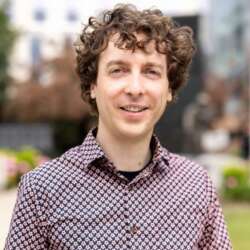
Their 1,000-square-foot lab on the second floor of the building is devoted to the geneticists' complementary studies of yeast. By investigating how yeasts transport a kind of RNA used in making proteins, Mangroo hopes to learn more about how the process works in other organisms, including humans. His lab partner has studied how yeast responds to environmental stresses, including yeast used in wine-making.
Formerly, they conducted their projects in widely separated labs, one in the MacNaughton Building and the other in C&M. Mangroo has been at Guelph for eight years, and Van der Merwe for two.
Now they're talking about collaborating on human health applications, specifically targeting drug developments against disease-causing fungi such as pathogens that threaten immuno-suppressed hos- pital patients.
“Fungal infections are becoming a serious problem these days because of drug resistance,” says Mangroo, who received a Premier's Research Excellence Award in 2001.
Besides sharing equipment such as a fluorescence microscope used for labelling and identifying proteins, they expect common lab quarters will encourage sharing of ideas.
“The big bonus of it all is that our students can interact,” says Van der Merwe. He has three students in the lab; Mangroo currently has four and expects to add two early next year.”
Upstairs, each “side” of the Lam/Whitfield lab is home to more than 10 researchers, including post-docs, technicians and students. The lab incorporates equipment rooms containing common machines used for imaging molecules, separating sugars, making proteins and analyzing reactions. Other rooms house duplicate pieces of equipment, such as incubators and centrifuges that are kept humming by both research groups.
The main lab space itself is filled with workbenches and stores of workaday equipment and chemicals (they stock the latter separately). Opening storage cabinets, Lam points out photos of the contents on the inside of the doors that are meant to remind users how materials should be maintained on the shelves.
He says the shared arrangement is already working efficiently for both sides. As their respective research projects change in future, that invisible line running down the middle of the lab may move back and forth, he says.
But neither researcher feels a need to mark that line more clearly with a wall. Says Whitfield: “You're recognized for what you do, and whether you've got walls doesn't matter.”
What about that radio? He concedes that he and Lam have different musical tastes: “Joe likes classical; I like classic rock.” Lam quips: “I told my side to use earplugs.”
Their standing arrangement is that “anybody can turn it off and nobody says anything,” adds Whitfield.
Their careers had intersected even earlier than their arrival at Guelph. Whitfield was beginning a post-doc at the University of Calgary as Lam was completing his PhD there with the same supervisor. Lam went to the University of British Columbia for about a year before coming to U of G.
Today, those intersections occur on a personal level as well. Both have two children. Both have golden retrievers. Their sons played this year on a provincial championship soccer team coached by Whitfield. And their daughters are both in second-year studies at Queen's University, where they lived in the same residence during their first year.