Guelph prof looks for ways around barriers keeping kids from physical activity
BY ANDREW VOWLES
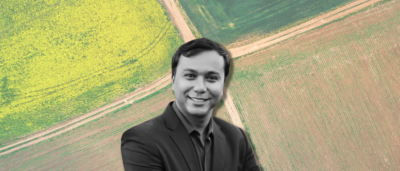
Worried that your kids are spending too little time on the playing field or in the gym or the pool? Getting more Canadian kids off the couch and into the game is the research goal of Prof. John Dwyer, Family Relations and Applied Nutrition.
Dwyer worries that Canadian kids face too many obstacles to becoming and staying physically active. He studies what prevents youth from participating in physical activity and ways to deke around those barriers and improve Canadians' overall fitness level.
The results of inactivity are legion, Dwyer says, pointing to statistics that say about one in three Canadian children are overweight or obese. Fewer than half of youth are physically active enough for optimal growth and development, according to the Canadian Fitness and Lifestyle Research Institute. Predictions are that our lack of activity — coupled with our less-than-wholesome eating habits — will spell higher health-care bills down the road.
“I've seen the importance of physical activity and nutrition in terms of developing healthy lifestyles — it's the foundation,” says Dwyer, who studied the psychology of physical activity and sport at the University of Western Ontario and applied social psychology at the University of Saskatchewan.
He's convinced that tackling those problems requires looking at kids, including examining three main kinds of barriers that his studies have shown keep children and youth from getting physical.
Intrapersonal barriers include circumstances such as gender and income and, more important, psychological walls.
“If you don't have much confidence in your ability to be physically active, you're not going to be physically active,” he says.
That kind of thinking can also lead people to make excuses for not exercising, such as lack of time.
Interpersonal barriers involve the influence of other people.
“For a child on the fence, if a lot of his or her friends are active, that child is going to be active,” says Dwyer, who often rounds up his daughter, Caitlyn, and her friends for a visit to the park with a soccer ball or for a bike ride.
Environmental barriers include the cost of programs and access to recreational facilities and equipment. Far from raising user fees or relying solely on subsidies — which can pose their own barrier for people uncomfortable about sharing financial information — he says: “It's supposed to be physical activity for all. We should be reducing fees or waiving recreational fees.”
A different kind of barrier lies in politics and public policy. Providing information to help policy- and decision-makers design effective programs is the ultimate goal of his studies. For example, studying why girls are often reluctant to participate in physical activity — a particularly pressing issue — suggested to him that many girls dislike having to share the gym or the field with boys. As a result, “both Toronto and Hamilton public health units are using our results in planning a program for girls,” says Dwyer.
Much of his work has involved Toronto children and programs. For 10 years, he worked for the city's public health department, where he helped develop and evaluate community programs such as the provincial healthy restaurant program called Eat Smart!
A cross-appointment to the University of Toronto allowed him to teach and study in the field. “I wanted to spend more time doing independent research and teaching.” Hence his 2002 move to Guelph, where he teaches research methods and program evaluation and where he's now cross-appointed to the public health and community services unit in Hamilton.
He still works with researchers in U of T's physical activity research program. They're currently analyzing results of a survey of 1,200 teachers and principals in Ontario about opportunities for school-based physical activity. Earlier, he headed a study on curriculum guidelines for health and physical education. Dwyer says his studies show teachers can be a strong influence, including those who frown on school-based recreation and sports because they take kids away from the classroom.
At home in Mississauga, he has a kind of test case in his nine-year-old daughter, a soccer player who plays or practises four times a week year-round. Caitlyn, a self-starter, has encountered none of those conventional barriers. But he always looks for ways to support her, from serving as taxi driver to cheering at her games.
Then there's the all-important role he serves as a fitness model. Both he and his wife, Shelley, work out at home on a stationary bike or elliptical machine. Dwyer himself makes a point of spending an hour every day on the equipment or out jogging. “At 5:30, I'm up and at it.”
Physical activity has been a lifelong habit for this self-described jock, whose father is a former boxer and longtime rower. Dwyer was a competitive wrestler through high school and university in his native Newfoundland, competing in world championships and other international tournaments.
Now 45, he hasn't hit the mats in years. But he's managed to maintain his university weight class and pegs his fitness level today at eight out of 10, compared with near-perfection back then.
He says his own experience is relevant for another reason: it's important to know yourself before choosing an appropriate sport or fitness regimen. Mismatches between sport and personality can be a key barrier for adults and kids alike.
Find out what you like to do and what you can stick with. “As committed as I am to physical activity, if I had to go to a gym or a facility, I wouldn't do it. I don't have time. Having my own equipment at home breaks down one of the barriers for me.”
If you're daunted by the prospect of meeting the current recommended activity level — an hour's worth of moderate or vigorous activity on most days of the week — then why not break up that activity into manageable stretches, even if only 10 minutes at a time?
As for eating, he eschews any particular diet. “Everything in moderation” is the mantra he follows — and one that he brings to his role as a member of a national advisory committee helping to revise Canada's Food Guide.