Newly arrived professor will divide her teaching time between Department of History and bachelor of arts and science program
BY REBECCA KENDALL
In the 19th century, a young Belgian woman named Louise Lateau began to experience stigmata. Starting when she was 18, wounds on her hands, feet and chest would spontaneously open and bleed. This happened every Friday until her death 15 years later. Was she a fraud? Was she a hysteric? Was she a saint? Her condition baffled the religious and medical communities at the time and is a case that interests one of U of G's newest faculty members today.
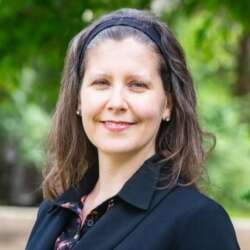
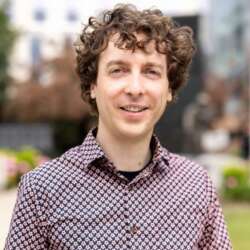
Prof. Sofie Lachapelle, History, studies the history of science, and although some may think her focus on psychology and psychiatry, marginal sciences and the paranormal is “weird,” she loves it. A PhD graduate of the University of Notre Dame, she is primarily interested in 19th-century French psychiatry and psychology. She has worked on the history of mediumistic phenomena, psychical research and miracles emphasizing the connection between science and religion.
In the case of Lateau, Lachapelle explored the scientific scrutiny under which stigmata, a physical manifestation of religion, was put in the 19th century. She says it's interesting that science can assign a label to someone and that label shapes how society views the person.
“I'm not out looking for the truth,” she says. “I'm trying to understand how the people reacted to situations and what it meant to them and to the people it was happening to.”
Lachapelle, who held a post-doctoral fellowship at the Max Planck Institute for the History of Science in Berlin, is curious about who decides what constitutes science, why and how this open-ended process takes place and how it is understood by those who are studied.She is concerned about the ways science marginalizes subject — both humans and topic — and by the processes through which it creates various identities.
“The relationship between science and religion is something we still don't understand very well, and there is a lot of potential out there for research,” she says.
In Lachapelle's office is a stack of boxes still waiting to be unpacked and a selection of postcards she picked up in Berlin, Russia, New Orleans and Britain tacked to her bulletin board. She is well-traveled after spending eight years in the United States and Europe, but happy to be back in Canada.
Born and raised on the east side of Montreal to French-speaking parents, she says she did everything in French until her PhD studies. Through watching English television in her teens, she gained some knowledge of the language, and this increased even further during her university years.
“If you buy the physics books in French, they are much more expensive than in English, so you very quickly go to English,” says Lachapelle, who is now fully bilingual.
Long interested in science, she was well into earning a bachelor's degree in physics math from the University of Montreal before realizing she wasn't on the right path.
“The last year I was an undergraduate, I decided I wasn't happy with it, but I couldn't figure out why.”
She enjoyed studying the sciences but found herself more interested in the scientists themselves, in their motives and their visions. After talking to a friend in the history department, she instead chose to look into the history of physics as an option.
“Although I studied physics and mathematics as an undergraduate, it was only once I began graduate studies in the history and philosophy of science that I developed an understanding of science that satisfied me,” she says.
Here at Guelph, Lachapelle will spend 60 per cent of her time teaching in the Department of History and 40 per cent in the bachelor of arts and science program. She's the first faculty member hired with dedicated responsibilities in the BAS program, which started in 2002.
“She brings to Guelph stellar training and international and multilingual academic experience,” says Prof. Donna Pennee, associate dean of arts and social science. “She will continue to develop an already active research profile, one that will directly inform her BAS and other teaching. As such, she is good for the History Department, good for the College of Arts and great for intellectually adventurous BAS students.”
Pennee and Department of History chair Terry Crowley say Lachapelle adds to the diversity of the University's faculty. Crowley notes that his department is especially pleased to appoint a woman to a position in the history of science, particularly at a time when old debates over the relationship between women and science have been resurrected through comments recently made by the president of Harvard.
“Through her interests in the evolving social and medical sciences as well as in education, she brings unique perspectives to the growing strengths of the University of Guelph in the history and philosophy of science,” he says.
A few months into her position, Lachapelle says she is “really charmed by the department, by how nice people are and by the fact that I feel very comfortable to be myself.”