Renewed funding enables CBS profs to continue their battle against bacterial infections in cystic fibrosis patients
BY ANDREW VOWLES
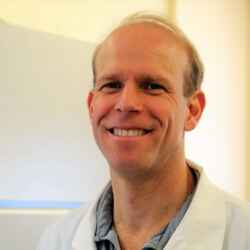
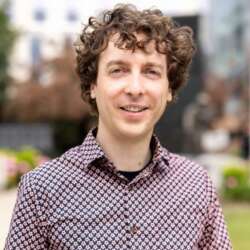
One strips away the invader's armour. The other aims to disarm the foe. Profs. Rod Merrill and Joe Lam, Molecular and Cellular Biology, have received fresh research funding for separate but related projects designed to combat killer infections in people suffering from cystic fibrosis (CF).
CF is the most common fatal genetic disease affecting young Canadians. An estimated one in 2,500 people born in this country will develop the disease. One in every 25 Canadians carries a defective copy of the gene responsible for CF; a child of two people with the defective copy has a one-in-four chance of being born with the affliction.
Lam and Merrill both study Pseudomonas aeruginosa, a common microbe that normally poses no risk to healthy individuals. But in people whose immune systems have already been weakened by infection or burns or who suffer from diseases such as CF, the bacteria may become deadly pathogens.
Mucus buildup in the lungs of CF sufferers provides a perfect environment for these bacteria, says Merrill, a biochemist.
“An estimated 60 per cent of cystic fibrosis patients have chronic lung infections caused by Pseudomonas. It's the No. 1 killer of cystic fibrosis patients.”
He and Lam are the only two Guelph faculty members to receive regular research funding from the Canadian Cystic Fibrosis Foundation (CCFF). Both saw the foundation renew their funding this year to continue their studies of aspects of the disease.
Merrill was awarded $75,000 a year for three years by the foundation, which has supported his work since 1997. He was among the biochemists who moved to the College of Biological Science last year from the former Department of Chemistry and Biochemistry.
He's looking for ways to disable toxic compounds produced by P. aeruginosa that prevent cells from making proteins in CF patients. His main target is a particularly lethal bacterial poison called exotoxin A.
“It's one of the most potent toxins known,” says Merrill, whose broader interests extend to toxins in bugs causing everything from diphtheria to whooping cough.
His lab has already developed peptide-based inhibitor molecules intended to prevent bacteria from gaining a foothold in the lungs.
“We're trying to block one of the tools used by the bacteria for infection,” he says. “It's not going to be a cure for the infection, but it's one link in the network to treat these bacteria.”
He's also used X-ray crystallography to look at the interaction of the toxin and the affected protein, called elongation factor II. By learning more about how the toxin works, he hopes to glean information that will help drug companies develop aerosol products to protect against infection. He works with two American pharmaceutical firms.
Recalling a high school friend's “sickly” brother who was afflicted with CF, Merrill says he studied bacterial infections during a post-doctoral stint. “I was just intrigued by the microscopic battles that are being waged among cells.”
Widening the lens beyond specific microbial toxins, Lam, a microbiologist, hopes to find ways to prevent and treat Pseudomonas infection. Holder of the Canada Research Chair in Cystic Fibrosis and Microbial Glycobiology, has has received a two-year CCFF grant worth $86,000 a year to continue one of two main projects.
Five years ago, his lab began investigating a short peptide made by a bacteriophage — a virus that attacks bacteria. He narrowed down the corresponding stretch of viral DNA responsible for making this protein, which prevents the P. aeruginosa bacterium from assembling its surface coat. Without that coat, the pathogen is effectively disabled.
Lam hopes to learn more about how the peptide works and how it might be used against the microbe. He's collaborating with Andy Kropinski of Queen's University, who is currently a visiting researcher in Lam's lab.
Earlier funding from CCFF and other agencies has enabled Lam to investigate various membrane proteins involved in assembling sugars on the pathogen's surface coat. He says studying the surface of P. aeruginosa is critical to learning how the bug infects the lungs or how it hides from the body's natural defences.
His lab holds four U.S. patents for pertinent proteins and genes. He's working with an American drug company on possible applications based on technology developed in his lab to screen for new drugs.
Lam has studied CF since his doctoral days at the University of Calgary, where his PhD supervisor had a son with the disease. Coincidentally, he had earlier worked with another Calgary researcher who now collaborates with Merrill. Originally from Alberta, Merrill studied chemistry at the University of Lethbridge.
Today they occupy offices and labs on separate floors of the new science complex. Although they have not worked directly together, they often discuss their respective research approaches, and they serve on advisory committees for one another's students.
Both agree that the recent CBS reorganization that gave rise to their new department — along with construction of the complex — has made it easier for them to compare notes. Merrill still collaborates with chemists in his former department, including Prof. Adrian Schwan, whose synthesis of substrate for the toxin will help in high throughput screening for new inhibitors.
Referring to his work on the bacterial toxin, Merrill says: “We're trying to block the virulence factor, and Joe Lam is designing compounds to kill the organism.”