Editor's note: President Alastair Summerlee welcomes comments on his column at president@uoguelph.ca.
U of G recently celebrated the 100th anniversary of Albert Einstein's annus mirabilis — “miracle year” — when he published five landmark papers, including the theory of relativity and the quantum theory. Astonishingly, he was only 26 at the time.
People gathered in War Memorial Hall to reflect on the difference Einstein made in the world. Indeed, his contributions and accomplishments — both in the sciences and in human rights — are immense. But for me, the celebration assumed a deeper, more significant role. It became a touchstone for the wonder and importance of scholarship and its potential to transform the world. It also reminded me that scholarship in both teaching and research is at the intellectual centre of the University.
It's appropriate that U of G singled out Einstein for remembrance. One of the many reasons he stands out as one of the 20th century's towering intellectuals is that he devoted so much of his life to contemplating the significance of scholarship and the role it plays in advancing the human condition. In his own lifetime, he faced repeated adversity — anti-Semitism, hostility toward his scientific ideas, resistance to his humane ideas — yet he overcame these obstacles and, in the process, influenced the course of human history.
Einstein devoted a great deal of thought to the process of human thought. “Curiosity,” he once wrote, “has its own reason for existing. One cannot help but be in awe when he contemplates the mysteries of eternity, of life, of the marvellous structure of reality. It is enough if one merely tries to comprehend a little of this mystery every day. Never lose a holy curiosity.”
Einstein took risks. His brilliance and sensitivity often placed him on the outside of conventional thought and society. He wasn't afraid to remain outside the mainstream — I still see the posters of him sticking out his tongue, thumbing his nose at authority, wearing ragged old sweaters — yet the sheer significance and weight of his scholarship ensured that his ideas reached vast audiences.
Just as it did during Einstein's lifetime, scholarship continues to transform our world in meaningful ways, and there is nothing more exciting than being a part of a community of scholars, especially one as vibrant as the University of Guelph. As I gaze out at the amazing accomplishments of our scholars, I find the same spirit of inquiry and engagement that Einstein championed. And you can never determine where that scholarship and curiosity will lead.
Who would have anticipated that, in 1910, a professor in the Ontario Agricultural College would introduce a new course into the farm-focused curriculum on Canadian literature? He taught what is believed to be the first-ever class on this subject. At the time, he was probably not considering the long-term implications of his actions. He possessed that splendid spark of “curiosity” that Einstein spoke of. He was simply interested in the topic and believed others would be, too. That one Canadian literature class established a crucial precedent. It influenced and set the tone for how the subject is taught across the country today.
Fast forward to the present, where we have abundant examples of U of G scholars who continue to make pioneering advancements. They contemplate new ideas, visit unexplored vistas and take risks, driven by that inspiring quest for knowledge that Einstein so eloquently celebrated.
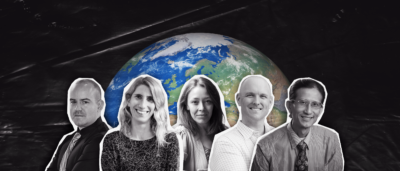
As often as possible, we pay homage to the achievements of our scholars. Recently, I had the opportunity to celebrate the winners of the 2005/2006 Distinguished Professor Awards. The honours recognize faculty who have consistently demonstrated a commitment to teaching and research. These 36 scholars have received numerous academic accolades and collectively represent the overall high quality of the entire academic community. Several of them commented that this award was one of the greatest honours they had received. The recipients were singled out for excellence by their colleagues, which was an obvious source of pride. But more significantly, they represent the continuing rich legacy of Einstein's vision of an open society of free inquiry, where women and men who possess the deep drive of curiosity are rewarded and celebrated for their efforts.
I have had the privilege of sharing in other celebrations of outstanding achievements. I've participated in events where faculty received the Central Student Association's Teaching Excellence Award, the School of Engineering's Professor of the Year Award, the U of G Faculty Association's awards for teaching excellence, the College of Arts and College of Biological Science teaching awards, the School of Hotel and Tourism Management's Faculty Member of the Year honour and the OAC Alumni Association's Distinguished Faculty Awards. And each time, I have taken heart that Einstein's maxim “Never lose a holy curiosity” endures.
So today, a century after the annus mirabilis, I am deeply moved by the professors who take seriously their roles as teachers and mentors to future generations of great minds. They continue to arm their students with the knowledge and open-mindedness necessary to face the challenges of the future.
In addition, many of our faculty have taken on the role of the “public intellectual,” encouraging community awareness of social issues, engaging in discussions on important issues of the day outside the classroom, pushing for positive change and conducting effective and socially responsible research. All these endeavours are vitally important if universities are to be the moral, social and intellectual centres of society.