Editor's note: President Alastair Summerlee welcomes comments on his column at president@uoguelph.ca.
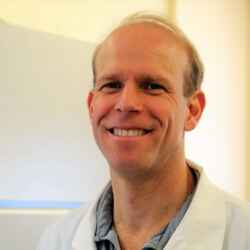
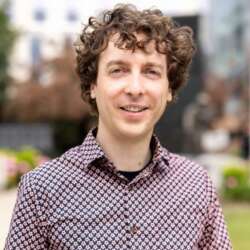
Recently, I had a chance to meet Christopher Kent, a graduate student from Tulane University who is among the thousands of people displaced by hurricane Katrina.
Christopher came to Guelph after seeing our invitation to students from Gulf Coast universities on Tulane's website. Since arriving a couple of weeks ago, he has enrolled in courses and moved into a graduate house, and is doing his best to bring some semblance of normalcy to his shattered life.
When he came into my office, Christopher was smiling and looking like a typical student, wearing jeans and carrying a loaded-down backpack. Of course, his situation is anything but typical, and he struggled to find the words to express his feelings. He must have said “thank you” half a dozen times.
Meeting him was an emotional moment. Christopher has come to symbolize two very important things for me. He is a reminder that, once again, there are people in the world whose lives have been devastated by natural disaster and unimaginable loss. But he also represents everything that is good about U of G, how our community opens its arms and hearts whenever there are people in need.
This communal sense of caring didn't just start when Christopher was packing up his 1988 Volvo for the long trek to Guelph. It long precedes hurricane Katrina and last year's tsunami.
So when we put the word out that Guelph was offering to help universities affected by Katrina, I wasn't surprised when the phone calls and e-mails began almost immediately. Faculty, students, staff, alumni and friends wanted to help with everything from housing, food and money to transportation, teaching and supplies.
Once we learned Christopher was making his way to us, the offers of help intensified. By the time he arrived, arrangements had been made for his housing, courses, books, registration and more. And it didn't stop when he got here. Just last week, some students who'd read about Christopher in the newspaper contacted the Department of History. They'd held a fundraiser on campus for hurricane victims and wanted the proceeds to go to him.
Christopher says the generosity has been overwhelming. He never imagined that people he'd never met could be so kind.
But those who know Guelph would have expected nothing less from this community. U of G is also working to develop relationships with other universities in the Gulf Coast regions that were adversely affected by Katrina, including sharing academic programs and faculty and student exchanges. The schools we are targeting have limited financial resources and opportunities, which makes it doubly hard for them to overcome the storm's devastation. Our hope is that these partnerships will be mutually beneficial and help develop lasting bonds between the institutions.
I was reminded of the extent of the University's commitment to caring once again during the United Way campaign's kick-off barbecue Sept. 29. It was one of the colder days of the month, yet we had a great turnout, with people standing outside in the chilly wind putting their all into selling hot dogs, cold drinks and ice cream.
This year's United Way fundraising target is $350,000, and there's a sense of excitement and challenge in this lofty goal. Last year, you may recall, this community raised $307,000, well above our goal of $285,00. It was the largest single contribution from a Guelph organization, earning U of G the United Way's Leadership Giving Award.
We have raised the bar significantly, and I am hopeful that we will achieve — and even surpass — this year's mark.
Our students helped set the pace during Project Serve, held during the last weekend in September. Nearly 800 of our newest arrivals gave up their Saturday — a warm and sunny one at that — to volunteer at more than 20 community organizations. They met on campus early in the morning, then set out for places like the Guelph Food Bank, St. Joseph's Hospital, the Women in Crisis shelter, OPIRG's demonstration garden and the donkey sanctuary.
Their tasks that day included pulling weeds, painting, cleaning up property and yards, and cutting grass. One group of 20 students had the thankless task of picking up trash in the city's parks and streets. In less than 2½ hours, they collected more than 900 pounds of waste.
When they were done, instead of heading home for a much-needed nap or downtown for some well-deserved relaxation, all the students came back to campus to talk about what they'd done that day and what they'd learned.
At a time when local media reports seem to focus on the inappropriate behaviour of a minority of our student population, it's extremely satisfying to see so many of our students pitching in to help beautify and improve this city.
Equally important, the Project Serve participants came away with a sense of satisfaction and appreciation. I'm happy to say that their efforts will continue long after the day ended. Some 70 per cent of our students volunteer in the community on a regular basis, a statistic I often repeat when talking about the various attributes that make this campus a wonderful and unique place to work, study and learn.
Indeed, I have often said that it's the people, values and sense of community that distinguish Guelph from other universities. I was reminded of the true extent of this when thinking about Project Serve, the United Way and, most recently, Christopher Kent.
It's long been said that disaster brings out the best and worst in people. In the aftermath of Katrina, says Christopher, he saw and read about some of the worst. But here at Guelph, he says, he's experienced the other end of the spectrum — he's seen only the best brought out in people.
That makes me extremely proud.