Drop-in centre couldn't operate without core funding from United Way Community Services of Guelph and Wellington, says executive director
BY MARY DICKIESON
When the door opens at 2 p.m., there's always someone waiting to come in, no matter what day of the week or time of the year. You can count on up to 20 young people showing up for supper at six, and when the doors are locked for the night at nine, there are usually eight or nine lingering in front of the TV because they need a place to sleep over.
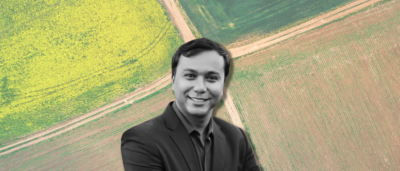
The faces change, the stories vary, but the need for a place like the Change Now Youth Drop-In and Resource Centre just keeps growing, says executive director Sabina Chatterjee. A 1997 graduate of Guelph's women's studies program, she has worked at the local drop-in centre for seven years.
In that time, staff numbers at the centre have grown from three to 21. They've added 400 hours of service provision per month, and Chatterjee says the agency has undergone a lot of capacity building, strategic planning and policy development.
She credits the United Way for helping to raise awareness of youth issues and says the resource centre couldn't operate without core funding from United Way Community Services of Guelph and Wellington.
No one wants to believe that one in five youth lives in poverty, says Chatterjee. “It's difficult for us to see how much some of these kids have been through in their lives and frightening to admit that there's so much need.”
Some of the young people she works with have had to parent themselves because their own parents are unwilling or unable to care for them. Some have left homes that were no longer safe; some were kicked out. Others move in and out of their family home depending on the situation there. And the Change Now food program often provides supper for youth whose working parents simply can't afford to feed everyone in the family.
Two years ago, Change Now moved into larger quarters in the basement of Norfolk United Church, where the centre can provide showers, laundry facilities and a health clinic for homeless youth. It also offers a daily food program for 13- to 24-year-olds who can't afford to buy a meal, life skills training, a recreation and athletics program, and help with homework and the never-ending search for housing.
The loss of a job, a failed relationship, a learning disability, an emergency that uses up the rent cheque — these are all reasons that youth become homeless or hungry or stressed beyond their ability to cope, says Change Now co-ordinator Tahira Dosani, another Guelph grad.
“The fact that they trust us enough to come here and talk to us demonstrates they have hope that their lives can get better,” she says. “That's amazing and so important to the future well-being of these youth and our community.”
Taking on the role of youth advocates was a natural progression for Dosani and Chatterjee. When they were students at U of G, both were active volunteers in human rights organizations. Dosani worked for Residential Life and the Central Student Association, and although her 2003 degree is in environmental engineering, she says she realized at graduation that she had always chosen part-time jobs and volunteer work in the support field because that's what she enjoyed doing.
Before coming to U of G, Chatterjee was a community anti-racism co-ordinator in Kingston while attending Queen's University. After moving to Guelph, she was active with OPIRG, the Women's Resource Centre and CFRU. She has also worked for Guelph-Wellington Women in Crisis, another United Way agency, and for the Wellington County Association for Community Living.
“In order to make the community I live in make sense to me, I need to be involved,” she says.
Chatterjee says her experience at Change Now has shown her how important it is to invest in better opportunities for the youth in Guelph and Wellington. If that doesn't happen, “they will never participate as full citizens,” she says. “If someone is totally disenfranchised, why would they want to participate in the community?”
At Change Now, the transformation begins by giving street-involved and at-risk youth a safe, hate-free place where they can find respect and someone to talk to. The next step might be a hot meal provided by a local church group or a clean pair of socks. Eventually, many youth at Change Now are able to build relationships and rapport with volunteers and staff members and become more successful in realizing their goals.
Chatterjee and Dosani are excited about a new initiative called Community Collaborative that aims to provide an alternative educational program for street youth and others whose learning needs don't align with traditional school programs. Change Now has been working with other United Way member agencies to create a community-based classroom that will be more responsive to the needs of disengaged youth.
“The ‘Give Yourself Credit' program addresses the barriers to education that exist for many youth in our community,” Chatterjee says.
Although Community Collaborative was initiated by the nurse practitioner who provides health- care services at Change Now, the initial discussions coincided with a United Way community forum where access to education for at-risk youth was a key issue, adds Chatterjee.
“The United Way is committed to giving local organizations a framework in which to discuss issues and needs within the community.”
She says the United Way develops leadership in community planning and social development.
“We need the United Way and its volunteer agencies to make Guelph more responsive and more caring.”
U of G's annual United Way campaign supports Change Now and 44 other local agencies. As of Nov. 7, the campus fundraising effort had raised more than $280,000, 80 per cent of the $350,000 goal. To make a contribution, download a pledge form at www.unitedway.uoguelph.ca.