Readership Survey
Biographical dictionary documents lives of Scotland's famous, not-so-famous and infamous women
BY REBECCA KENDALL
Researching and learning about Scottish women who helped shape their homeland's national identity and culture and worked to advance the women's movement throughout the world is now easier thanks to a new book co-edited by a U of G historian.
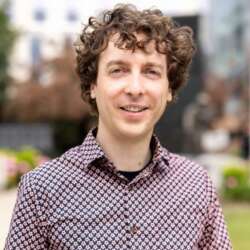
Prof. Elizabeth Ewan, who holds a University research chair in history and Scottish studies, is one of four women — and the only one from outside the United Kingdom — who spent five years investigating the lives and contributions of famous, not-so-famous and infamous Scottish women for The Biographical Dictionary of Scottish Women, the first-ever comprehensive collection of entries profiling the women of Scotland.
The book was released March 8 as part of International Women's Day celebrations at the Scottish Parliament and the National Library of Scotland and has been creating a buzz throughout the kilted nation.
The book has already been covered by the BBC, The Sunday Times and The Herald, with the Edinburgh-based newspaper Scotsman giving the book further publicity by creating a five-day, three-question women-of-Scotland quiz, with winners each receiving a copy of the text.
“Looking at history using gender as a lens leads to a different understanding of the Scottish past,” says Ewan, whose parents are both Scottish. “The response so far has been positive, and some people have been saying they can't put the book down. There's a pent-up interest in the history of Scottish women that hasn't been met, and there's been a real hunger for this sort of publication.”
When embarking on the task of editing, she estimated there would be only enough information to create 200 entries. Women's history in Scotland isn't a developed field, and she'd been advised that it would be a difficult task to find enough data to produce an entire book. Instead, she and her collaborators found the difficult part was narrowing down the number of intriguing female figures they came across.
“One argument that's been made for why women's history hasn't been documented is that sources of information aren't out there,” says Ewan. “I think this book clearly disproves that and lets us know that women's history in Scotland runs deep. The exciting thing about the project is discovering what's out there.”
The dictionary has 830 separate entries, but some, like the entry for the Scottish Women's Hospital for Foreign Service, include the names of several women.
“In total, the book makes mention of nearly 1,200 women,” she says. “We actually have a back list of several hundred more women. At some point, another book may be published to include them. We discovered women from every walk of life and from every period. We tried to include representative women, those who aren't famous or well- known but who represent some of the trades and jobs women held. Many people assume all women were in the home, and we show this wasn't the case.”
Trying to decide whom to include was difficult, as was deciding whether or not someone should be considered Scottish, she says.
“There were some women who probably thought of themselves as Scottish, but because their career wasn't primarily in Scotland, we chose not to include them, despite their emotional and ancestral ties to Scotland.”
Ewan says she and her co-editors, who worked with 280 scholars from around the globe, aimed to make the book suitable for a general audience while maintaining academic standards. They also kept the entries relatively short, so they could include as many women as their publisher would allow. Each entry ends with a bibliography of materials readers can reference for in-depth research.
“We designed the book to be a starting point for research rather than the final word. We really want to encourage further research to be done on these individuals.”
Among its 402 pages, the book introduces readers to Margaret Wilson, who pioneered education for girls in India in the early 19th century; Marjory Fleming, who died at age 11, leaving behind a series of writings that were used by a famous author to popularize the idea of Marjory as not just a childhood genius but also representative of the childhood experience in the Victorian era; and Scottish-born Jenny Trout, who became Canada's first licensed female physician despite pranks and indecencies committed by her male colleagues and professors. The book also profiles women who worked in such fields as politics, arts, social reform, science, religion and the trades.
In addition, the book gives mention to women who, although they never actually existed, have been a big part of Scottish myth or pop culture. Included in this list of a dozen names are Scota, a mythical Egyptian princess from whom Scots claim descent; Scathach, a legendary warrior woman; and Maw Broon, the matriarch of the popular Scottish comic strip The Broons.
“Maw Broon epitomizes an image of Scottish womanhood, and every Scottish person has grown up with this character,” says Ewan. “We've had more questions about her than about any other woman.”
Completing the dictionary has been a bittersweet experience for Ewan, whose friend and co-editor Sue Innes died from a terminal brain tumour in February 2005. She had been diagnosed in 2004 and expected to live only a few weeks, but her dedication to the book kept her going for six months and provided motivation for the other editors to continue, despite the emotional struggle, says Ewan.
“She knew she wouldn't survive to see it completed, but with her blessing, we dedicated it to her.”
The Biographical Dictionary of Scottish Women is available through Edinburgh University Press and can be purchased online at www.eup.ed.ac.uk.