Readership Survey
OVC PhD candidate's research aims to help Uganda battle deadly parasitic infection
BY ANDREW VOWLES
Helping to battle a deadly parasitic disease in Uganda — an affliction threatening an estimated 60 million people in several sub-Saharan African countries — is the goal of research by a U of G doctoral candidate.
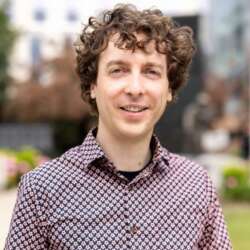
Lea Berrang Ford of the Department of Population Medicine hopes her studies of African sleeping sickness will help health officials and humanitarian agencies halt its renewed spread in the conflict-ridden East African country.
Berrang Ford, who defended her PhD thesis earlier this month, was the lead author of a research paper published this spring in Emerging Infectious Diseases, published by the National Center for Infectious Diseases within the U.S. Centers for Disease Control and Prevention.
Her spatial analysis of sleeping sickness in Uganda since the 1970s marries the student's longtime interests in health, environment and mapping — not to mention offering a way to tackle a disease that continues to bedevil several African nations.
Her thesis shows that the rapid northward spread of sleeping sickness from southeastern Uganda is linked to changes in human exposure to tsetse flies — the vector for the Trypanosoma parasite — and movement of the parasite to new areas, probably through infection of cattle. She says the highest-risk areas are rural districts with moderate to high amounts of vegetation cover, plenty of tsetse fly habitat, high cattle infection and civil conflict.
Berrang Ford urges that authorities focus monitoring and prevention activities in the centre of the country to prevent further spread, including the potential merging of two forms of the parasite that currently occupy the southern and northern regions.
“Merging would be a nightmare,” she says.
In addition, she questions a current attempt to eradicate the tsetse fly from the continent, including releasing sterile males to limit breeding. “It's a great idea in theory,” she says, but civil conflict and cost may make the strategy less feasible.
Berrang Ford calls for better monitoring of cattle and use of insecticide along with selective clearing of habitat. And she suggests that medical, veterinary and entomological agencies improve communications and co-ordination.
She has shared her results with officials in Uganda and with representatives of the United Nations Food and Agriculture Organization. She plans to write a more pointed report to spur action.
“It could make a measurable impact,” she says, although she concedes that “it's hard to change policy.”
Berrang Ford co-authored the article in Emerging Infectious Diseases with her co-supervisors: Profs. David Waltner-Toews, John McDermott and Olaf Berke.
“Diseases like sleeping sickness that can remain in the background and can flare up with important consequences are often ignored,” says McDermott, writing in an e-mail from Nairobi, where he serves as deputy director-general of research with the International Livestock Research Institute (ILRI). “Work done by Lea and other colleagues has helped to highlight the factors that lead to disease spread and impact on the poor.”
Berrang Ford, Waltner-Toews and McDermott also co-wrote an article on the topic that was published last summer in EcoHealth. Other co-authors of that report were Dominique Charron of the Public Health Agency of Canada; Prof. Barry Smit, Geography; and Martin Odiit of the Ugandan Ministry of Health. (A third paper will be published in the Transactions of the Royal Society of Tropical Medicine and Hygiene.)
Waltner-Toews says that, by pinpointing the causes of sleeping sickness in existing and new areas, his student's research will help the Ugandan government fight the disease more precisely and effectively.
“Her work is important because it highlights the interactions among socio-political upheavals, land-use changes and disease emergence,” he says. “The impacts of the social upheavals linger on far after they've been resolved, and this helps health workers watch for these longer-term effects and, hopefully, prevent further disease spread in the rebuilding efforts.”
Berrang Ford visited Africa three times between 2002 and last December. Most of her work involved poring over archived sleeping sickness data for the past three decades, working in the Ugandan capital, Kampala, and at regional health centres. She was based at ILRI in Kenya.
Sleeping sickness was nearly eradicated in sub-Saharan Africa by the 1950s, but two decades later, it came back. Berrang Ford blames a combination of civil war and unrest and greater attention by health providers and funding agencies on other diseases, notably HIV-AIDS and malaria.
(Last month, the Bill and Melinda Gates Foundation gave $22.6 million to the University of North Carolina at Chapel Hill for a clinical trial of a prospective new oral drug for treating sleeping sickness. The trial will take place in the Democratic Republic of Congo, Sudan and Angola.)
Uganda is the fourth hardest-hit country in the region. A largely rural disease, sleeping sickness is often unreported, but left untreated, it is fatal.
Berrang Ford studied environmental geography at Guelph before heading to the University of Oxford for a master's degree in environmental change and management. That new one-year program involved just 30 students from 20 countries, including James Ford, a native of Manchester, England, who came to Guelph for PhD studies in geography. He and Berrang Ford were married last year.
For her African studies, she landed a doctoral research award from the International Development Research Centre of Canada, along with funding from the Natural Sciences and Engineering Research Council.
This fall, she'll begin work as an epidemiologist with the Public Health Agency of Canada, using spatial analysis to study infectious diseases.