Features

The Odds Were in Their Favour

Venn diagrams aren't the only things that overlap in tale of three teachers

BY ANDREW VOWLES

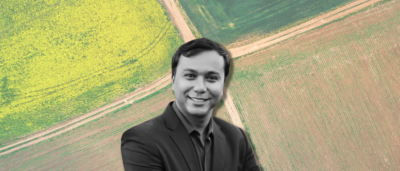
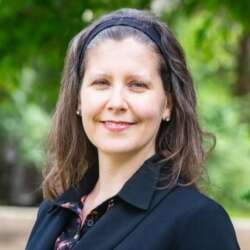
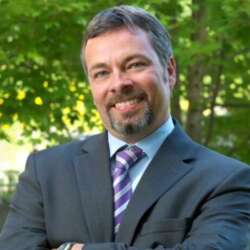
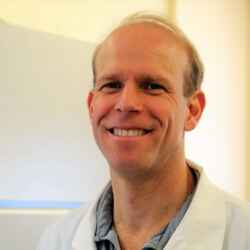
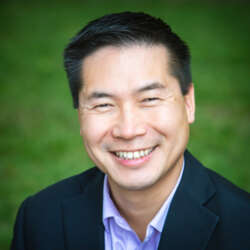
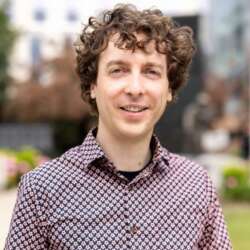
Profs. Gary Umphrey, left, Ayesha Ali and Henrick Malik are linked through shared teacher-student experiences in intro stats.
Profs. Gary Umphrey, left, Ayesha Ali and Henrick Malik are linked through shared teacher-student experiences in intro stats. Photo by Martin Schwalbe

How likely is this? It's been more than three decades since Prof. Gary Umphrey took his first-ever U of G statistics course from Prof. Henrick Malik, now emeritus professor in the Department of Mathematics and Statistics. Today, not only are they near- neighbours on the fifth floor of the MacNaughton Building, but they're also both colleagues of Prof. Ayesha Ali, whose arrival early this year came just over a decade after she took her own introductory stats course — from Umphrey.

Asking all three statistics faculty members for the odds on such a students-turned-teachers trifecta provokes laughter in the department lounge, followed by a plausible- sounding if imprecise response.

“It's like buying a lottery ticket,” says Umphrey. “The more tickets you buy, the better the chances of winning.”

In this case, he says, the more students you teach over your career, the more likely it is that one of those students will wind up teaching in turn in your department.

Case in point: out of the thousands of students who have taken their beginning stats courses from Umphrey, so far only Ali has become a departmental colleague here at Guelph. But besides Umphrey, other current faculty members who encountered Malik early in their undergrad years — among at least 10,000 students he's taught during his half-century in the classroom — are Profs. Gerarda Darlington and Brian Allen. (Two of his former graduate students are now faculty at other Ontario universities, including the current head of math and stats at the University of Windsor.)

Allen, currently chair of Guelph's Department of Mathematics and Statistics, traces his own U of G lineage through a separate branch of the stats academic family tree. Says Allen: “John Holt taught me my very first stats course. John is a new professor emeritus and still very active in the department.”

Of course, not every U of G statistics professor took courses from colleagues or forebears here at Guelph. But even if stats faculty don't necessarily beget more stats faculty, there may have been more than chance alone working among Malik, Umphrey and Ali well before they got to Guelph.

Malik is one of six brothers who all excelled at math in their native Pakistan (although he's the only statistician, one brother became a physicist). He came to Guelph in 1968, one year before the opening of the MacNaughton Building. (“That's before I was born,” laughs Ali.)

Named emeritus professor in 1996, Malik still occupies the same office today. A winner of several teaching honours, including a 1974 Ontario Confederation of University Faculty Associations award, he proudly shares a thick sheaf of teaching evaluations granting him top marks from second-year students in last winter's “Statistics for Business Decisions” course.

Umphrey took his first stats course from Malik in 1972, a year after starting at Guelph with hopes of becoming a marine biologist. Glancing at his former student, Malik says: “Gary I remember very well.” In fact, it was Malik's recommendation that landed the then-new graduate a job interview with the department chair — an opportunity that turned into Umphrey's first job as a full-time tutor.

He went on to complete his M.Sc. in statistics here with J.J. Hubert, now emeritus professor, before completing a PhD at Carleton University in evolutionary biology and systematics. Umphrey taught at the University of Western Ontario before returning to Guelph as a faculty member in 2001.

“It was like almost no time had passed,” he says.

He now applies statistics to biodiversity, pursuing an interest in ants that developed while he was an undergraduate here. In a paper published this year in Ecology, he discussed ants' interspecific mating and hybridization strategies.

It was while Umphrey was teaching in London that he encountered Ali, who carried an impressive statistics pedigree into his introductory stats classroom in 1993. “She has statistics in her genes,” says Malik.

Ali's father, Mir, was hired in 1962 as the first statistician at Western, where he helped launch the department of statistical and actuarial sciences; he was named professor emeritus in 1994. His younger brother will become professor emeritus in statistics at Ball State University in Indiana next year. Another of Ayesha Ali's uncles completed graduate degrees in statistics at Western and is now professor emeritus at Carleton University.

She is the only one of eight siblings to study stats, although she's hardly the lone scientist in her generation. Four siblings went through engineering, and one sister studied math and computer science. Like Ayesha Ali, a younger brother who studied applied math and computational methods at Western took his first stats course from Umphrey.

Ask Umphrey for his first recollection of Ayesha Ali and she can't resist answering for him: “Walking in five minutes late for class every day.”

After graduating from Western, she completed a master's at the University of Toronto and a PhD at the University of Washington. She was a faculty member for three years at the National University of Singapore before joining Guelph last January.

Appropriately enough, Umphrey figured in her decision to return to Canada. Attending a conference in Toronto, she had spotted her former professor's name on the agenda and looked him up.

“He was one of my most memorable professors,” says Ali. “There was always some entomology question on his exams.”

Umphrey told her about an opening in his department at Guelph. Now teaching two third-year courses and studying causal inference and graphical models, she says: “It's like coming home.”

She can't say yet whether she's encountered that neophyte in her classroom who may be destined to become a U of G stats faculty member down the road, let alone whether she'd make a case for causality in any event. But you never know for certain.

TOP