Features
A Struggle for Human Rights
Sociologist's studies of social movements give her a voice for justice in El Salvador
BY REBECCA KENDALL
![]() |
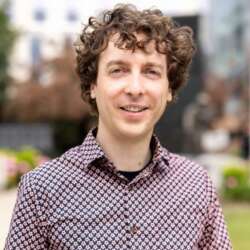
| Prof. Lisa Kowalchuk connects U of G studies with pursuit of social justice. Photo by Martin Schwalbe |
Prof. Lisa Kowalchuk, Sociology and Anthropology, was shocked when she read a story in a San Salvador paper that described a young Canadian woman who was leading a group of locals in a series of land invasions in rural El Salvador. What was shocking was that she was the woman being written about.
It was 1996, and Kowalchuk was a York University PhD student, studying the involvement of landless subsistence farmers, called campesinos, in social movements and the effects of their participation. She'd been interviewing a number of Salvadoran campesinos who'd been participating in land invasions that specifically targeted coffee plantations, and had been meeting with one particular group at a makeshift settlement on a public thoroughfare.
Some members of the group had taken her to meet with other organization leaders, and while she was gone, the mayor of Javaque, a small town in the western department of La Libertad, passed by the settlement and told the people they had to leave immediately or they'd be removed by force.
“One of the men, angry about what was going on, announced that they were being assisted by a Canadian women who was there to help them,” says Kowalchuk, who completed an MA at McGill University and taught at St. Mary's University in Halifax for four years before coming to Guelph in 2004. “That's how the story made it to the press.”
The story then made it into the hands of government officials and to an immigration hearing — she had applied for temporary residency to continue her research — and she was interrogated for 90 minutes about her travels and her political views.
“They implied I was a socialist because I said I was a sociologist. They were also asking me whether I had visited specific areas in the country where land invasions had taken place. In most of the cases, I hadn't been to those places, but they thought I was involved and they ordered me to leave the country.”
Only a few months into a new project funded by the Social Sciences and Humanities Research Council of Canada, Kowalchuk was faced with a forcible end to her research in El Salvador.
“I was scared and immediately made calls home to Canada and to a lawyer friend of mine. I had to be careful on the phone and choose my words carefully because I was pretty sure my phone was being tapped.”
With help from the Canadian ambassador and the lawyer, she was able to get her deportation order frozen until she could collect enough material to prove she was in El Salvador strictly as an academic.
She proved her case and continues to travel back to the Latin American nation, although each time she gets to the border, she feels a pang of anxiety.
“I always wonder if this will be the time they'll say: ‘No, you can't come in,'” says Kowalchuk, whose work has been published in a number of journals, including Sociological Quarterly, European Review of Latin American and Caribbean Studies and the Canadian Journal of Sociology.
She's now analyzing the anti-privatization movement that began in El Salvador in 2002. She's focused on the dynamics of this social struggle and how it brought together many different groups, including many with no previous militant behaviour or mandate, to stop the privatization of medical care. This included labour groups, women's groups, church organizations and campesinos.
Of particular interest to Kowalchuk are the roles of the campesinos and the mainstream press, who shaped the messages being communicated.
She's exploring the strength of the movement and the reasons it bonded so many people from various walks of life toward a common goal. “What does this say about the future of social movements in the country?”
Salvadorans want to preserve what little health care they have, says Kowalchuk, who notes that, although some people have medical coverage through employment and others are eligible to use public-sector hospitals, there is no health care in many rural areas. “Forty per cent of people in rural areas aren't seeking out any medical care when they're sick.”
Salvadorans were also concerned about a proposal to implement pay-per-use services and to outsource medical care to private providers.
Success of the movement was mixed, says Kowalchuk. Although it achieved a moratorium on further outsourcing of health-care services, the government stopped short of agreeing to an outright ban on future changes to the country's health-care system, which is what the movement wanted.
Her interest in the political struggles of the people of El Salvador stems back to her days as an undergraduate student at McMaster University. At the time, there was a lot of support in Canada for the social movements of Salvadorans, and a lot of attention was focused on what was happening there, she says, noting that the history of El Salvador is marked by civil conflict, economic inequality, political assassinations and frequent human rights abuses.
The 1989 murder of six Salvadoran Jesuit priests who'd been working for peace drove Kowalchuk and a group of other students from McMaster to see the people's struggle first-hand.
“It wasn't enough to just know these things were happening. We felt we had to raise our voice and support their struggle for justice.”
Her first trip to the country was in 1991, when the nation was embroiled in the 12-year civil war that killed an estimated 75,000 people. The students met with 15 to 20 organizations that were working for peace and human rights and made a secret visit to a guerilla encampment, where they spent an entire night interviewing people about their stories.
“It had a huge impact on all of us. We took videos that we had to smuggle out. It was dangerous for the Salvadorans, but it was also important for them to bring in members of the international community to see what was going on.”
A few days after the Canadians departed, the encampment was attacked by the army, and Kowalchuk doesn't know what happened to those whose words and images travelled back with the group to Canada.
“After meeting these people who spoke about how they'd lost relatives and been detained and tortured, my commitment to struggles of social justice was solidified and I felt I understood more clearly why people were taking up arms in these situations.”
One Salvadoran who has left a deep impression on Kowalchuk is a campesino-turned-activist called Ana Maria, whom she often stays with while in El Salvador. “Her home serves as a base for me.”
They first met 10 years ago, and the woman has openly shared the details of her experience with Kowalchuk. At 19, she joined the guerilla insurgency and was trained to provide medical attention to combatants. She witnessed the torture of rural women, saw crude surgeries performed, went days without eating and lost her first husband in the conflict. Kowalchuk is the godmother of the woman's youngest child, Wendy, now 12.
“Human rights violations are always something we should be concerned about,” says Kowalchuk. “I think North Americans might not feel connected to things beyond our own borders or beyond our own postal codes, but many of the problems being experienced there are experienced here, although on a different scale.”
She plans to return to El Salvador next spring.