In This Issue

Go Wild With Liv Wylde

Zoology student brings the magic and wonder of nature to children with a book series featuring a khaki-clad adventurer made of clay

BY REBECCA KENDALL

She may be made of clay, but zoologist Liv Wylde has travelled the world and even been introduced to David Suzuki, thanks to her creator, Jessica Morrison, a U of G student who has written a series of books designed to show children the wonders of nature.
She may be made of clay, but zoologist Liv Wylde has travelled the world and even been introduced to David Suzuki, thanks to her creator, Jessica Morrison, a U of G student who has written a series of books designed to show children the wonders of nature. Photo by Jessica Morrison

Olivia Kovana Wylde is always prepared for adventure and ready to explore the Earth's mysteries and wonders at a moment's notice. Dressed in khaki shorts, hiking boots and her signature beige outback hat, Wylde, better known as “Liv” to her friends, has travelled the world and seen its deepest waters, its most rugged terrain and its greatest heights. She's also been introduced to David Suzuki. Not bad for a 20-something zoologist who's made of clay.

“Liv isn't prissy, she isn't perfect and she doesn't talk down to kids,” says fourth-year zoology student Jessica Morrison, creator of a new book series for kids that features the plucky down-to-earth character.

“She isn't afraid to get dirty, and she doesn't mind getting a little scraped up. She isn't afraid of wild animals, but rather fears that the wild world will get overlooked as time goes on and humans will forget that they, too, are animals and will be unwilling to include others in their local and global decisions. She's basically me.”

Morrison, who spent her summer doing conservation work in New Zealand and has spent several summers working at an animal sanctuary, says she's been kicked in the head by deer and bitten by raccoons, skunks, birds, porcupines and squirrels.

“I've got the scars to prove it,” she adds, motioning to her leg. “The price of admission into the world of hands-on animal experience is high, but it's completely worth it. I have strong ideas about how humans should relate to the world and to animals, and I needed to express this.”

The first three titles in Morrison's Liv Wylde book series, which focuses on creatures that live in the sea, on land and in the air, were published by Benchmark Publishing and Design and released in June.

“I think one of Liv's biggest strengths is her ability to explain complex issues in a way that's easy for others to understand,” says Morrison. “She can take difficult scientific subjects and relate them to stuff that young people already understand, like explaining bioluminescence in relation to a root beer float.”

Liv Wylde made quite an impression on Suzuki this summer when they were introduced in Windsor, where Suzuki was holding a book signing to promote his autobiography. He was presented with Morrison's books and later sent the budding author a letter expressing his delight in the collection and his best wishes for her future success.

Each book tells of an adventure Liv is taking and the animals she encounters along the way. In Canadian Capers, she discusses the play activities of animals such as the North American porcupine, the black bear and the eastern grey squirrel. She explains to her young readers that animals use play to practise defence mechanisms and predatory skills.

Flying Frenzy takes readers on an adventure to Indonesia and puts them in contact with some of the island nation's flyers, such as the palm cockatoo and the Atlas moth, and some “fake flyers” — creatures that glide through the air rather than fly. These include the flying lemur and the paradise flying snake.

Liv takes readers under water in Marine Marvels to explore the sea's food chain and to examine the characteristics of aquatic animals that help them survive in their environment. The list of underwater creatures featured includes krill, sharks, starfish and the viperfish, one of the fiercest and most elusive predators of the sea.

Each book includes a series of activities to keep kids thinking about the creatures they've just read about, as well as a glossary of scientific terms and a list of the animals discussed.

The stories feature detailed two- and three-dimensional scenes sculpted using clay and Plasticine in colours that Morrison mixes herself. She designs and crafts everything from blades of grass, tree bark and animal tracks to the fine features and markings on her cast of wild and diverse creatures. She also takes the photographs of the scenes that appear in her books.

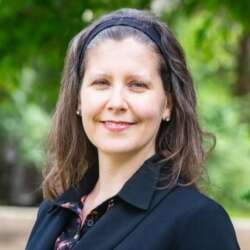
Jessica Morrison says her Liv Wylde character is “basically me.
Jessica Morrison says her Liv Wylde character is “basically me." Photo by Martin Schwalbe

Although the books took only a few “intense” months to produce, they've been years in the making, says Morrison, who has written and illustrated three additional titles and is doing the finishing touches in preparation for their winter release. In the upcoming books, Liv will explore the Sonoran Desert, the Arctic Circle and Costa Rica and explain how the animals that live there survive in heat, extreme cold and the rainforest.

An avid wildlife watcher, Morrison has early memories of spending time outdoors tracking, observing and learning about the animals that inhabited the area around her home.

“My favourite thing to do as a kid was to play in the woods. I learned early on that I related to animals differently than other people did. I saw them as equals among creatures, and I think there's more to them than people give them credit for. Animals and humans may not look alike, but we're a lot more similar than most of us like to admit.”

When Morrison was a child, she wanted to read books that shared this philosophy, but she almost always came up empty-handed. Her book series was initiated to fill the void she found and to encourage a new generation of children to discover — or rediscover — the magic and wonder of nature, she says.

“I hope there are kids out there who will pick up my books and think that they're exactly what they've been looking for. I truly believe the series can help children relate to nature on a very fundamental level and be accepting of their surroundings. The more kids learn to care about nature, the more open they'll be to sharing space with wildlife and respecting their place in the world. After all, you don't need to be a biped to earn respect.”

For a look at Morrison's work, visit www.livwylde.com.


TOP