Features

Rain, Rain, Don't Go Away

U of G engineers partner with city, developers in studies of rainwater harvesting systems

BY ANDREW VOWLES

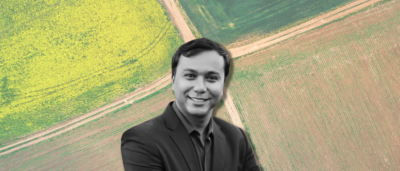
These days, rain brings not frowns but smiles at Prof. Khosrow Farahbakhsh's house. That drumming on the roof means the new storage tank buried in his front yard will be topped up with a fresh supply of rainwater for use every time someone flushes a toilet, waters the garden or does the laundry — uses that account for about 40 per cent of water demand in the family home.

Discussing the novel rainwater harvesting system installed this summer at his Guelph home, the School of Engineering professor says: “For the first few days, the kids were conscious of the new system, but now they don't think about it as much — although, whenever it rains, they get excited.”

They're not the only ones. Interest in rainwater harvesting systems is rising among municipal officials, builders and developers as a home-grown solution to mounting fears about water shortfalls and water-quality concerns, not just in Guelph but also in towns and cities across Canada. Through a new study involving a number of test sites around the city, including Farahbakhsh's home, he and two graduate students hope to yield information about everything from the requisite technology to policy options for introducing this modern twist on yesterday's rain barrel on a much larger scale.

Along with the City of Guelph and two local developers, the environmental engineers are studying the feasibility and design of rainwater harvesting systems intended to help in conserving fresh water, staving off the need to tap new sources of water and reducing the impact of stormwater discharge on lakes and rivers.

Farahbakhsh has received $250,000 in funding and in-kind support over two years from the Ontario Centres of Excellence (OCE) program, the Canada Mortgage and Housing Corp. (CMHC), the City of Guelph and his private-sector partners to explore rainwater harvesting.

Such systems — basically consisting of a buried tank that holds up to 10,000 litres of rainwater captured from the roof downspout — are a modern-day version of the old-fashioned rain barrel. He says a major reason for the growing interest in rainwater harvesting is the impact that expanding development is having on freshwater supplies, not least here in Guelph.

Martin Lavictoire, conservation and efficiency technician with the city's environmental services, says he hopes the U of G project will help reduce water demands and provide a money-saving alternative for the city and taxpayers.

“This project is a solution to water needs,” he says, explaining that diverting enough water for toilet flushing alone would probably slash water use in the average home by about one-third. “We want to see what sort of impact rainwater harvesting can have on city usage of water.”

An Australian study that modelled rainwater harvesting found that installing these systems in all new housing developments — along with some annual retrofitting — would be more economical than providing traditional water infrastructure. Under this scheme, major expansion to water supply infrastructure would be delayed by 26 years.

In addition to relieving pressure on water supply systems, rainwater harvesting diverts water from aging stormwater infrastructure and rivers and lakes that, in many Canadian centres, are often overwhelmed during peak rainfall.

One of the project's test sites is the home of Ben Polley, whose company, Harvest Homes, builds straw bale houses. He installed a rainwater harvesting system when he built his own house three years ago in Hillsburgh east of Guelph. It's a model eco-home constructed with such features as solar and wind power and “green” building materials, including those signature straw bales.

Polley hopes the study will help answer questions about costs, designs for cold-climate systems and water quality to help builders and developers incorporate rainwater harvesting into new construction. Unlike other installations, the system at his house, including an activated carbon filter and ultraviolet disinfector, produces potable water.

“We're using rainwater for 100 per cent of our water needs,” he says. “Essentially we're all drinking rainwater. It's just that some of us are catching it earlier.”

The U of G trio is now helping to design a rainwater storage tank for an eco-home to be built next spring in Guelph by Reid's Heritage Group. (That model house will feature several green building concepts, including solar and geothermal heating.) Product development manager Andy Oding says his company wants to learn more about the system and how to build rainwater harvesting into entire tracts of new housing.

“The University is going to take the data and will create programs that help the end user, the builder, the developer and the city look at it on the larger scale,” he says.

Oding adds that equipping more houses for rainwater harvesting may reduce development costs for pumping water, leading to cheaper homes or at least water-friendly homes without extra expense.

Farahbakhsh says the Guelph team aims to help build capacity for large-scale rainwater harvesting in Canada, including developing appropriate technologies, regulations and building codes, progressive policies, economic and market viability, knowledge transfer, and public participation and acceptance.

“Most of the people who may be interested in rainwater harvesting wouldn't know where to start,” he says. “It's exciting, but at the same time, it's challenging. Our circle is expanding.”

Master's student Chantelle Leidl is studying the costs and benefits of rainwater harvesting, including looking at government policies and regulations and large-scale issues for municipalities to consider in introducing these systems. Master's student Christopher Despins is studying appropriate design of systems and investigating the quality of water captured from various roofing materials and surfaces.

Prof. Andrea Bradford, Engineering, is looking at the effect of rainwater harvesting on local and community watersheds and water balance.

The U of G researchers are also discussing ideas with the Upper Grand District School Board for a system for a new 500-student school.

“In most elementary schools, 50 to 70 per cent of the demand for water is for toilet flushing, so rainwater harvesting would be ideal,” says Farahbakhsh.

He has fielded calls from various municipalities, including the City of Regina, which found the Guelph researchers through CMHC. “What we're doing is going to have national implications,” he says.

Pointing to the Guelph-area partnership and resultant funding application, Lavictoire says: “Realistically, the project wouldn't have happened without the OCE funds through the University. They need to see a research component and that private industry will be able to benefit from the possible outcomes. If the University weren't involved, that funding would not have come.”

Meanwhile, the concept is having an immediate impact in the professor's own 20-year-old home. Late last summer, Farahbakhsh hired a contractor to bury an 8,000-litre concrete tank in the front garden. Rerouted gutters and downspouts direct rainwater into a “first-flush unit,” basically a pipe that diverts the first — and most contaminated — millimetre of water away from the tank. (The tank was already full by early October.)

The system is equipped with a rain gauge and a flow meter; a hand pump allows him to draw samples for quality testing. Referring to a turbidity test that compares water with the Canadian drinking-water standard, he says: “We're close to that.”

TOP