People

My Favourite Martian Digs

Space researcher views mock Mars mission as another step in journey to red planet

BY ANDREW VOWLES

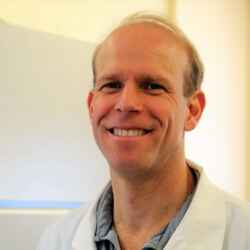
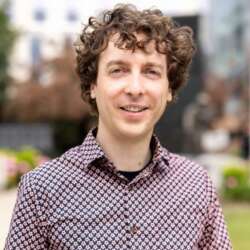
Matt Bamsey. Photo by Martin SchwalbeHe hasn't gotten to Mars yet, but Matt Bamsey has already staked a claim of sorts to a tiny piece of the red planet, one that he's held since his teen years. And if humans set up a Martian colony sometime in this century, the U of G doctoral student may be able to claim that he helped them get there. In addition — and despite daunting odds — Bamsey hopes he might have a shot at taking that epic first-ever journey to our nearest planetary neighbour.

That would fulfil a dream he's nurtured since his boyhood in Guelph spent reading books about space and astronomy, keeping tabs on shuttle flights and sketching spacecraft designs. He was just 12 when his parents, both science-fiction fans and U of G grads, bought him a chunk of the moon as a whimsical birthday gift. Sometime later they bought him similar pieces of both Mars and Europa, one of Jupiter's moons.

Now 26, Bamsey is still pursuing that ultimate goal through several avenues. Having worked for the Canadian Space Agency (CSA) as a student for five years, he still spends most of his time at the agency's Montreal headquarters. Last year he began PhD studies back in his hometown, working on life-support systems studied by Prof. Mike Dixon, chair of the Department of Environmental Biology. And he was recently selected to take part in a simulated Mars expedition in the Canadian High Arctic later this year to help earthlings prepare for that anticipated journey to the red planet.

The four-month expedition will begin in May at the Flashline Mars Arctic Research Station (FMARS). Located on Devon Island about 1,500 kilometres from the North Pole, the cylindrical pod perches on the rim of the Haughton meteorite impact crater formed some 23 million years ago. The expedition will be the longest and most isolated human Mars simulation ever conducted.

Crew members will simulate conditions that a mission might face on Mars, even wearing spacesuits for working outdoors and experiencing an artificial time delay in communications with base operations. Describing the station's crew quarters, kitchen and research labs, Bamsey says: “It's designed as a real habitat.”

The station is run by the Colorado-based Mars Society, which selected seven crew members for this mission in late fall. Bamsey, who has visited the Haughton crater four times since 2003, is the only member with experience in the High Arctic. He will serve as executive officer and engineer while studying crew water use, habitat systems and basic geology, biology and crew psychology.

Also on the team will be crew commander Melissa Battler, a geologist at the University of New Brunswick, and Canadian geologist Simon Auclair of the International Space University. Bamsey will meet them and the other team members from the United States and Greece during a two-week training session next month at the Mars Society's Mars Desert Research Station in Utah.

Bamsey says he was chosen because of his university studies in life-support systems and his experience with earlier expeditions intended to help prepare for travels to the moon or Mars.

At Guelph, he's studying greenhouse systems in the Controlled-Environment Systems Research Facility, a complex of greenhouses and controlled-environment chambers adjoining the Bovey Building. Here, researchers led by Dixon study growth of plants under low-light and low-pressure conditions that mimic those of a long-haul space flight or an outpost on the moon or another planet.

“Mike Dixon is a leader worldwide in advanced life support,” says Bamsey, who will develop sensors to monitor nutrients delivered to plants grown in hydroponic solution. Scientists expect that space explorers, including anyone on a four- to six-month journey to Mars, would rely on plants as life-support systems for food, air quality, and recycling of water and waste. “We're using plants to keep people alive,” he says.

If the idea of turning a bit of Canada's Arctic into Mars sounds otherworldly, what to make of the notion of installing a greenhouse in the same environs to grow lettuce, cucumbers and other produce? That's what Bamsey — along with other Guelph researchers — helped do during earlier field seasons on Devon Island. On those previous trips, he helped erect a greenhouse and monitor its systems. Located a few kilometres from the research station where he'll practise living on Mars this spring and summer, the Arthur Clarke Mars Greenhouse gives scientists a place to try out growing operations in Mars-like conditions. The greenhouse operates year-round and is monitored from southern Canada for most of the year. (The facility is run by the Mars Institute, the SETI Institute and Simon Fraser University.)

Living at the greenhouse site was less like a Mars simulation and more like Arctic survival training, says Bamsey. Like his colleagues, he spent three or four weeks camped in his own tent, equipped with whatever gear he could pack into two big duffle bags. Even in July, temperatures hover around freezing on the world's largest uninhabited island (not counting seals, polar bears and muskoxen). And the weather can be unpredictable: Bamsey has spent more than a few hours waiting for the skies to clear before being able to fly out on the first leg of a lengthy journey home.

“It's harder to get to Devon Island than it is to get to the moon,” quips Dixon. “But when it comes to deploying sophisticated technology in a remote and harsh environment, it is a superb analogue.”

Bamsey says last summer's trek was worth the inconveniences. “We grew a perfect crop of lettuce from seed.” Not to mention the highlight of a “polar dip” at Resolute Bay, where the temperature of the saltwater actually drops below zero.

Research in the greenhouse is supported by the CSA, U of G, Simon Fraser and the SETI Institute. The principal investigator is Alain Berinstain, the CSA's director of planetary exploration and space astronomy and an adjunct professor in the Department of Environmental Biology. He's also co-adviser for Bamsey's doctoral thesis.

“Matt's work with Mike Dixon and me in developing life-support systems for the moon and Mars is very forward-looking research,” says Berinstain, “and the type of work we're doing is a necessary step on our way there. His work is helping us understand how we'll need to think when we operate a greenhouse on the moon or Mars.”

Bamsey still spends most of his time in Montreal, working as a student research affiliate with the CSA's space science department on the Arctic greenhouse project. He's also gone on the road to talk about space science and exploration to schoolchildren, including a stop along the way at Guelph CVI, his own alma mater. (A typical question, albeit from younger audiences: “How does an astronaut go to the bathroom?”)

After studying aerospace engineering at Carleton University, Bamsey went to the University of Colorado at Boulder to work on life-support systems and spacesuit design for lunar and Mars missions. There, he co-authored two conference publications with his adviser David Klaus, a leader in bioastronautics, the study of what happens to the human body in space. Referring to Bamsey's planned Mars simulation mission, Klaus says: “I can't imagine a more qualified, dedicated or hard-working individual to have on the FMARS crew.”

Bamsey would love to suit up one day himself as an astronaut bound perhaps for a moon outpost or even for Mars. (The George W. Bush administration has announced plans to return to the moon by 2020, with an eye to establishing a launch pad for a Mars expedition.) “Going to the moon would be ‘astronomical,'” he says.

Dixon believes a Mars shot might be too far off for his student, but for a moon mission, “his expertise in controlled-environment systems and food production will be invaluable.”

Why go to Mars, anyway? Bamsey says space exploration has already yielded numerous technological benefits. Studying space and monitoring our own planet from that vantage point may also improve life back on Earth, not least by helping us learn more about the possible extent and impact of climate change, he says.

Money spent on space research and exploration is not thrown away, he adds. “Every dollar is spent on Earth for jobs and technology development. None of that money is disappearing. Everything is spent here on the planet.”

And there's that idealistic-sounding goal of transcending national boundaries.

“It's something that can bring every country on Earth together,” says Bamsey. “We've been stuck in low Earth orbit for 30 years. We haven't done the exploration we could do.”

Those kinds of arguments flow easily for him, no surprise for a longtime advocate of space science and exploration. He joined the Mars Society of Canada after high school in 1999 and spoke to more than a few skeptical audiences as the organization's president between 2003 and 2005. He's currently a student adviser to the Mars Institute board of advisers.

“We've been pushing all the federal parties to increase space spending,” he says. “The space community needs to do a better job of getting the word out there.”

TOP