Features

A New Canine Model of Cancer

Mice are nice but dogs may help OVC researchers learn more about course and treatment of cancer

BY ANDREW VOWLES

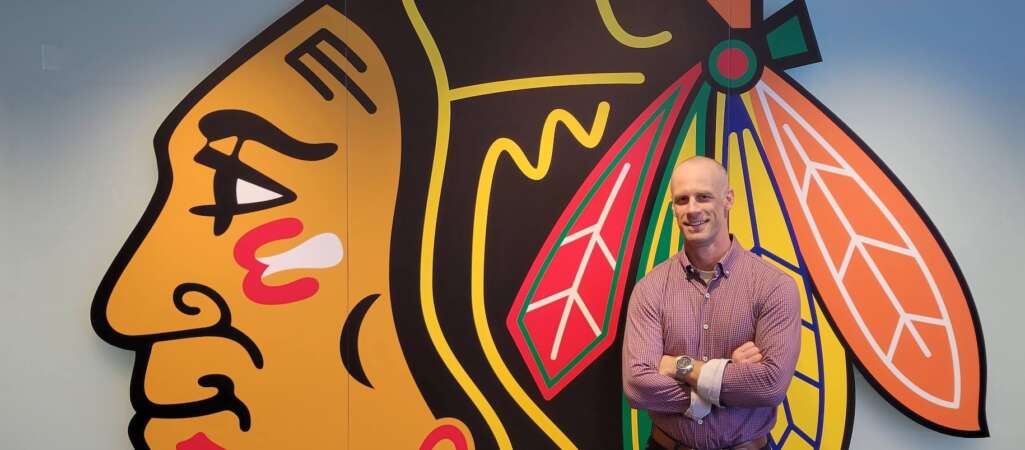
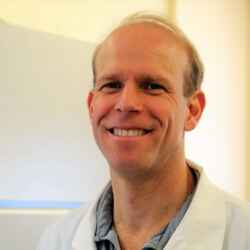
Prof. Geoff Wood, Pathobiology, hopes to help people and dogs defeat cancer.
Prof. Geoff Wood, Pathobiology, hopes to help people and dogs defeat cancer. Photo by Martin Schwalbe

Cancer researchers seeking treatments and cures have long relied on lab mice to study the disease. Now add dogs to the menagerie.

Since returning last year to his alma mater, Prof. Geoff Wood, Pathobiology, has set up a research program using both mice and dogs to study human cancer. Besides learning more about the disease in people, he expects his work will benefit canine patients at the OVC Teaching Hospital.

He hardly plans to supplant the mouse as a model animal for studying disease. Mus musculus has been a lab workhorse for researchers for more than a century. And it will continue in that role for a long time, judging by the scope of mouse genetics projects under way worldwide, including work at the Toronto Centre for Phenogenomics (TCP), where Wood studied before coming back to Guelph.

But there are some things we can learn more readily from dogs, especially those arriving at OVC with naturally developed tumours, says this lifelong dog owner (he currently has a nine-year-old black Lab).

Larger breeds of dogs are particularly vulnerable to bone cancer. Nobody knows why, although researchers and veterinarians speculate that the animals' rapid growth opens them up to more cancer-causing mutations. Others think breeding practices have predisposed dogs to genetic disorders such as cancer, heart disease and blindness.

“The bigger they are, the more likely they are to get osteosarcoma,” he says, adding that boxers are notorious for developing tumours in general. (Researchers used DNA from a boxer to develop the first map of the dog genome; other breeds and relatives were then used to complete the dog genome sequence, published in 2005.)

Wood plans to work with OVC patients through such clinicians as Prof. Paul Woods, co-director of Guelph's Institute for Comparative Cancer Investigation. The pathobi- ologist has been designing a gene chip that he'll use to compare the DNA of normal and diseased animals to uncover markers (bits of genetic material associated with disease genes).

He expects to learn which genetic clusters are bad or benign in various patients. Besides helping him learn more about cancer in dogs, this technology will allow him to watch what happens during treatment. Wood hopes that information will help veterinarians better tailor treatments for individual patients and yield better predictions about survival after treatment.

Beyond the OVC hospital, he says his work holds out promise for learning more about cancer in people. That's largely the purpose of those mouse studies, of course, including Wood's own work with mice. But he says there are benefits to using dogs as models of human disease.

Cancer in dogs looks much the same as cancer in people. Conversely, “bone cancer in mice is vanishingly rare,” he says.

The canine genome sequence also resembles the human one, showing that we share more of our ancestral DNA with dogs than with mice.

Perhaps more important, those cancer cases arriving at OVC develop spontaneously. That might make them a better model of human disease progression than researchers' carefully induced changes in lab mice. And because companion animals live with their owners, they may provide clues to environmental triggers that also lead to cancer in humans.

Wood figures he'll get the best of both worlds by studying dogs and mice.

“This gives us an opportunity to mine these two data sets of what changes go on in the dog and the mouse, what's similar and different.”

He hopes to clear away some of the genetic “noise” in cancer — genetic changes that can't be attributed to specific causes. And maybe he'll learn more about how groups of genes, including regulatory genes, work together to trigger disease.

Wood completed a DVM at Guelph and a PhD at the University of Toronto, where he used rats to study cancer. He was drawn to cancer research by seemingly perverse logic — it's a complicated area in which researchers and doctors have made little progress, despite recent advances.

He completed a D.V.Sc. by dividing his time between Toronto and Guelph, where he was co-supervised by Prof. Jeff Caswell, Pathobiology. He worked at both the Ontario Cancer Institute — where he studied breast and endometrial cancer — and the TCP. At the latter, he worked with Colin McKerlie, a two-time Guelph graduate who was named CEO of the centre this spring.

Wood says animal models are critical to understanding how disease works in humans and how to tackle it. Citing ties with clinicians and access to OVC patients, he says: “The opportunity to do comparative work with dogs is why I came here.”

He's one of a few researchers in North America taking a comparative approach to studying canine cancers. Another is Chand Khanna, senior scientist at the National Cancer Institute in Bethesda, Md., and a former OVC intern. Wood expects to work with Khanna, who has developed a bank of canine tissue specimens and arrays.

TOP