Features

From Crops to Car Parts

Prof aims to help rebuild our world using biobased materials

BY ANDREW VOWLES

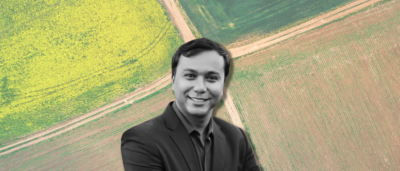
Prof. Manju Misra uses a cross-appointment in engineering and plant agriculture to study bioproducts.
Prof. Manju Misra uses a cross-appointment in engineering and plant agriculture to study bioproducts. Photo by Martin Schwalbe

That wooden lectern looks lonely. Its blond wood stands out in the School of Engineering (SOE) boardroom, surrounded by painted cement block walls, glass windowpanes and a carpet, table and chairs made of various synthetic products. One day soon, if Prof. Manju Misra's ideas pan out, that lectern in the corner will be a little less lonely.

Newly arrived at Guelph this year, Misra hopes to help supplant our petroleum-based economy with more biobased materials. She plans to bring together engineering and structural know-how with ideas and new materials from a fast-growing bioproducts sector to re-engineer much of our world.

Cross-appointed between SOE and the Department of Plant Agriculture, she is something of a composite herself. Misra spends most of her time teaching and researching in SOE; about one-quarter of her time is devoted to plant agriculture.

Her lab is located in Guelph's new Bioproducts Discovery Centre, a hub for University research on using agricultural crops to develop novel industrial products from car parts and building materials to fuel. The centre itself contains traditional building products, she says, but it's been designed to accommodate a roof garden for growing small crops.

The centre's director is her husband, Prof. Amar Mohanty, Plant Agriculture, who holds the Premier's Research Chair in Biomaterials and Transportation at U of G. The couple have been working together since meeting as graduate students at Utkal University in their native India. They came to Guelph from faculty positions at Michigan State University.

Biobased materials and “green” nanotechnology are Misra's interests. “We mostly use non-food biomass to produce these materials,” she says.

Biobased products combine materials derived from fossil fuels with biological materials grown on farms and in forests. Biomass yields material destined not only for your vehicle's gas tank but also for other products used every day, she says, although she's interested in new uses for lignin, cellulose and other plant components left after making crop-based ethanol. (In her only fuel project, she's looking at how to grow algae to capture carbon dioxide and use the resulting biomass to make biodiesel.)

Misra looks at ways to use biomaterials in car parts, building components, furniture and packaging. She says there are plenty of research questions in this still-new field. How to blend components just right to make lightweight materials with desired strength and stiffness? How to make a uniform, low-cost product?

Unlike polyethylene, which looks and acts the same wherever it's made, biomaterials still vary in properties and function. “We're working on chemistry and engineering to reduce this hurdle.”

Gesturing around the Thornbrough Building boardroom at varied materials, Misra says alternatives need to meet tests of economy, ecology and technology. “All of these have to combine.”

After watching gasoline prices rise sharply over the past decade, she understands the need for low-cost alternatives. She's also aware of the “green” imperative.

Take packaging. “We want to substitute a certain percentage of the polyethylene and polypropylene with appropriate material that can degrade after use.”

She's also using nanotechnology to look closely at materials and their changing properties on the scale of billionths of metres. Among their joint publications, Misra and Mohanty have written about biodegradable nanocomposites for the Journal of Nanoscience and Nanotechnology. He is editor-in-chief of the Journal of Biobased Materials and Bioenergy; she serves on the editorial board. Co-editors of the 2005 book Natural Fibers, Biopolymers and Biocomposites, they are now working on another volume called Packaging Nanotechnology.

Having built a biocomposites research program at Michigan during their eight years there, Misra and Mohanty were eager to take on a new challenge. Neither researcher knew anything about Guelph.

Misra likes the range of expertise at U of G from crops to car parts. She says that broad scope is unusual in a single institution. For instance, Guelph leads the BioCar initiative, a $6-million project that connects researchers at four Ontario universities in developing agricultural composites for the auto industry.

She and Mohanty have worked on establishing ties with other researchers on campus as well as external groups.

“The most important thing about Guelph is its existing unique strengths in plant feedstocks, breeding genomics and related biological sciences that can really make a difference in how we study bioproducts,” says Misra. “We want to help make Ontario a leader in creating and using bioproducts worldwide and make Canada more competitive in manufacturing and selling these products.”

TOP