Features

The Good, the Bad and the Puzzling: A Day in a Vet's Life

Internal medicine specialist sees wide range of cases at OVC teaching hospital

BY ANDREW VOWLES

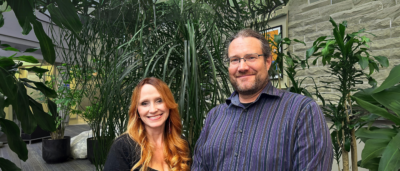
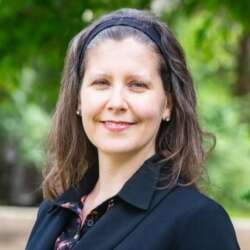
Prof. Shauna Blois shares a moment with her dogs, Brie, left, and Kohl.
Prof. Shauna Blois shares a moment with her dogs, Brie, left, and Kohl. Photo by Martin Schwalbe

The cat was rapidly using up the last of its lives. When the 10-year-old calico arrived at the Ontario Veterinary College, its owners weren't sure whether it could be saved. The animal had lost weight and become lethargic and withdrawn.

“She was not a happy cat,” says Prof. Shauna Blois, Clinical Studies, who saw the patient that day at the OVC Teaching Hospital.

Blois discovered that the cat not only had diabetes but was also producing too much growth hormone because of a tumour in its pituitary gland. Once the cat had been diagnosed and treated, it took a while to nurse the animal back to health, but “she became like a kitten again, back to her normal friendly self.”

It's that kind of happy outcome that makes the late nights and early mornings in the small-animal clinic worthwhile for this recent D.V.Sc. graduate. Since joining the faculty as an internal medicine specialist in the fall, Blois has slipped into regular rotations for periods of up to six weeks at a time. She spends about half of her time in the clinic, with teaching and research taking up the other half.

Pausing between appointments, she ticks off the day's cases referred to OVC by other veterinarians. After she'd scoped a dog with severe diarrhea, there was a cat with pneumonia that required X-rays, then another dog with urinary incontinence. In the afternoon, there was a dog with a blood disorder, followed by a look at whether a tumour might have spread in another dog. Many of her cases involve endocrine disorders, cancer and gastroenterology.

In one memorable recent case, she worked with her colleague Prof. Brigitte Brisson on a 12-year-old golden retriever. A large tumour was blocking a blood vessel, causing fluid to collect. They inserted a stent, a small mesh tube intended to restore blood flow, but the treatment failed. The dog had to be euthanized.

Those cases are frustrating, says Blois, adding that the treatment team routinely reviews every case to see what they might have done differently. With the retriever, “we tried everything we could, but it wasn't good enough.”

She's learned to keep a clinical distance from patients and owners.

“It's important to be objective and not offer options based on emotion,” she says. “It's also important to not get attached to families and patients. We're not here to force our own beliefs or desires on owners but to give information.”

Not every case resolves itself, good or bad. Some provide a bit of mystery. Take that dachshund late in the fall whose abdomen was distended with fluid. They'd worked up tests of the heart, liver and other organs and looked for signs of infection, but everything looked normal.

“Any case without a resolution is frustrating,” says Blois. “They're hiding their diagnosis somehow.”

Her research interest is endocrinology. That often means rooting out a lurking problem, as with that calico cat's diabetes and the underlying growth hormone.

She's also looking at new drug therapies and why they work or produce certain side effects. When and how to prescribe, say, non-steroidal anti-inflammatory drugs for a dog with arthritis?

Sometimes there's a link to human medicine. One anti-inflammatory drug, for instance, has been shown to cause heart problems in people. Blois found no evidence that any similar clotting problem occurs in dogs prescribed this particular class of drugs.

A DVM graduate of the Atlantic Veterinary College, she came to Guelph to do a residency, then went on to complete her D.V.Sc. with Prof. Dana Allen.

A lifelong animal lover, she grew up in dairy farming country around Truro, N.S. She started volunteering at vet clinics as a young teenager.

Currently Blois is teaching in the fourth-year medicine and surgery course that helps students learn to diagnose ailments in dogs and cats.

“It's easy to relate to that excitement and nervousness of being in the clinic for the first time,” she says. “You're out of your comfort zone. It's nice to be able to help them make that transition to being a vet.”

Inevitably, some of her work follows her to her downtown home. She and her husband — Prof. Tom Gibson, Clinical Studies — have two dogs and two cats. Three of the animals came from the teaching hospital with various ailments: a border collie with shoulder problems, a French bulldog that had epilepsy as a pup and a cat with pancreatitis.

Blois and Gibson met during her internship here at Guelph; he's been on faculty for two years as a small-animal surgeon. “We can take care of most patients between us,” she says.

At home, Blois trains for full-distance triathlons (1,500-metre swim, 40-kilometre cycle and 10-km run) with the Guelph Triathlon Club. She's been active for about a decade and normally trains three or four times a week in winter and about six days in the summer.

“I enjoy the training more than the competing,” she says, describing herself as a middle-of-the-pack athlete. “It's a good way after a long day to clear your head.”

TOP