Future Students

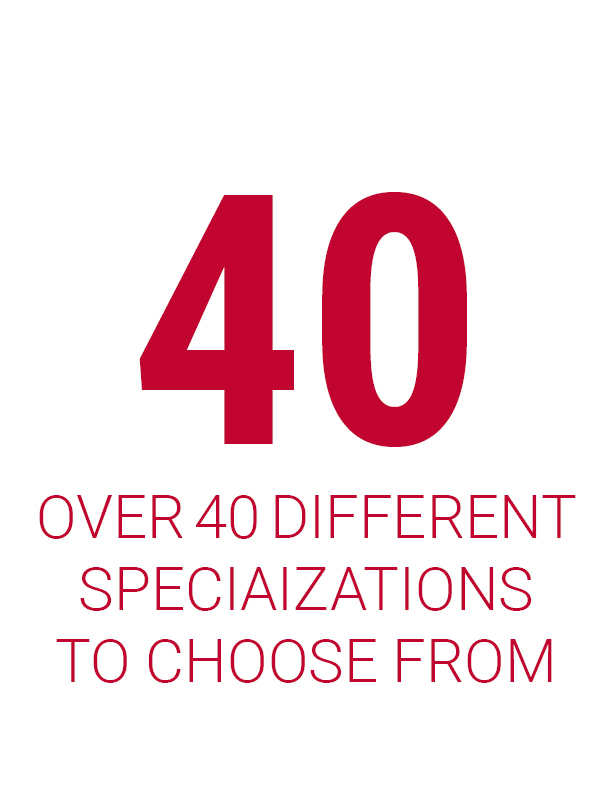
Born from a student and faculty desire for innovative academic work at the undergraduate level, the Bachelor of Arts and Sciences (BAS) program affords inquiring students the opportunity to engage critically in over 50 unique specializations while mediating between their choices with interdisciplinary courses ranging from methods and theory to honours thesis projects. These students enter U of G’s BAS degree intent on a program which combines disciplinary rigour with interdisciplinary focus.

The BAS program was developed from the premise that the humanities, sciences and social sciences offer perspectives that inform and compliment each another. This integrated approach to knowledge and learning is particularly important in addressing the complexities of our contemporary society.

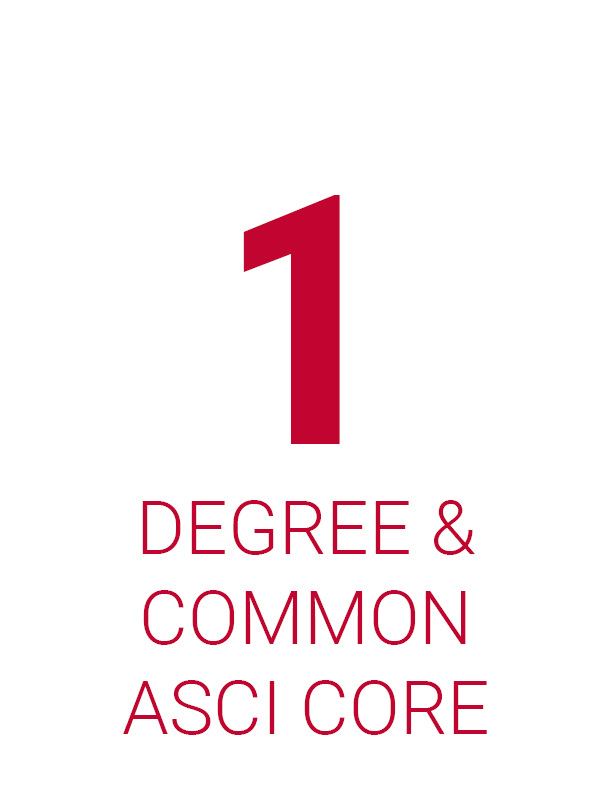
Please refer to the degree structure chart PDF File to see how the BAS Program is designed. The Bachelor of Arts & Sciences program can be divided into 4 main groupings:

Six (6) Interdisciplinary Courses (ASCI)

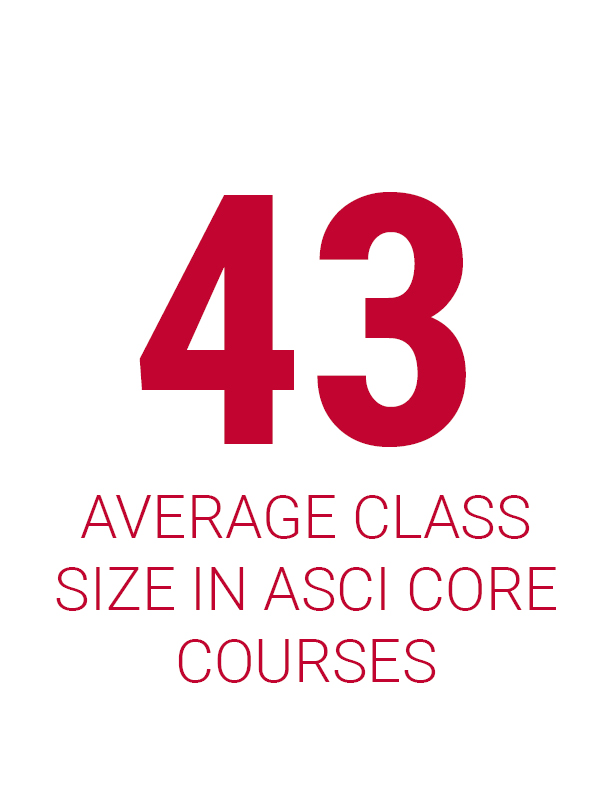
These Arts & Science (ASCI) classes at the core of the program are probably one of the biggest benefits of the program. They are specialized classes that incorporate both the arts and sciences in the curriculum and study where they intersect. In the BAS program, you'll also have a chance to develop your research skills and knowledge in both the arts and sciences. These unique courses aren't only rooted in academics and theories either, they actively study how arts and science are a functioning part of society around us by studying past and current global issues, incorporating service learning through community volunteering and looking at specific case studies. As well, these specialized courses are only available to BAS students, so it's a chance to really get to know all the other students in your program while also getting a chance to meet lots of people outside of your program when taking your other courses. These courses provide a balanced understanding of connections and interplay between broad disciplines, grounding their learning, and are key components to a successful interdisciplinary program.

Learn more about these wonderfully unique courses here.

Top

Core Science and Core Arts/Social Science Courses

BAS students are all required to complete a core of four (4) science courses as well as a core of four (4) Arts/Social Science courses before graduation. This ensures that all BAS students have a solid grounding across the humanities, social sciences and the sciences as true Arts & Science students. These courses also help students determine what minor specializations they may be interested in pursuing in the BAS program.  This is why most students opt to complete their core requirements within their first year.

Top

Minor Specializations

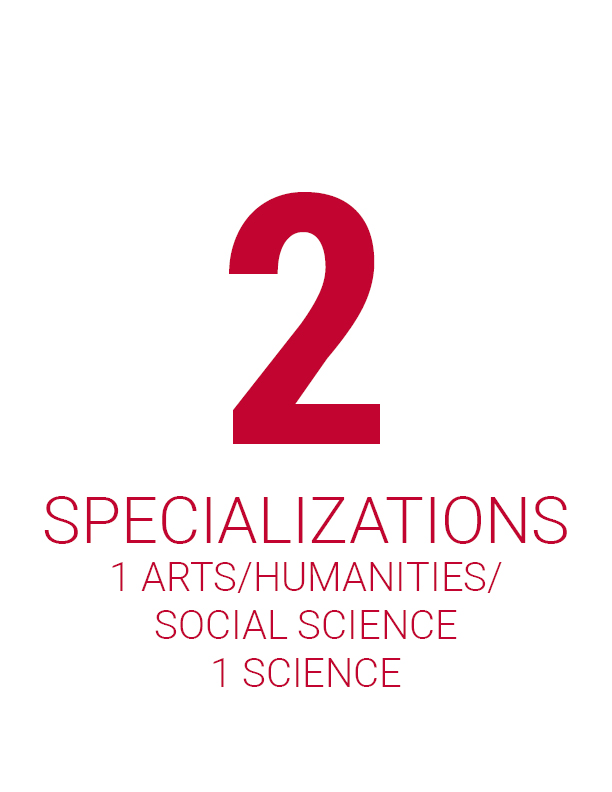
In addition, all BAS students in the program complete two specializations: a minor in the Sciences and a minor in the Arts/Social Sciences. These two specializations can be as closely related or as independent from each other as the student wishes.

Science Minors available to BAS Students include:

Agriculture, Biochemistry, Biology, Biotechnology, Chemistry, Computing & Information Science, Ecology, Functional Foods & Nutraceuticals, Geographic Information Systems (GIS) & Environmental Analysis, Geology, Mathematics, Mathematical Sciences, Microbiology, Molecular Biology and Genetics, Neuroscience, Nutrition & Nutraceutical Sciences, Physics, Plant Sciences, Psychology: Brain & Cognition, Statistics, and Zoology.

Arts and Social Science minors available to BAS students include:

Anthropology, Art History, Business Administration, Classical Studies, Criminal Justice and Public Policy, Economics, English, Ethics in Life Sciences, European Culture and Civilization, Family and Child Studies, French Studies, Geography, German, History, Hispanic Studies, International Development, Italian, Marketing Management, Mathematics, Museum Studies, Music, Philosophy, Political Science, Psychology, Sociology, and Theatre Studies.

Top

Elective Courses

Even within this unique program where BAS students are choosing courses and learning from across many different disciplines, there is still an opportunity for students to take courses purely out of interest. Elective courses allow students to sample different academic opportunities from across campus or to focus their efforts towards a specific specialization.

Elective courses are often used to meet various requirements that the minors may not meet for certain grad school and professional school programs.  Similarly, some students use the electives to take extra courses in one of their given minors to obtain an equivalent to a major. This way when they graduate, though they will still graduate with 2 minors, but their transcript will also reflect that they have taken the appropriate courses for the equivalent to the major.

Lastly, elective courses are most often used by students that wish to travel with exchange programs or study aboard programs.  Elective courses give students the freedom to explore different courses while studying at another institution anywhere in the world. 

*                    *                    *

The Bachelor of Arts & Sciences program is an honours program consisting of 20.00 credits. Most offered courses are 0.50 credits, thus requiring students to take approximately 40 courses to complete this program. These 20.00 credits are spread across the 4 different groupings as mentioned above.  The order that you take the courses in and the length of time it takes you to obtain the 20.00 credits is all up to you.

If you already know what your two minors are going to be and want to pursue them rather than completing the core requirements first, that's up to you.  It just means somewhere along the way, you will eventually need to meet the core requirements.  Similarly, while most students complete the program within 4 years by taking a full course load each Fall and Winter semester for 4 years, there are other ways to complete this degree.  Some students choose to take a reduced course load for many different reasons (ie. Varsity sports, part-time jobs, personal health and time management, etc.), meaning they will take longer than 4 years to complete the degree.  That's okay too!  The point is, this is YOUR degree.  Complete it the way you want to regardless of how others are completing their degrees.

Top

It’s all about YOU

The Bachelor of Arts & Sciences program is centered around YOU, the student. YOU are offered a chance to create your very own unique degree according to their interests, strengths and needs. While there are certainly required courses that all students must take, over 90% of the course structure is actually determined by YOU. There is even an opportunity for you to create and develop your own courses with faculty you choose to work with. This program is about choice; where you are encouraged and empowered to take an active role in your directed learning, development and growth.

Careers & Opportunities

We are often asked: “What can I do with this degree? Could you provide us with examples of career and academic options pursued by graduates from this degree program?”

Students who graduate from BAS are eligible for any of the professional schools (Medical, Vet, Occupational Therapy, Physical Therapy, Teaching, Law, Journalism, MBA, etc). They also have the requirements to pursue graduate education in interdisciplinary programs. Students interested in pursuing a “traditional” graduate education (e.g., MA English) may need to complete more course work to earn the “equivalent” of a major in the subject area of choice.

Students are equally attracted to this degree for what it affords them while in university – the chance to pursue more than one discipline – and for the diverse paths to which it may lead upon graduation. Many plan to seek advanced degrees including MA and MSc programs; others are looking to professional degrees such as medicine, education, law, veterinary medicine; others still are enthusiastic about combining their interest in science and the humanities in careers in journalism.

Two of our fourth year students with unique combinations – minors in Physics and Music – successfully applied to B.Ed programs and both felt the BAS program afforded them the opportunity to explore these seemingly diverse disciplines while also encouraging them to make strong connections between the two. They credit the program for giving them opportunities they may not have thought to explore within a traditional BA or BSc program.

Another student, enrolled in Studio Art and Biology, is now studying medical illustration and yet another is working with a faculty member in OAC’s Herbarium putting her minors, Anthropology and Ecology, into practice through the study of the Aboriginal taxonomy.

Here are some more examples of what some of our graduates are actually pursuing right now:

  • Doctor of Veterinary Medicine (DVM) program at Guelph’s Ontario Veterinary College (OVC)
  • Law degree (Queen's University & McGill University)
  • Medical School (University of Ottawa, McMaster University, SABA Medical School)
  • Chiropractic College
  • Employed in the Pharmaceutical Industry as Quality Assurance Manager
  • Employed by the Ontario Provincial Government
  • College of Naturopathic Medicine
  • Master’s (MA) program in Museum Studies
  • Program Manager, Greater Boys and Girls Club of Vancouver
  • PhD program in the History and Philosophy of Science
  • Master’s (MA) program in Environmental Studies (UK)
  • Bachelor of Education (BEd) degrees completed and teaching Biology, English, & Drama
  • Enrolled in BEd programs to teach: Art and Biology, Physics and Music, Physics and history, Biology and History, French and Biology, Drama and Biology
  • Communications for Canadian Sports Hall of Fame
  • Graduate diploma in Communication of Science
  • Master’s in Public Health Policy and Administration (Dalhousie) (minors in Nutrition and Political Science)
  • Master’s in Toxicology and Pharmacology (U. of Toronto) (minors in Biomed and Political Science)
  • Master’s of Landscape Architecture (U. of Toronto) (minors in Art History and Mathematics)
  • Graduate Diploma program in Forest Ecology (Niagara College, US)
  • Intern with the Ontario Provincial Government
  • Taking a year off to travel

Students not interested in pursuing further education have the same broad range of opportunities open to them as other graduates, depending on their own interests and skills.


Top