Art History
BACHELOR OF ARTS, HONS
(Major and Minor Programs)
Art history is the study of art and architecture as manifestations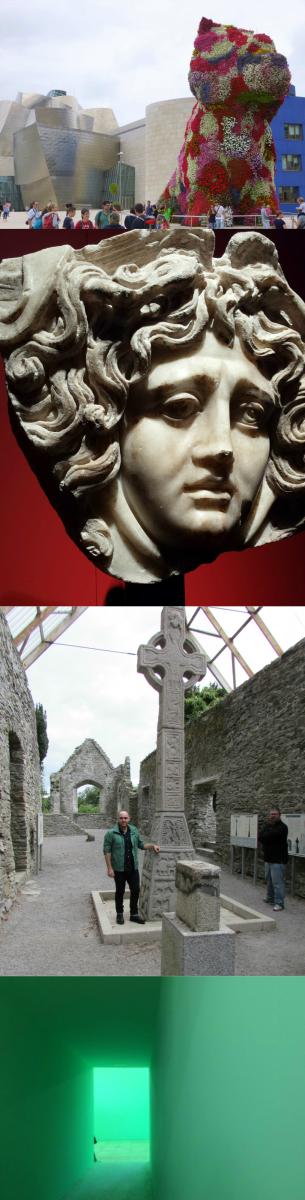 of human creativity and as valuable forms of historical documentation. Art history students learn to appreciate the fundamental and varied roles the visual arts play in the lives of human beings, as they become familiar with major works in the Western and non-Western traditions. Toward this end, students learn how works of art embody, but also condition and control cultural, economic, social, religious, political, racial, and gender dynamics. The Art History program covers historical perspectives on the visual arts, study of the methodologies of art history and critical theory, and consideration of contemporary issues in the practice and display of art. In this regard we encourage broad, interdisciplinary exploration of artistic, aesthetic, and visual traditions in their social, historical, and cross-cultural contexts. We respond to the vision of a learner-centred university by engaging in innovative teaching, and providing students with opportunities to travel to museums, galleries, and sites and to discuss their work in a supportive and challenging environment.
Students will take courses dealing with a variety of art-related topics from a range of historical eras, including the Medieval, Early Modern, Modern, and Contemporary periods. There are also opportunities for students to pursue Individual and Experiential Learning components and participate in our annual symposium and publication ARTHAttack!
Unique features of the programs: Paid research Assistantships are available so that our graduates can demonstrate professional experience in primary and secondary research and knowledge creation and dissemination. Small class sizes for premium interaction with faculty, a dynamic annual Speakers Series, and collaborative events with local art and historical collections.
Our graduates use their knowledge to pursue careers in:
- Advanced Graduate Studies in Art History and Visual Culture
- Cultural Resource Management
- Heritage Conservation
- Information Science
- Education
- Marketing and the Art Market
- Publishing
- Development
- Museums and Galleries
Art History Program Learning Outcomes
First Year:
- Recognize and understand major monuments, artists, methods and theories, and assess the qualities of works of art and architecture in their historical and cultural settings.
- Describe works objectively and interpret works of art from a range of historical periods.
- Demonstrate an effective knowledge of visual vocabulary appropriate for careers in the visual arts, architecture, and visual studies.
Second Year:
- Evaluate the aesthetic, historical, social, and ethical significance of the visual realm that is our present environment and the heritage of many cultures.
- Construct plausible methods of analysis in the field of art history and visual culture.
- Develop a broader and deeper understanding of how visual images inflect and change our understanding of historical events.
Third and Fourth Years:
- Identify the major debates that have shaped the discipline of art history and visual culture and situate methodologies and approaches within or without these historiographical contexts.
- Locate, interpret and analyze primary and secondary sources relevant to research questions.
- Develop and implement the critical skills necessary for complex visual analysis.
- Communicate ideas using visual, oral and written arguments and presentation skills.
Students interested in the study of Art History in conjunction with other programs are recommended to look at the Minor in Museum Studies. Please see the Undergraduate Calendar for course listings and details about the Major and Minor programs.
Faculty Advisor - Art History
Susan Douglas
sdouglas@uoguelph.ca
JHNH 111
519-824-4120 x53024
Faculty Advisors can:
-
provide information on the specialization, and can assist you in planning for completing the specialization course requirements.
-
approve or deny substitutions for courses required for the specialization. A signature is also required from a BA Academic Counsellor, but the faculty advisor must be approached first to assess the course you want to substitute, and sign for approval.
-
can advise on about careers and further education in the discipline, or refer you to another faculty member to discuss career direction and the graduate school application process, etc.
ART HISTORY
(HONOURS PROGRAM)
https://www.uoguelph.ca/registrar/calendars/undergraduate/current/c10/c1...
MAJOR IN ART HISTORY
Core Requirements
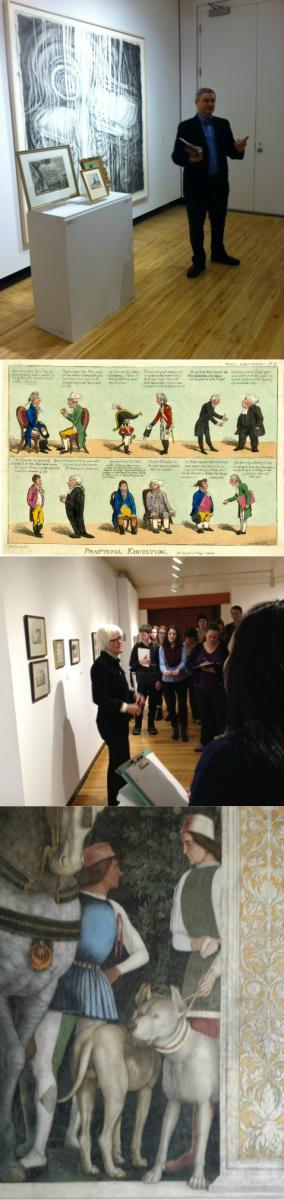 All students are required to complete the following core courses [1.00 credits]
A minimum of 9.00 credits is required, including:
- ARTH*1510 [0.50] Art Historical Studies I
- ARTH*1520 [0.50] Art Historical Studies II
- ARTH*2220 [0.50] The Visual Arts Today
- ARTH*2480 [0.50] Introduction to Art Theory and Criticism
- ARTH*2540 [0.50] Medieval Art
- ARTH*2550 [0.50] The Italian Renaissance
- ARTH*2600 [0.50] Early Modern Art
1.50 credits from:
- ARTH*2050 [0.50] Modern Latin American Art
- ARTH*2060 [0.50] Aboriginal Arts in the Americas
- ARTH*2070 [0.50] Art of the USA
- ARTH*2120 [0.50] Introduction to Museology
- ARTH*2150 [0.50] Art and Archaeology of Greece
- ARTH*2280 [0.50] Modern Architecture
- ARTH*2290 [0.50] History of Photographic Media
- ARTH*2580 [0.50] Late Modern Art: 1900-1950
- ARTH*2950 [0.50] Baroque Art
2.00 credits from:
- ARTH*3010 [0.50] Contemporary Canadian Art
- ARTH*3060 [0.50] Public Art
- ARTH*3150 [0.50] Space: Roman Art and Urbanism
- ARTH*3200 [0.50] Colour: Practice & Meanings in Western Art
- ARTH*3210 [0.50] Critical Issues in Art History
- ARTH*3220 [0.50] Nationalism & Identity in Art
- ARTH*3320 [0.50] Lives: Aspects of Western Art
- ARTH*3330 [0.50] Display: Visual Culture in Western European Art
- ARTH*3340 [0.50] Studies in Renaissance and Baroque Art
- ARTH*3520 [0.50] Idea: Art Since 1950
- ARTH*3600 [0.50] Topics in the Long Eighteenth Century
- ARTH*3620 [0.50] Museum Studies
- ARTH*3780 [0.50] Gender and Art
- EURO*3150 [0.50] Topics in European Film
2.00 credits from 4000 level seminar courses:
- ARTH*4310 [1.00] Topics in Art & Visual Culture I
- ARTH*4320 [1.00] Topics in Art & Visual Culture II
- ARTH*4330 [1.00] Topics in Art & Visual Culture III
- ARTH*4340 [1.00] Topics in Art & Visual Culture IV
- ARTH*4350 [1.00] Topics in Art & Visual Culture V

Students may count either ARTH*4600 “Individual Study: Art History” or ARTH*4800 “Experiential Learning” towards their major. Neither of these courses contribute to the requirement of 2.00 credits from seminar courses.
MINOR IN ART HISTORY (HONOURS PROGRAM)
A minimum of 5.00 credits is required, including:
and 4.00 additional credits in Art History including at least 2.00 credits at the 3000 or 4000 level.
MUSEUM STUDIES
The Minor program in Museum Studies offers an introduction to museum culture from both theoretical and practical perspectives. Courses in the program cover the history of museums, examination of assumptions that have guided the collecting and classifying of visual culture, and consideration of how these institutions serve the needs of national and group identity construction.
This program of study is designed as a complement to a significant number of Major specializations, suitable for any student wishing to broaden their knowledge beyond their Major area of study.
MINOR (HONOURS PROGRAM)
(May not be taken in combination with Art History Honours Major).
A minimum of 5.00 credits is required, including:
- ARTH*1510 [0.50] Art Historical Studies I
- ARTH*1520 [0.50] Art Historical Studies II
- ARTH*2120 [0.50] Introduction to Museology
- ARTH*2480 [0.50] Introduction to Art Theory and Criticism
- ARTH*3330 [0.50] Display: Visual Culture in Western Europe
- ARTH*3620 [0.50] Museum Studies
2.00 additional credits in Art History