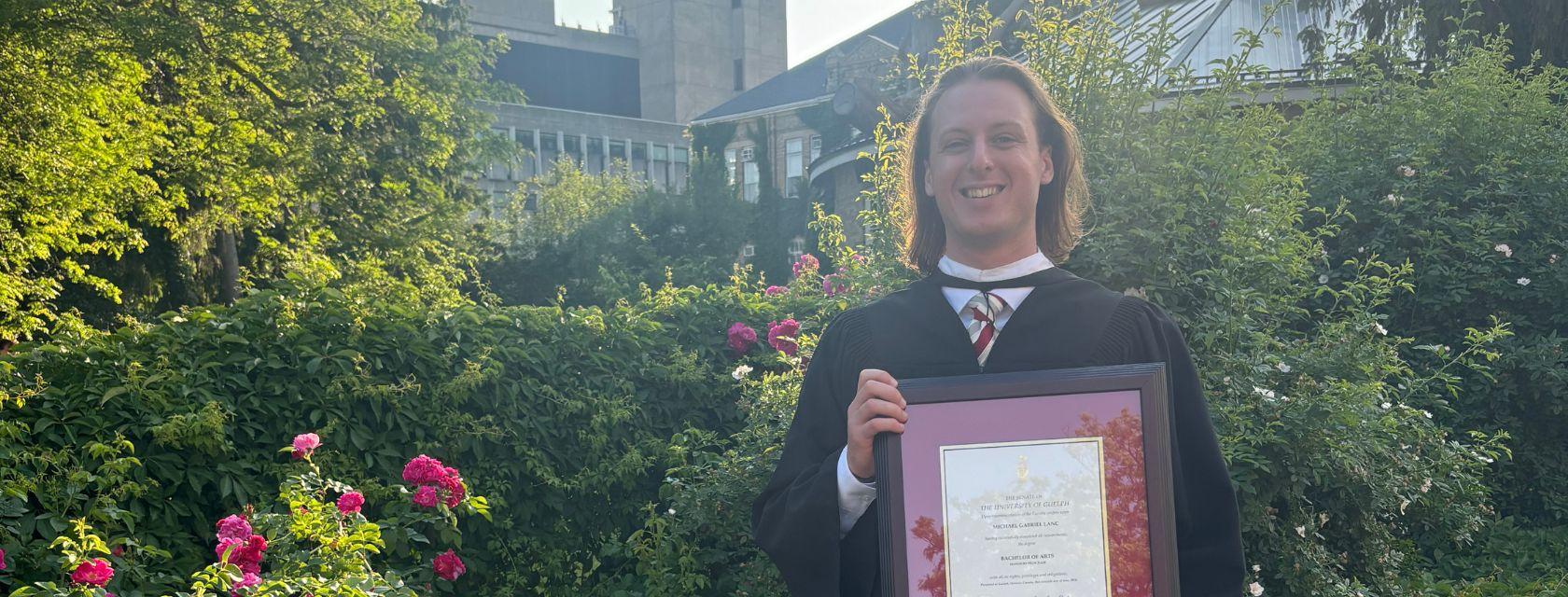
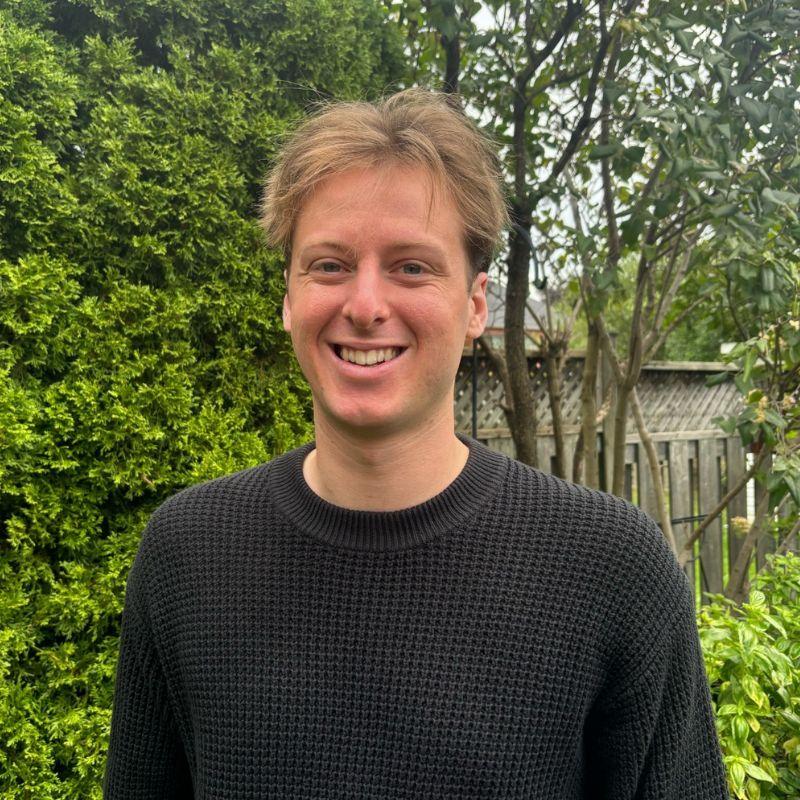
Interview with Michael Lanc
Tell us about yourself and why you chose to pursue a double major in Political Science and Philosophy at the University of Guelph?
When I first toured the University of Guelph as a high schooler, I knew immediately that it was where I needed to be. The warm campus atmosphere really made it feel like home. I recall touring several other universities at the time, and none of them made me feel quite like Guelph did.
My path toward studying philosophy is a bit of a funny one. I started my BA majoring in political science, but after taking several electives in philosophy, I decided to make it a minor. Then, after a transformative study abroad experience in the UK, I decided to take up philosophy as a second major. I found that philosophy was an excellent channel for my love of debate, and it complemented my studies in political science quite well; while political science taught me about how we do govern ourselves, philosophy gave me the tools to ask questions about how we should govern ourselves.
What did you like most about your program? Is there anything in particular about the courses or professors that stands out to you?
I really appreciated that my professors in philosophy always made time for discussion-based learning, allowing me and my fellow students to discuss (and often debate!) exciting philosophical issues. It made me much more comfortable speaking publicly, allowed me to learn from my peers, and helped me make some great friends!
I also appreciated how accessible my professors made themselves through office hours and by email. They were always quick to assist when I had trouble, and they were a vital resource in helping me along my academic journey. As part of my undergraduate thesis, I was also able to work one-on-one with a faculty member during my final year, which helped me mature as an academic researcher.
Did you do co-op? If yes, tell us a bit about your co-op job and your experience.
I had two co-op placements as part of my studies in political science, but I found the critical thinking and analysis I learned through studying philosophy directly relevant to my work. My first placement was in the City of Guelph’s Department of Intergovernmental Relations, where I was able to support the City’s stakeholder relationship-building and communicate with provincial policymakers through the grant-writing process. My second placement was at the Live Work Well Research Centre, hosted at the University of Guelph, where I worked as a research assistant on the Engendering Disability-Inclusive Development, an international partnership pursuing rights and justice of and with diverse women and girls with disabilities. I’d highly encourage philosophy students to look into work study and internship opportunities throughout their degree to apply their education to make a real-world impact!
Where are you currently working and what is your role?
Currently, I am completing my MA in Philosophy at the University of Toronto. Beyond my studies, I work as a Teaching Assistant in the department, supporting course lecture and tutorial delivery. I intend to start a Master of Public Policy in September 2026, combining my theoretical interests in philosophy with my practical interests in political science.
How did your degree and time at the University of Guelph help get you to where you are today? How do the skills and education you gained help with your current work?
My time at the University of Guelph was integral to getting me where I am today. Admissions to my current program are extremely competitive, but the strength of Guelph’s Department of Philosophy enabled me to submit a strong application. The courses I took during my undergrad were challenging and the feedback I received on assignments from faculty was detailed, both of which prepared me to study at the postgraduate level. My professors in Guelph were also extremely supportive of my goals, which gave me the confidence to apply in the first place. I’m so grateful for their mentorship.
As an aside, I’m still in touch with some of my professors from my time at Guelph! They continue to be sources of support as I continue my academic journey, and I think this speaks to how dedicated the faculty at Guelph are to the success of their students – even those who have graduated!
What advice would you give someone considering a double major in Political Science and Philosophy or applying to the University of Guelph?
To someone considering studying philosophy, I would encourage them to consider taking on extracurricular commitments during their degree. Studying philosophy undoubtedly makes for sharp, creative thinkers, however employers who are not familiar with the field may not be aware why it is so valuable. Having practical experience on a resume makes demonstrating this much easier. This practical experience can be wide-ranging: it can be combining philosophy with another major (like political science, economics, or computer science), looking into co-op or internship opportunities, or joining a club on campus (I would recommend Guelph Model United Nations!).
I’d also encourage future Guelph students to look into the university’s study abroad opportunities and undergraduate thesis options as additional ways to make the most of their university experience!
Bonus Questions