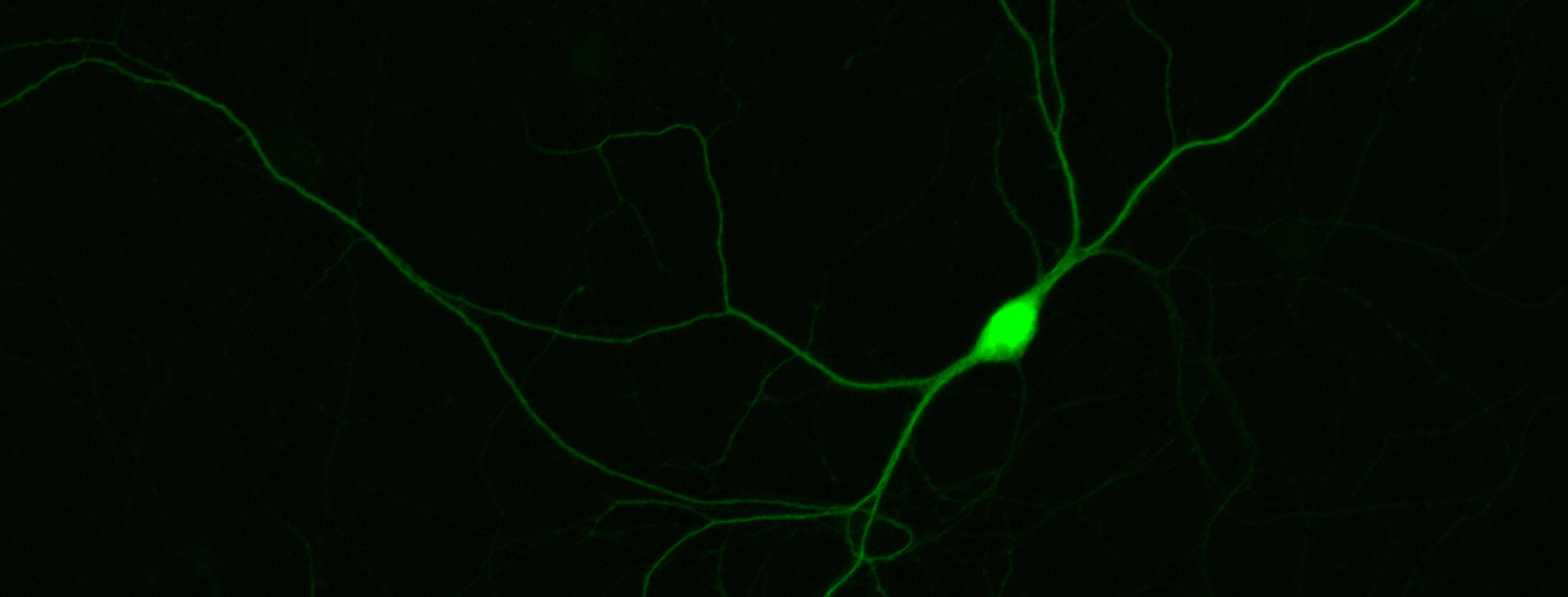
Collaborative Specialization in Neuroscience
The Collaborative Specialization in Neuroscience offers the opportunity for master’s and PhD students to combine their departmental degree program with multidisciplinary exposure to the field of neuroscience.
The specialization fosters strong collaborative efforts between faculty and students working across various levels of analysis, including molecular, cellular, systems, and behavioural research, providing students with the best possible foundation for academic careers in neuroscience and related areas, as well as specialized knowledge for careers in human and veterinary medicine and biotechnology, among other paths.
Graduate studies at the University of Guelph are supported by internationally renowned faculty engaged in cutting-edge research and practice. You will have an opportunity to work closely with faculty members who are committed to the development of their students and will empower you to think critically, explore new realms of knowledge, and apply what you have learned in order to develop the skills you need to be competitive in your chosen discipline.
Participating Schools and Departments
The Collaborative Specialization in Neuroscience is available to master’s and PhD students studying in the following departments:
- Animal Biosciences
- Biomedical Sciences
- Clinical Studies
- Human Health Sciences
- Integrative Biology
- Molecular & Cellular Biology
- Pathobiology
- Philosophy (PhD only)
- Population Medicine
- Psychology
- Theatre, English, and Creative Writing
Neuroscience is supported by faculty and researchers across campus. Learn more about Neuroscience at Guelph.
Program Details
Doctoral and master’s (thesis or coursework and major research paper) students wishing to undertake graduate studies with an emphasis on neuroscience will be admitted by a participating department and will register in both the participating department and in the collaborative specialization.
Master's program
In addition to coursework in their respective departments, students in a master’s program must complete NEUR*6000: Principles of Neuroscience, as well as registering for NEUR*6100: Seminar in Neuroscience every Fall and Winter semester that they are in the program.
PhD program
If a student enters the Collaborative PhD Specialization in Neuroscience at the doctoral level, in addition to coursework in their respective departments, they must complete NEUR*6000: Principles of Neuroscience or show evidence of course equivalence in prior training.
Students must be engaged in neuroscience dissertation research. Doctoral students must also enroll in NEUR*6100: Seminar in Neuroscience (0.0 credit) every Fall and Winter semester that they are in the program.
Hear from Graduates

During my undergraduate degree at the University of Guelph, I was able to join the MCB department in my third year as a work study student. It was my first exposure to an academic research lab and since then, I never wanted to leave! The department is filled with amazing faculty and other students who create an amazing workspace for conducting research. My advisor, Dr. Jasmin Lalonde, was an excellent mentor. His expertise in neuroscience and molecular biology allowed me to continuously grow as a researcher. He was always available to help me troubleshoot my experiments and gave me advice and support. His excellent teaching skills helped me continue to mature into a successful researcher over the course of my graduate studies.

The University of Guelph is a renowned university and, as a former graduate student at U of G, it helped me build myself for the future. The graduate courses offered in the Molecular and Cellular Biology department are high-calibre and prepare students really well for the outside world. Also, you get to meet and benefit from world-known scientists who have made tremendous contributions to their areas of research.

The inclusive, open environment of the University of Guelph drew me to the university, while the many opportunities for research collaborations, teaching experience, and ability to travel to conferences and meetings kept me here. While generating data and contributing new knowledge to improve our understanding of biology and disease is an essential part of graduate studies, my department understands that there is more to the graduate student experience.

Guelph had the research I was interested in and also a strong sense of familiarity, as I did my undergraduate degree here as well. At Guelph, I learned to be a researcher, a teacher, a mentor ... and perhaps forever a student! I believe all of these are essential skills going into academia.
Admissions
Prospective students can apply at the time of their application to the University of Guelph. The application process has two stages: first, application to the primary program of interest, identifying interest in the collaborative specialization as a secondary focus. If the student is admitted to the primary program, the second stage is then admission to the collaborative specialization. Students may add the collaborative specialization at any time during their degree (except for the last semester before graduation), as long as they complete the program requirements via a “Study Option or Degree Program Transfer” form, which they can request from the Graduate Program Assistant in their home department.
Contact Us
Dr. Jasmin Lalonde, Director and Graduate Program Coordinator
jlalon07@uoguelph.ca
519-824-4120 x54706
Graduate Program Assistant
cbsmcb@uoguelph.ca
519-824-4120 x56246