Marcus Garvie
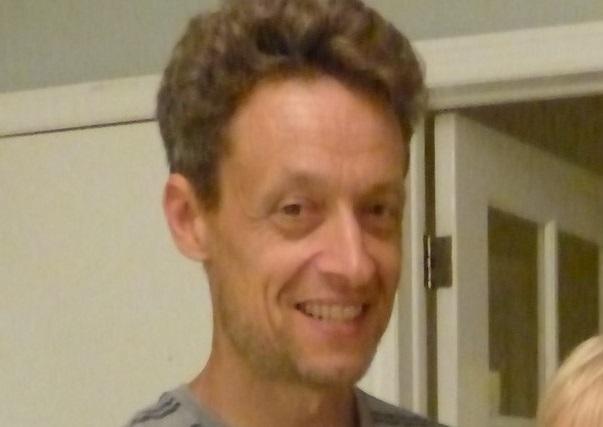
Associate Professor, Mathematics
College of Computational, Mathematical and Physical Sciences, Department of Mathematics & Statistics
Current research interests
Over the last few years my collaborator, John Burkardt (Department of Mathematics, University of Pittsburgh), and I have been engaged in research in the area of computational geometry. We focus on linear programming methods for tiling finite regions of the plane using polyominoes, and also the application of colouring arguments to tiling problems. We are also looking at more general tiling problems, for example the Eternity puzzle, see
https://en.wikipedia.org/wiki/Eternity_puzzle.
Most of my research projects have MATLAB repositories associated with them, and published at Zenodo.org with DOI's (Digital Object Identifiers). See the links given above.
Previous research interests and training
My doctoral training was in the rigorous numerical analysis and mathematical analysis of parabolic partial differential equations using the finite element method. Most of my experience has been in the area of the numerics of reaction-diffusion equations using the standard Galerkin finite element method. The main application area is mathematical biology, with a focus on spatially extended predator-prey interactions in ecology. I have also worked in optimal control theory and studied diffusion-induced instability (Turing theory). Most of my research in these areas was conducted with Catalin Trenchea (Department of Mathematics, University of Pittsburgh).
Teaching interests
In addition to my research skills I have extensive teaching experience gained from secondary school level positions, teaching at the community college level, and also from the post of Mathematics Instructor at Arizona State University in the USA. I fully funded my PhD studies through teaching and in the UK I am a qualified teacher at the secondary school level. I enjoy teaching at all levels and at Guelph I currently teach large classes at the first year level in Business Mathematics and Linear Algebra. I have also taught a large class (of mainly Engineers) at the 2nd year level in Numerical Methods. I have put a lot of effort into creating well-written workbooks for all my courses, so that my classes are textbook-independent. I am also excited about the prospect of making my classes relevant to the real world, for example, by including applications and computer examples.
Publications
Published:
Garvie, Marcus R.; Burkardt, John;
A generalized colouring method for a parallelizable integer linear programming approach to polyomino tiling. Journal of Computational Science 93 (2026), 102734
https://www.sciencedirect.com/science/article/pii/S187775032500211X
Garvie, Marcus R.;
Counting the Number of Squares of Each Colour in Cyclically Coloured Rectangular Grids. Mathematics 13 (2025), no. 6: 1013, 1-20.
https://doi.org/10.3390/math13061013
Garvie, Marcus R.;
Symmetry-Based Enumeration of Polyominoes on C-Coloured Checkerboards. Symmetry 17 (2025), no. 3: 436, 1-22.
https://doi.org/10.3390/sym17030436
Burkardt, John; Garvie, Marcus R.;
An Integer Linear Programming Approach to Solving the Eternity Puzzle. Theoretical Computer Science 975 (2023), 114138.
https://doi.org/10.1016/j.tcs.2023.114138
Garvie, Marcus R.; Burkardt, John;
A Parallelizable Integer Linear Programming Approach for Tiling Finite Regions of the Plane with Polyominoes. Algorithms 15 (2022), no. 5: 164, 1-41.
https://doi.org/10.3390/a15050164
Garvie, Marcus R.; Burkardt, John;
A new algorithm based on colouring arguments for identifying
impossible polyomino tiling problems. Algorithms 15 (2022), no. 2: 65, 1-21.
https://doi.org/10.3390/a15020065
Garvie, Marcus R.; Burkardt, John
A new mathematical model for tiling finite regions of the plane with polyominoes.
Contrib. Discrete Math. 15 (2020), no. 2, 95–131.
https://doi.org/10.11575/cdm.v15i2.62866
Diele, Fasma; Garvie, Marcus; Trenchea, Catalin
Numerical analysis of a first-order in time implicit-symplectic scheme for predator–prey systems. Comput. Math. Appl. 74 (2017), no. 5, 948–961.
https://doi.org/10.1016/j.camwa.2017.04.030
Garvie, Marcus R.; Morgan, Jeff; Sharma, Vandana
Finite element approximation of a spatially structured metapopulation PDE model.
Comput. Math. Appl. 74 (2017), no. 5, 934–947.
https://doi.org/10.1016/j.camwa.2016.12.022
Garvie, Marcus R.; Burkardt, John; Morgan, Jeff
Simple finite element methods for approximating predator-prey dynamics in two dimensions using Matlab. Bull. Math. Biol. 77 (2015), no. 3, 548–578.
https://doi.org/10.1007/s11538-015-0062-z
Garvie, Marcus R.; Trenchea, Catalin
A three level finite element approximation of a pattern formation model in developmental biology. Numer. Math. 127 (2014), no. 3, 397–422.
https://doi.org/10.1007/s00211-013-0591-z
Garvie, Marcus R.; Trenchea, Catalin
Identification of space-time distributed parameters in the Gierer-Meinhardt reaction-diffusion system. SIAM J. Appl. Math. 74 (2014), no. 1, 147–166.
https://doi.org/10.1137/120885784
Garvie, Marcus R.; Trenchea, C.
Spatiotemporal dynamics of two generic predator-prey models.
J. Biol. Dyn. 4 (2010), no. 6, 559–570.
https://doi.org/10.1080/17513750903484321
Schwalb, Astrid Nadine; Garvie, Marcus R.; Ackerman, Josef Daniel
Dispersion of freshwater mussel larvae in a lowland river.
Limnol. Oceanogr. 55 (2010), no. 2, 628-638.
https://doi.org/10.4319/lo.2010.55.2.0628
Garvie, Marcus R.; Maini, Philip K.; Trenchea, Catalin
An efficient and robust numerical algorithm for estimating parameters in Turing systems.
J. Comput. Phys. 229 (2010), no. 19, 7058–7071.
https://doi.org/10.1016/j.jcp.2010.05.040
Garvie, Marcus R.; Trenchea, Catalin
Finite element approximation of spatially extended predator-prey interactions with the Holling type II functional response. Numer. Math. 107 (2007), no. 4, 641–667.
https://doi.org/10.1007/s00211-007-0106-x
Garvie, Marcus R.; Trenchea, Catalin
Optimal control of a nutrient-phytoplankton-zooplankton-fish system.
SIAM J. Control Optim. 46 (2007), no. 3, 775–791.
https://doi.org/10.1137/050645415
Garvie, Marcus R.
Finite-difference schemes for reaction-diffusion equations modeling predator-prey interactions in MATLAB. Bull. Math. Biol. 69 (2007), no. 3, 931–956.
https://doi.org/10.1007/s11538-006-9062-3
Garvie, Marcus R.; Blowey, James F.
A reaction-diffusion system of λ−ω type. II. Numerical analysis.
European J. Appl. Math. 16 (2005), no. 5, 621–646.
https://doi.org/10.1017/S095679250500639X
Blowey, James F.; Garvie, Marcus R.
A reaction-diffusion system of λ−ω type. I. Mathematical analysis. European J. Appl. Math. 16 (2005), no. 1, 1–19.
Interests
- Computational geometry
- Tiling theory
- Polyominoes
- Linear Programming
- MATLAB, CPLEX, Gurobi
- Mathematical and numerical analysis
- Mathematical biology/ecology
- Optimal control theory
- Turing theory
Education
B.Sc. in Mathematics (University of Sussex), 1989.
M.Sc. in Ecology (The University of Wales, Bangor), 1991.
Postgraduate Certificate in Education (Keele University), 1993.
M.Sc. in The Numerical Solution of Differential Equations (University of Reading), 1998.
Ph.D. in Applied Mathematics (University of Durham), 2003.