
Master of Medical Foundations
Degree
- MMF (Master of Medical Foundations)
Program Type
- Coursework
Delivery
- On-campus
Entry Terms & Application Deadlines
Domestic:
- Summer (May): March 1 Program starts in June
International:
- Summer (May): February 1 Program starts in June
Duration
- Full Time: 12 months
Launch your career in medicine and the allied health professions.
The Master of Medical Foundations (MMF) is an 11-month, course-based graduate program providing both theoretical and practical training in human anatomy, multisystem physiology, and disease and immunology, with a focus on the role of lifestyle medicine and social dimensions of health and wellbeing.
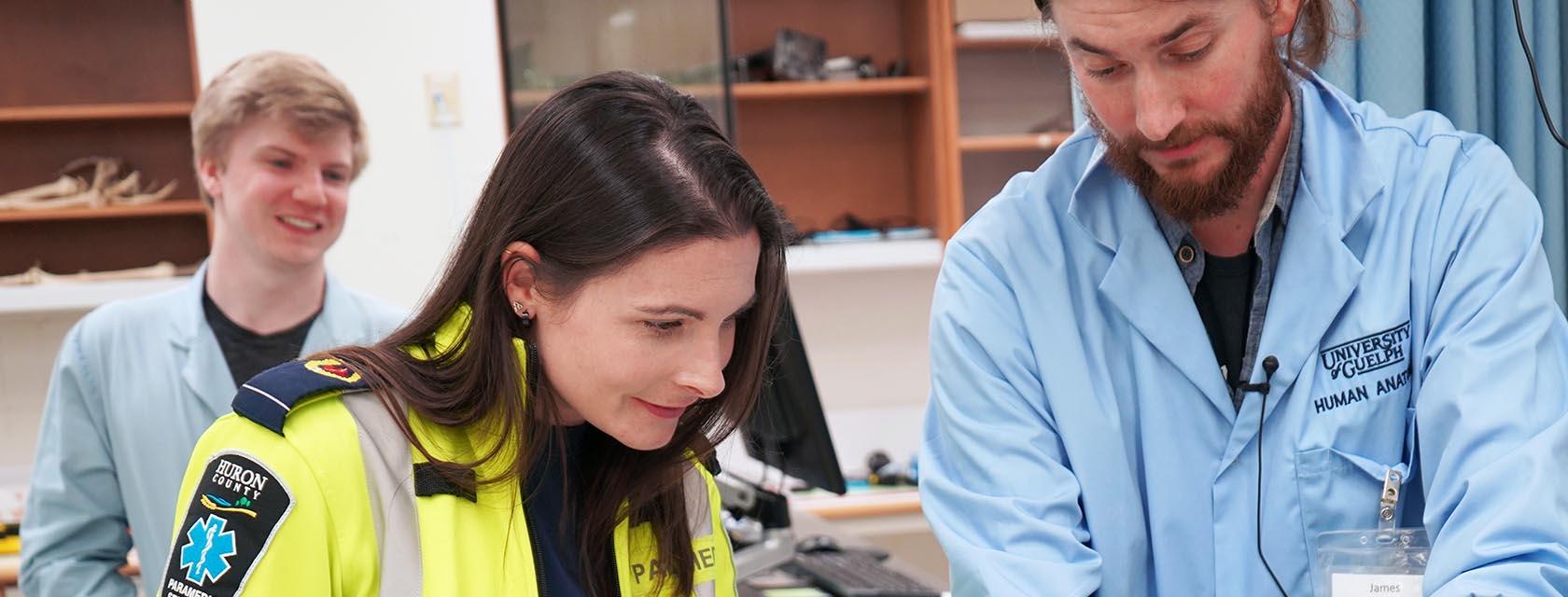
The MMF will provide you with unique hands-on learning experiences working with human body donors in the on-campus Human Anatomy Laboratory, complemented by interactive seminars and applied learning in physiology and immunology. You'll engage in problem-based learning, including through clinical case studies, simulations, and evidence-based research.
The program builds strong scientific and technical skills, while also providing a deep understanding of the social, economic, cultural and behavioural factors impacting human health. Lifestyle medicine and the social determinants of health are integrated throughout the MMF program, equipping graduates to take a holistic, compassionate, and human-centred approach into their future careers.
Inspired by Medical School Curriculum
The Master of Medical Foundations explores human health as a whole, integrating anatomy and physiology to understand how body structure and function interact in both health and disease. You'll delve into the cellular and molecular mechanisms of disease and participate in problem-based learning mimicking clinical scenarios.
Hands-on Anatomy Training
Through prosections, small-group and inquiry-based learning, you’ll learn directly from human body donors about anatomical structures, from the skeleton to the central nervous system, and apply your knowledge to clinical scenarios of injury, aging and disease.
Prepare for Your Future
The Master of Medical Foundation provides the knowledge and technical skills to either launch your career or pursue further studies through professional and graduate programs. With career-focused opportunities, including optional MCAT and allied health professional school application and interview preparation, you’ll have the confidence to pursue your academic or professional goals.

Degree Details
The Master of Medical Foundations is a three-semester (11-month) hands-on, course-based master’s program. Classes begin every year at the start of June and run until the following April.
In the summer semester, students complete two courses focused on human anatomy and physiology (2.0 credits total). In the fall, students study mechanisms of disease (1.0 credit). In the winter, students focus on lifestyle medicine, and infection and immunity (1.0 credit).
Course Descriptions
- Top 150 in the World
- for Life Sciences (Times Higher Education 2026)
- 2nd for Research Impact & Volume
- Among Mid-Sized Universities in Canada (Maclean’s 2027)
- Top 20% in the World
- For Biological Sciences (QS Top Universities 2026)
- Top 200 in the World
- for Anatomy and Physiology (QS World University Rankings by Subject 2026)

Department of Molecular and Cellular Biology
More than 40 faculty members in the Department of Molecular and Cellular Biology, part of the College of Biological Science, direct multidisciplinary research programs that address novel biological questions on molecular and cellular scales. Research in the department spans a range of important eukaryotic and prokaryotic systems, and addresses fundamental and applied research problems. Faculty strengths include biochemistry, cell biology, immunology, microbiology, molecular biology and genetics, plant biology, neuroscience, and vaccinology.

Department of Human Health Sciences
The Department of Human Health Sciences, part of the College of Biological Science, has more than 25 faculty members specializing in a variety of research areas. These efforts are focused on understanding the basic underlying biological aspects of health, at the level of the individual, not community or populations. Research efforts are underway to better understand aging, neurological/sensory disorders, osteoarthritis, and chronic diseases such as cancer, cardiovascular disease, obesity, and type II diabetes, among many other topics.

Career Paths
The Master of Medical Foundation provides a distinct advantage to prospective medical students, as well as training for a wide variety of careers in the allied health professions, pharmaceuticals, medical equipment development and sales, and medical insurance, among others. The program also supports applications to other professional schools, including dentistry and optometry, or advanced studies in the biomedical and health science fields.
MMF graduates may find careers as:
- Medical doctors
- Biotechnologists
- Dentists
- Epidemiologists
- Laboratory technologists
- Occupational therapist
- Optometrists
- Outreach workers
- Pharmaceutical salespeople
- Physiotherapists
- Physician assistants
- Research technicians
Hear from MMF Graduates

The MMF program has been one of the most rewarding experiences of my academic journey. What makes it unique is the way it brings learning to life, allowing concepts from different disciplines to come together in meaningful and unexpected ways. There were countless moments when content suddenly clicked, transforming abstract knowledge into genuine understanding. The hands-on dissections made learning feel tangible and brought the material beyond the classroom, with every week offering a new perspective and a greater appreciation for the complexity of the human body. Just as memorable, though, were the people. The strong sense of community fostered an environment where curiosity, collaboration, and support came naturally, making even the most challenging moments enjoyable.

The MMF program has been a wonderful experience for me. The profs are super friendly and supportive of our learning, and despite the high workload, I have had a total blast! Having the opportunity to integrate the content we have learned through a clinical lens during our ICAP sessions and on our donors has been nothing short of transformative. The anatomy lab is a definite highlight. With aspirations for a future career in healthcare, I believe this program has done an amazing job providing me with a healthy foundation of knowledge to succeed.
Meet the MMF Program Director
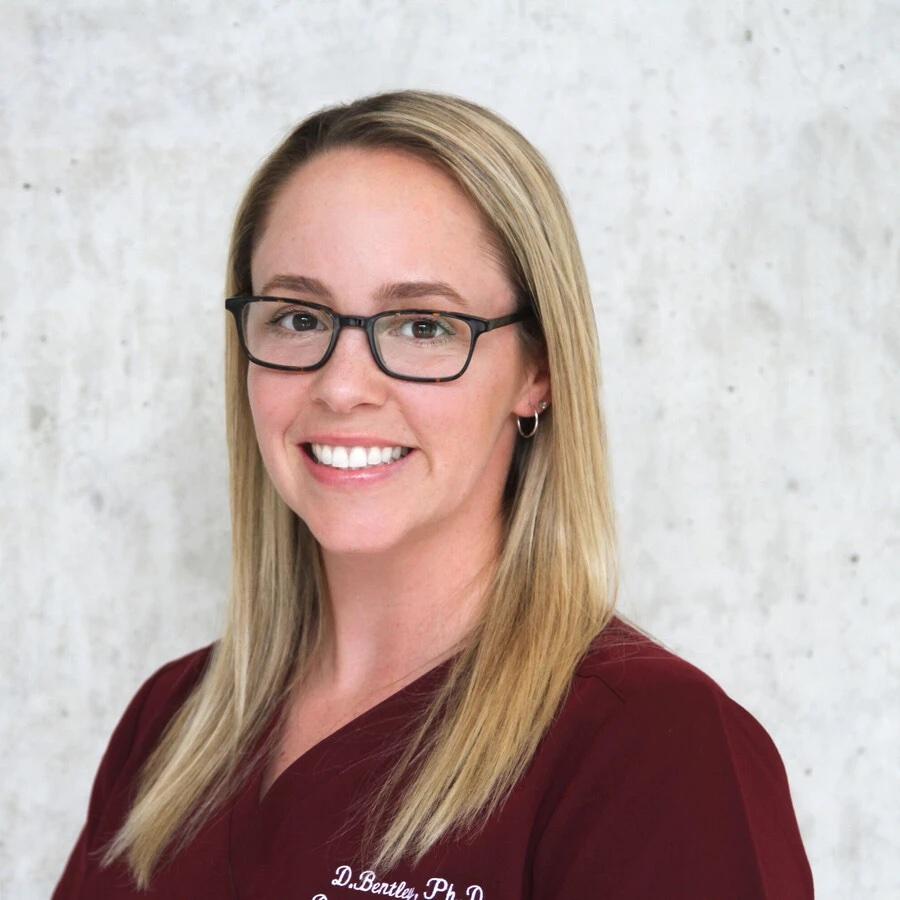
Dr. Danielle Bentley bridges the gap between clinical research and evidence-based education to prepare the next generation of health professionals. Her approach ensures that every student — whether pursuing medicine, allied health, or advanced graduate studies — gains a deep, clinically applicable understanding of human structure and function. Under her leadership, you aren't just studying anatomy, you are building a vocationally relevant foundation for a successful career across the health sciences. Learn more about Dr. Bentley.
Admission Details

Contact Us
Dr. Danielle Bentley, MMF Program Director
danielle.bentley@uoguelph.ca
Abiran Sritharan, MMF Program Coordinator
asrithar@uoguelph.ca
519-824-4120 x52302
Mira Jashari, Graduate Program Assistant
fjashari@uoguelph.ca
Karen White, Graduate Admissions Assistant
519-824-4120 ext. 52730
cbsgrad@uoguelph.ca