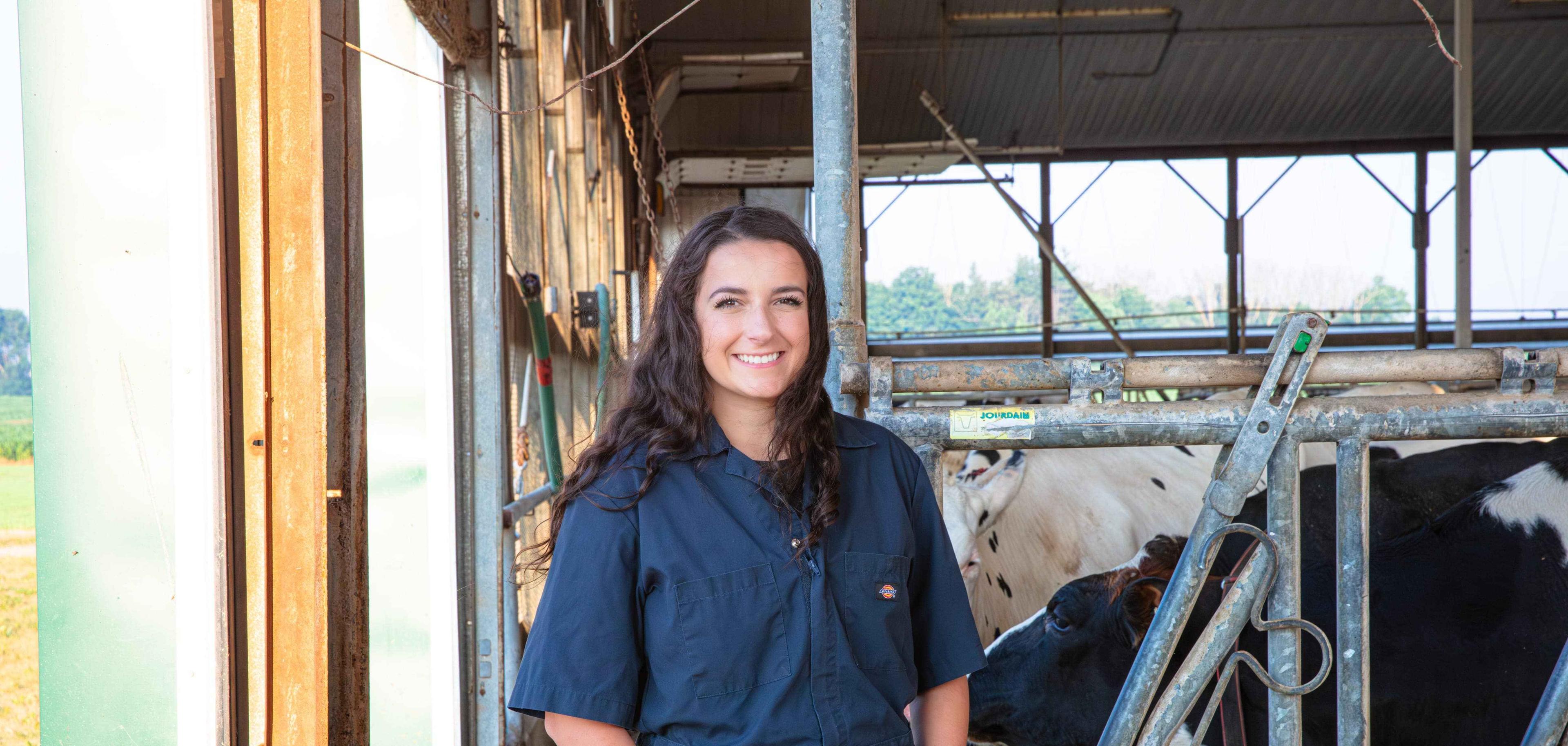
Master of Animal Biosciences
Degree
- MABS (Master of Animal Biosciences)
Program Type
- Coursework
Work Integrated Learning
- Internship
Delivery
- On-campus
Entry Terms & Deadlines
Domestic:
- Fall (September): July 15
International:
- Fall (September): February 1
Duration
- Full Time: 10 months
- Part Time: 24 months
Expand your animal science knowledge and advance your career.
The course-based Master of Animal Biosciences (MABS) is offered through our Department of Animal Biosciences and focuses on advanced training in specialized aspects of the animal sciences.
Focus your knowledge
Select courses to target an area of expertise: Breeding and Genetics; Animal Nutrition; Animal Behaviour and Welfare; Animal Physiology; or Digital Animal Analytics.
Course-based learning
This professionally oriented master’s is completed through six courses + a major research paper or 12-16 week internship.
World-class faculty
Tap into the knowledge, expertise and research of the 25+ faculty in the Department of Animal Biosciences.
Expand your network
Join a thriving community of over 130 graduate students who share similar interests and career goals.
Complete in 1 year
Full-time students can complete the program in one year (or three semesters) – getting you back into the workforce quickly.
Access unique facilities
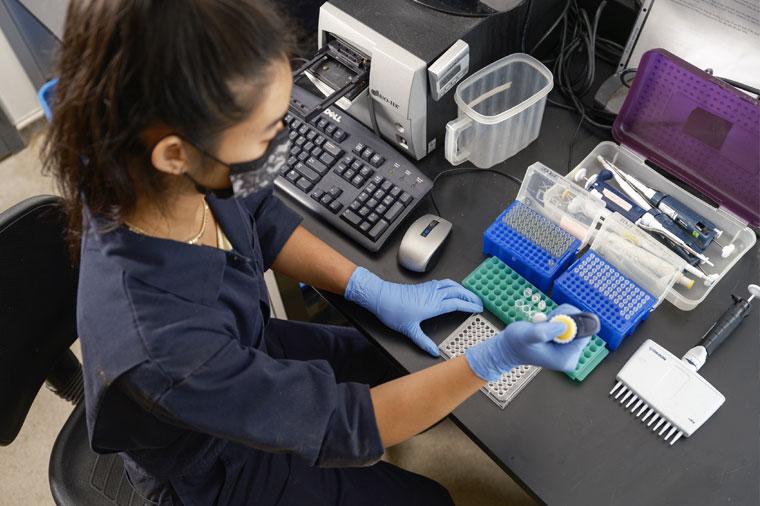
Learn in high-quality research and laboratory facilities focused on genomics, nutrient analyses, physiology, welfare, meats and microbiology.
- Six (6) courses + a major research project or 12-16 week internship; typically completed in one (1) year
If you are interested in completing a thesis with a faculty advisor, please check out our MSc in Animal Biosciences (Thesis/Research) option.
More information on courses and admission requirements can be found here.
Meet Your Profs

My research program seeks to understand the underlying physiology of diseases common in horses, and how these diseases can be modified with targeted nutrition, with a focus on cartilage biology.

It's the data that makes me excited, but what makes me even more excited is when my graduate students come from trying to understand how to put that in the context of our global understanding about dog and cat nutrition and I see them move into a state of excitement over the data.

There is a lot of demand for people with advanced degrees in poultry nutrition. The industry is growing, as you know most people are consuming poultry and poultry will be the most consumed meat in the future. So we really need the scientists to be able to drive that growth in poultry.

The most exciting aspect in my work is to integrate all these new genomic technologies that we have available in order to identify the killer later genes or their functional mutations associated to our economical important traits such as feed efficiency or meat and carcass traits or fertility and reproduction in beef cattle.

One thing I really love about studying cattle is you get to see animals in their environment and then we can take samples and take measurements on these animals and bring it back to the lab and you start to see differences on the tissue and cell level and even down to the gene level.

What we're really focused on is looking at factors that influence that behaviour and then the management factors that are going to influence the expression of that behaviour so we can make very applied recommendations to producers to optimize the health and production of their cows.
How to Apply
Application to this program is more like the process of a job application (rather than the process you went through applying for your undergrad degree).
In addition to your transcripts and references, you also need to submit a longer Statement of Interest and your Résumé.
Your Statement of Interest should be:
- 1 - 2 pages long
- Clearly indicate what your career goals are, and why the Master of Animal Biosciences program is a good fit
- What your area of interest is (animal behaviour and welfare, nutrition etc.)
- Whether you are interested in an industry-focused internship or research-focused major paper
Additional Options
You may also be interested in MSc in Animal Biosciences (Research/Thesis).
Contact
For questions on applying and admissions, contact:
Dr. Belinda Ward-Campbell, Academic Coordinator
abscgradcoursework@uoguelph.ca
Department of Animal Biosciences
For questions on graduate program options, contact:
Leigh West
Ontario Agricultural College (OAC)
lewest@uoguelph.ca
519-824-4120
