Beatrice Wausi Gedion poses in front of the Improve Life banner after completing her masters.

Guelph Grad Q&A: Beatrice Wausi Gedion

U of G Gives Grad Student a Place to Grow  

Originally from a small rural village in Kenya, Beatrice Wausi Gedion developed a passion for agriculture while working on her father’s farm as a child. This passion would help guide her academic journey and would ultimately lead her to pursue a master’s degree in Plant Agriculture at the University of Guelph. A decision she made due to U of G’s reputation as a leader in agricultural sciences and research.

Beatrice completed her master’s in 2022, and the strong foundation it provided helped her land a job as a seed crop inspector and quality assurance technician with Corteva Agriscience. Allowing her to fulfill her childhood ambition of building a career focused on innovative solutions to sustainable agriculture and food security challenges.

Continue reading to learn more about Beatrice’s incredible journey. 

The University of Guelph is an incredible place to grow not only academically but also personally and professionally. If you are passionate about agriculture, sustainability, and making a world difference, this program will give you the tools, network, and confidence to achieve your goals.

Beatrice Wausi Gedion
Master of Plant Agriculture, 2022 Grad

Interview with Beatrice Wausi Gedion

Tell us about yourself and why you chose to pursue a master's in plant agriculture at the University of Guelph?

I am Beatrice Wausi Gedion, originally from a small rural village in south of Kitui, Kenya. I have always been passionate about agriculture since I was a young child at my father’s farm. As I grew up the curiosity grew increasingly to wanting to find innovative solutions to sustainable agriculture and food security challenges. The University of Guelph stood out to me because of its strong reputation in agricultural sciences, a world-class faculty, and commitment to research that has real-world impact. Pursuing a master’s in plant agriculture was a natural step for me to deepen my knowledge, gain hands-on research experience, and contribute to developing resilient and sustainable food systems in the world. 

What did you like most about your program? Is there anything in particular about the courses or professors that stands out to you?

What I enjoyed most was the balance between theory, research, and practical application. The courses were not only comprehensive but also highly relevant to emerging challenges in agriculture. The professors were deeply supportive and approachable, always encouraging us to think critically and innovatively. One thing that stood out to me was how collaborative the learning environment was, it felt like being part of a community working toward common goals in plant science and sustainability. 

Did you do co-op? If yes, tell us a bit about your co-op job and your experience.

I did not pursue a co-op, but I engaged in extensive research opportunities in the lab that allowed me to gain practical, hands-on experience in the field. 

Where are you currently working and what is your role?

I am currently working as a Seed Crop Inspector and a quality assurance technician at Corteva Agriscience Company. In this role, I conform to the requirements of the Canadian Seed Growers’ Association (CSGA) for reporting, communications and other activities specified by the CSGA; Notifying the CSGA and the Canadian Food Inspection Agency (CFIA) of any upcoming seed crop inspections two days preceding the inspections in CSGA's Seed Cert; Quality test checks in the laboratory; Processing of orders; Grading; Data entry and documentation of government records; Compliance with safety and quality standards. 

How did your master's degree and time at the University of Guelph help get you to where you are today? How do the skills and education you gained help with your current work?

My master’s degree equipped me with a strong foundation in plant science, research design, and problem-solving, which directly apply to my current work. Beyond technical skills, the program sharpened my ability to communicate complex agricultural concepts to diverse audiences, work collaboratively across disciplines, and think strategically about sustainability. These skills have been essential in my professional journey and continue to guide me in creating meaningful impact. 

What advice would you give someone considering a master's in plant agriculture or applying to the University of Guelph?

I would encourage anyone considering this path to embrace both the academic and experiential opportunities available. Be curious, seek mentorship, and don’t be afraid to explore interdisciplinary connections. The University of Guelph is an incredible place to grow not only academically but also personally and professionally. If you are passionate about agriculture, sustainability, and making a world difference, this program will give you the tools, network, and confidence to achieve your goals. 

Bonus Questions

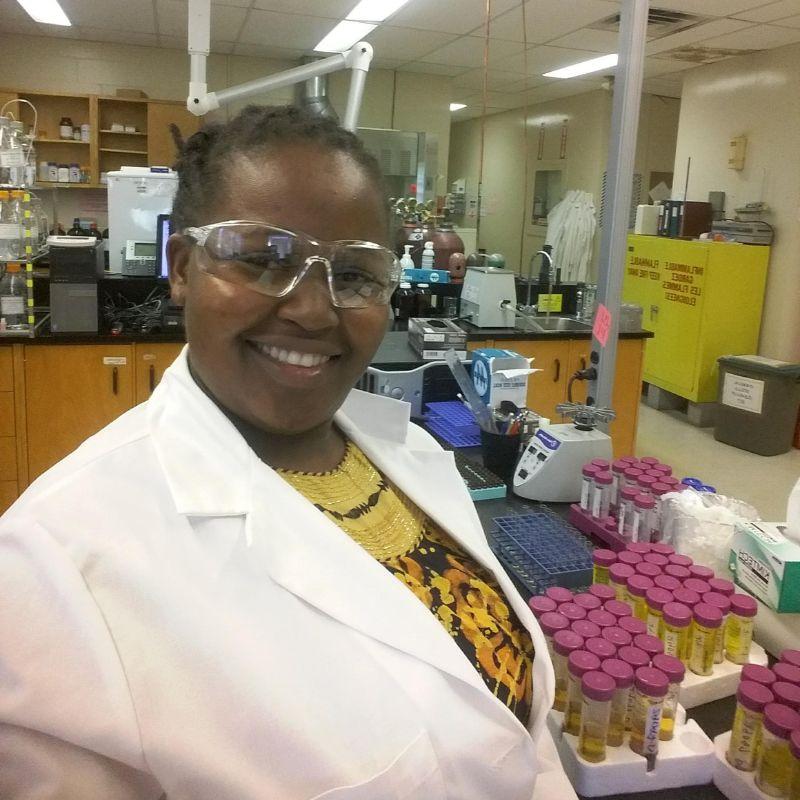
Master's student Beatrice Gedion working in the lab.

Where was your favourite place to eat on campus and what was your go-to food order?

My favourite place to eat was the Bullring. I sat outside most of the time, especially during the summer because it was cozy, welcoming atmosphere and was perfect for catching up with friends.

In your opinion where is the best place to study on campus?

The McLaughlin Library, especially the quiet floors, was my top spot for focused studying. I also liked finding a sunny spot outside when the weather was nice, it made studying feel less stressful.

What was your pre-exam ritual?

I always reviewed my summary notes one last time the night before, made sure to get a good sleep, and then had a hot cup of Kenyan tea in the morning. On exam day, I liked to arrive on campus a bit early, find a quiet corner, and take a few deep breaths to clear my head. Lastly, I said a word of prayer and asked God for guidance. 

What are your top 5 favourite things about U of G?

  1. The beautiful, green campus, the Arboretum and its open spaces.
  2. The strong sense of community and friendliness among students and staff.
  3. The diversity of food options on campus (and the reputation for great food!).
  4. Access to top-notch professors and research opportunities in agriculture.
  5. The Gryphon spirit from athletics to events, it always felt like home.