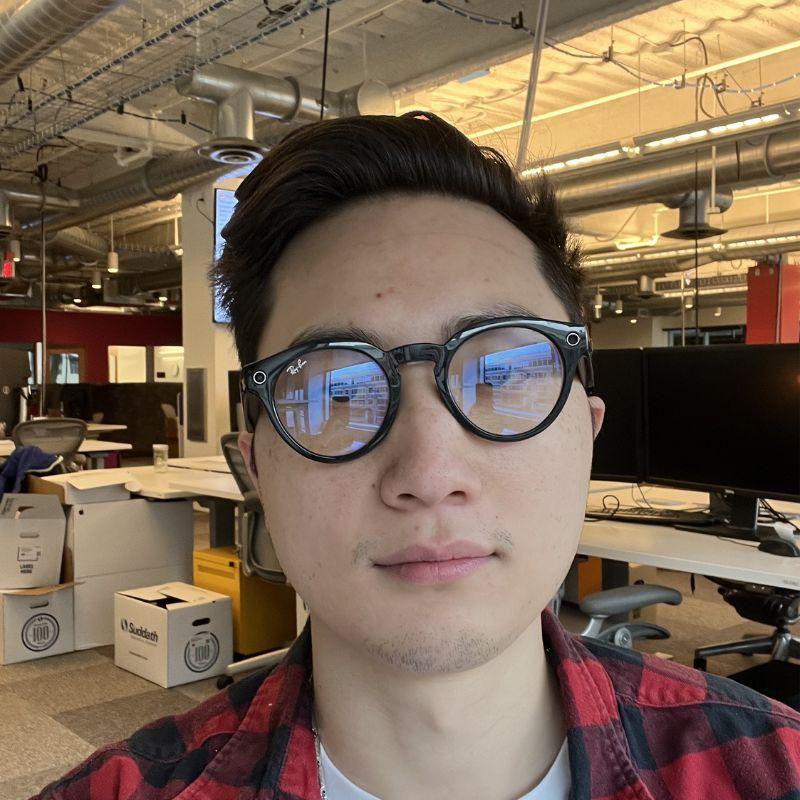
Interview with Dennis Kao
Tell us about yourself and why you chose to study Computer Science at the University of Guelph?
I’m Dennis, the son of Cambodian refugees. My family immigrated to Canada in the 80s, where we eventually settled in Richmond Hill.
I actually chose to study biological sciences at the University of Guelph initially and was a pre-med student. I didn’t see myself as a doctor and switched to studying Computer science in my third year. I could have looked into changing schools, but I wanted to stay with the friends I had made on campus.
What did you like most about your program? Is there anything in particular about the courses or professors that stands out to you?
I enjoyed that the program geared itself towards practicality. As a computer science student, I particularly enjoyed the software engineering courses led by Dan Gillis, where we worked in teams to plan and deliver on a complex project. This was my first taste of what true work was like and I felt like it was the missing piece when it came to being a professional.
Where are you currently working and what is your role?
I was an early-stage engineer to Meta’s companion app for Wearable devices. Wearables are intelligent devices that sit on the end user. Different form factors include smart watches, glasses or necklaces. They’re different from smart phones since they are more easily accessible and have different ways of interacting with them.
As of today, I am the tech lead for the app’s bug reporting feature which collects user feedback and relevant logs on the app to help drive a better, more stable product. This involves coordination, leadership and coding.
How did your degree and time at the University of Guelph help get you to where you are today? How do the skills and education you gained help with your current work?
My time at U of G helped me develop the core foundational knowledge of computer science that I use every day. In the world of software engineering, it is possible to create and glue together pieces until you reach a working product. But without this core knowledge, certain classes of problems become impossible to solve because of a lack of theoretical knowledge.
The second set of skills I want to emphasize is coding and academic rigor. I actually only started developing software when I started my degree. Maybe in some ways I’m glad, because writing software in school meant I may have developed better habits in writing clean code, as opposed to if I had started writing software on my own at a young age.
What advice would you give someone considering the Computer Science program or applying to the University of Guelph?
Computer science is a pretty rigorous program and demands a set of skills that may be completely different from what you are used to. Writing a piece of software is unlike writing an essay for example. If the software produces an incorrect answer or behaviour, it is usually the “fault” of the person who wrote it. In the example of an essay, there can leeway for opinions, and discussion about what is “right” and “wrong”.
It is only after you’ve mastered the basics of computer science and programming do you then have some breathing room on how to approach a problem. But without these strong fundamentals, I’ve seen my fellow students struggle in upper year courses.
My last parting advice is about the school. I genuinely feel like professions and instructors take the extra effort to teach and keep their students engaged. Attending office hours, engaging with your TA or simply asking questions after class are easy ways to develop your understanding of a topic, or clarify confusing concepts.
Bonus Questions