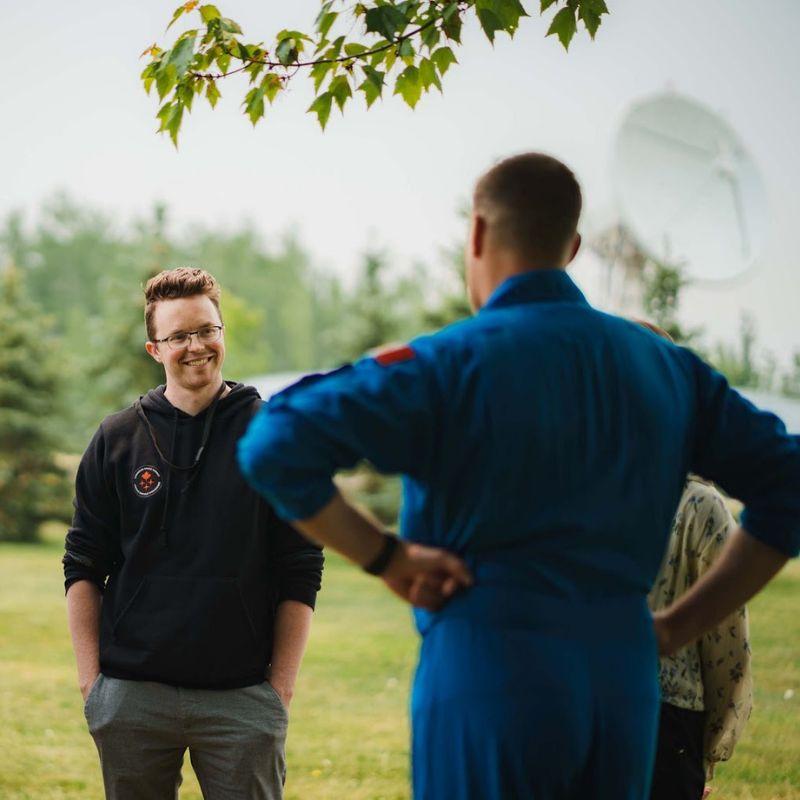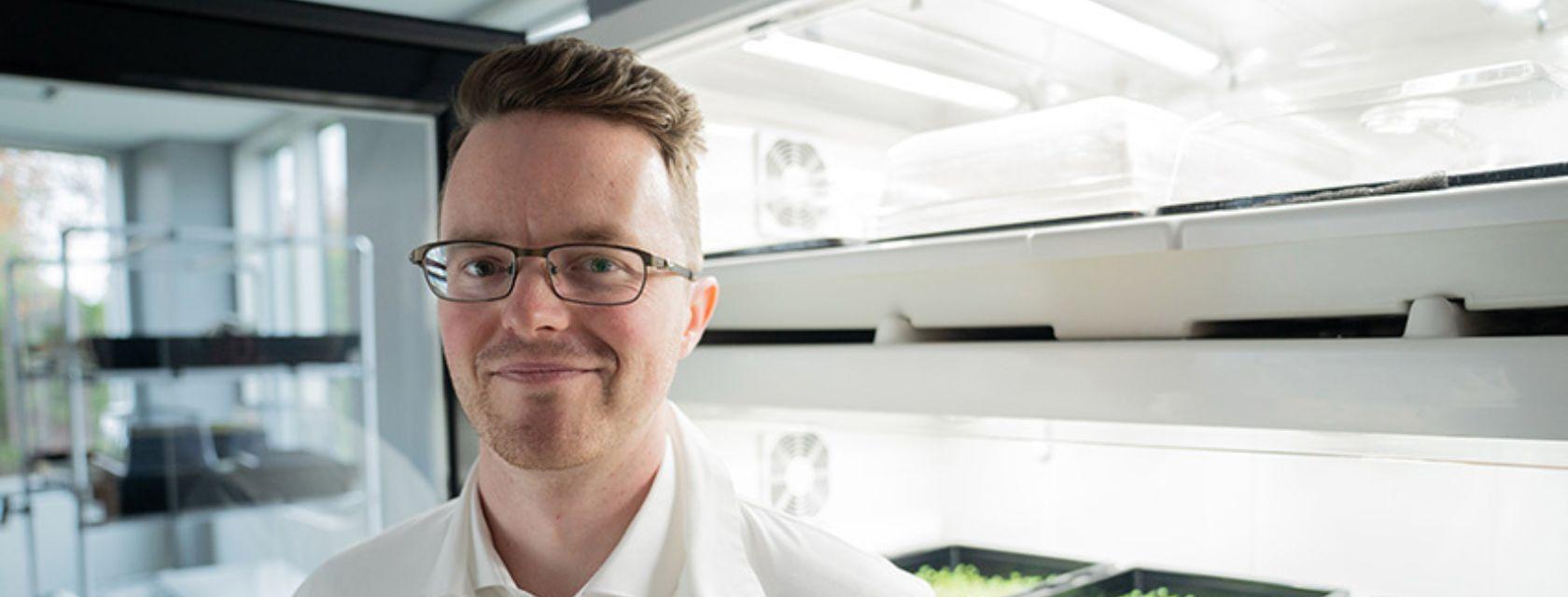
U of G PhD grad standing in his lab at the Canadian Space Agency.

Guelph Grad Q&A: Jared Stoochnoff

PhD Graduate Lands Job at the Canadian Space Agency  

The University of Guelph’s Controlled Environment Systems Research Facility (CESRF) is home to one of the world’s most advanced sealed plant growth chamber facilities, enabling researchers to study plants grown under conditions similar to those in space or other extreme environments on Earth.

It was this unique research environment and the opportunity to work with experts advancing sustainable food production systems that drew Jared Stoochnoff to U of G. After completing his master of Environmental Sciences in 2017, he went on to earn his PhD in 2021, an incredible accomplishment made even more meaningful by the fact that he would become the very first Dr. Stoochnoff.

The mentorship, programs and community at U of G played a vital role in shaping Jared’s career trajectory and preparing him for his current role as an exploration scientist at the Canadian Space Agency. In his role he coordinates with scientists and engineers as they plan future greenhouses for the Moon and Mars.

Continue reading to learn more about Jared’s exciting academic journey. 

I wouldn’t be where I am today without the PhD program and people at the University of Guelph. Throughout my academic journey, my many mentors supported my ideas and ambitions, even when they went above and beyond what was expected.

Jared Stoochnoff
PhD in Environmental Science, 2021 Grad

Interview with Jared Stoochnoff

Tell us about yourself and why you chose to earn your PhD in Environmental Science at the University of Guelph?

The University of Guelph’s Controlled Environment Systems Research Facility (CESRF) is home to Canada’s most advanced sealed plant growth analysis chambers, leading cutting-edge research in plant environment interaction modelling and systems engineering. For decades, the facility has developed and tested controlled environment agriculture technologies to support the growing Canadian AgTech sector. At the same time, this work is driving progress toward sustainable food production systems on the Moon and Mars. er that keeps me in the field, working on projects that contribute to environmental conservation. 

What did you like most about your program? Is there anything in particular about the courses or professors that stands out to you?

While the research and development of new technology was exciting, it was the incredible people on the CESRF team who made my time at Guelph a truly memorable experience. I'm still in touch with many of the MSc and PhD students I worked alongside, which speaks to the strong community the lab and program experience. 

Did you do co-op? If yes, tell us a bit about your co-op job and your experience.

While I didn’t participate in a co-op program at U of G, I completed four co-op terms during my BSc at UVic and strongly support co-op programs in general, as they provide early work experience and opportunities to build important industry connections. 

Where are you currently working and what is your role?

As an Exploration Scientist for the Canadian Space Agency’s Food Production Initiative, I coordinate with scientists and engineers from other space agencies (e.g., NASA, DLR, ASI) as we collaboratively plan future greenhouses for the Moon and Mars. These efforts will support sustainable food production for long-duration space missions and drive innovations that improve terrestrial AgTech. 

How did your PhD and time at the University of Guelph help get you to where you are today? How do the skills and education you gained help with your current work?

I wouldn’t be where I am today without the PhD program and people at the University of Guelph. Throughout my academic journey, my many mentors supported my ideas and ambitions, even when they went above and beyond what was expected. During my PhD program, I completed a semester abroad at the German Aerospace Center, founded the Canada Goose Team in the Deep Space Food Challenge, and consulted for the AgTech industry. These opportunities wouldn’t have been possible without the combined knowledge and experience gained from the CESRF team. These opportunities gave me the skills and confidence to take on my role as an Exploration Scientist for the Canadian Space Agency, where I am proud to help shape Canada’s contribution to the future of lunar greenhouse technology.

What advice would you give someone considering a PhD in Environmental Science or applying to the University of Guelph?

Pursuing a PhD in Environmental Science (in any subject really) is a rewarding but challenging journey, so it is important to follow what interests you most. As long as you do your best, you can always be proud of yourself. 

Bonus Questions

U of G PhD grad at the Canadian Space Agency.

Where was your favourite place to eat on campus and what was your go-to food order?

The Pad Thai and club sandwich at the OMAFRA cafeteria kept me sane during my last eight years at CESRF.