Chemistry at Home
Have some fun with chemistry at home
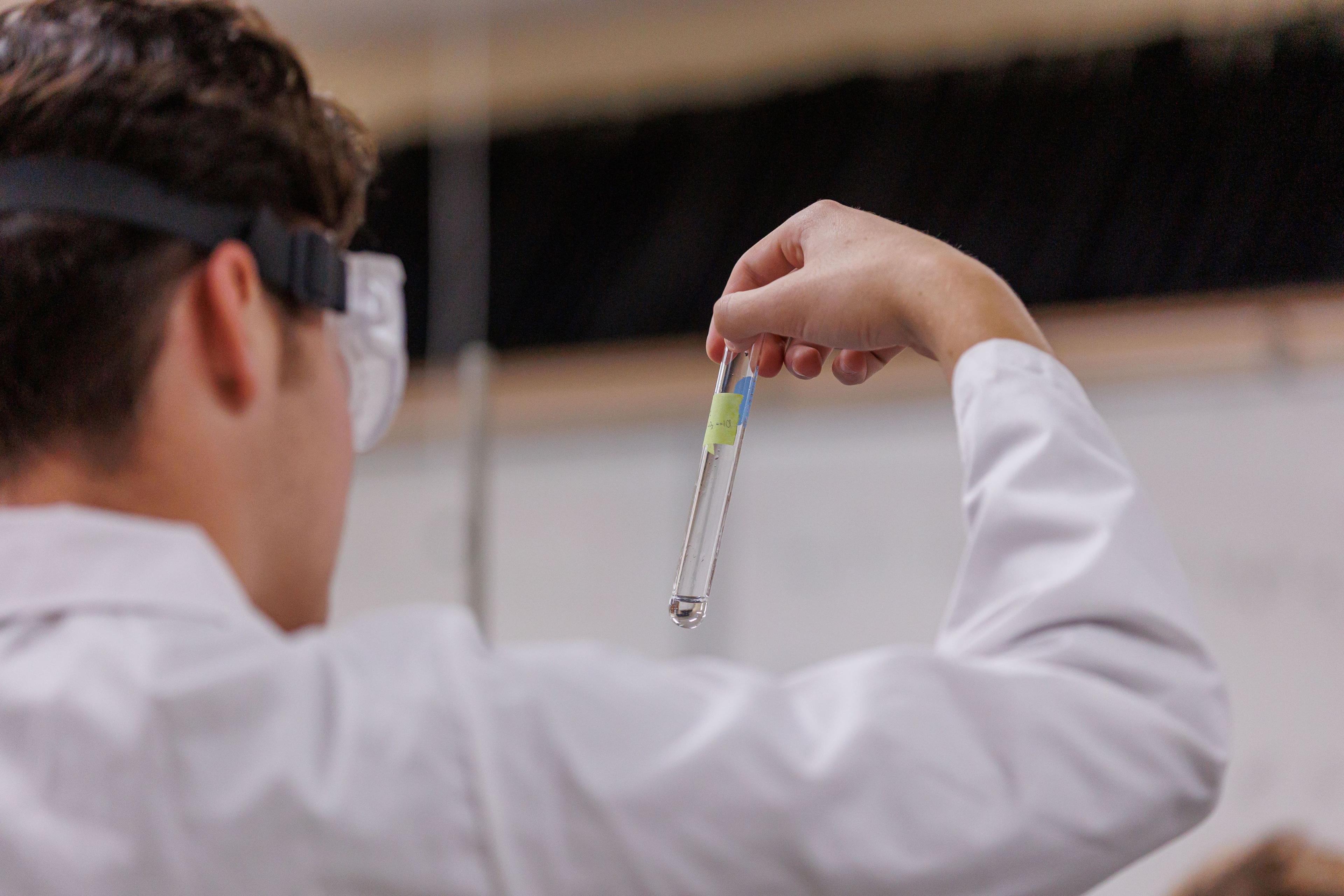
Are you a budding scientists ready to learn about chemistry? Grab your PPE, reagents, glassware, and a responsible buddy (chemists never work alone for safety) and get started! Be sure to discuss your experiment with your supervisor (ie. parent, grandparent, cool aunt, caregiver, etc.) before you get started!
Vinegar Volcanoes
What you need
- Baking soda
- Vinegar
- Container
How to do it
- Place some baking soda at the bottom of your container
- Add some vinegar to the container
- Watch your volcano erupt!
Cool Crystals
What you need
- Jar
- 1/2 cup of Salt (or Borax)
- Water
- Toothpick
- String
How to do it
- Fill the jar with water, and stir the salt (or Borax) in. Make sure it all gets dissolved.
- Tie one end of the string onto the toothpick. Set the toothpick so that the string is hanging into the water
- Wait for a few days and wait for the crystals to form
Colourful Cabbage Juice Indicators
What you need
- red cabbage leaves
- water
- A pot
- coffee filters
- stove
- clear test substances (Vinegar, lemon juice, window cleaner, soap, etc)
How to do it
- With the help of an adult, shred the cabbage leaves. Then boil them in a small amount (about 1/2 a cup) of water
- Pour the juice through a coffee filter in order to remove the leaves from your solution. Let it cool.
- Add a little bit of juice to your test substances, and watch it change colour. If it becomes more red, the test substance is acidic (has a low pH). If it turns blue or green, the test substance is basic (has a high pH).
Invisible Ink
What you need
- Lemon juice
- Q-tip
- paper
- hair dryer
How to do it
- Dip the Q-tip into the lemon juice
- Write your secret message on the paper in lemon juice. Wait for it to dry, so that you can't see the message anymore
- Heat up the paper with the hair dryer to reveal the secret message
Density Columns
What you need
- Honey
- Soap
- Vegetable oil
- Water
- corn syrup
- tall, thin, clear glass
- food colouring, if you wish
How to do it
- Add different colours to the different liquids, if you wish. Note that the food colouring won't mix with the vegetable oil
- Pour the liquids into the glass, starting with the honey, followed by the corn syrup, the soap, the water, and finally the vegetable oil
- Wait for the liquids to settle. Notice the different layers you can see in your glass
