Kia Boon Ng
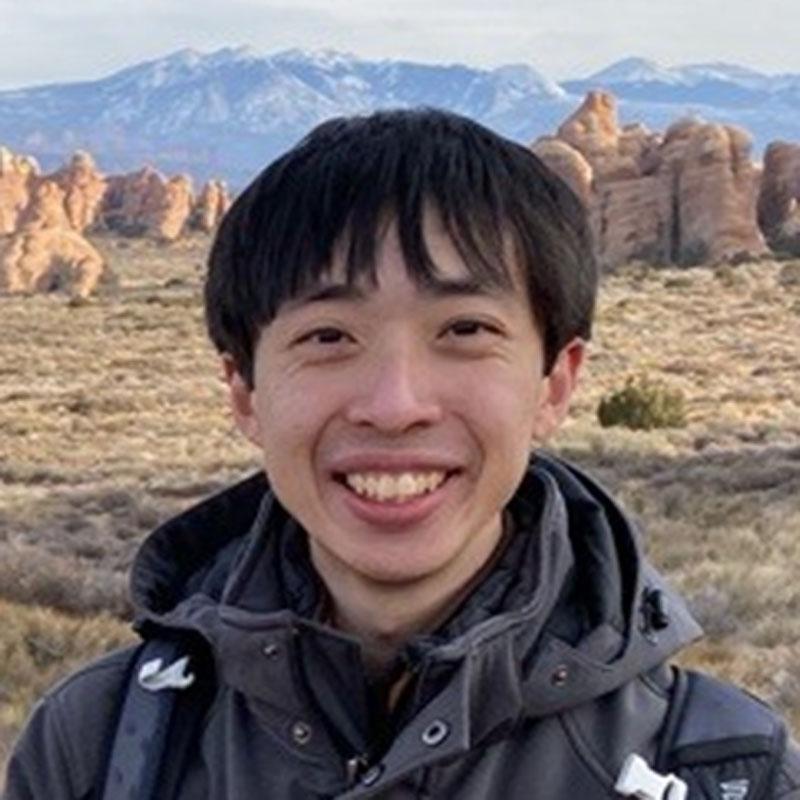
Incoming Assistant Professor
College of Computational, Mathematical and Physical Sciences, Department of Physics
Research Areas
- Atomic, Molecular and Optical (AMO) physics
- Cold and ultracold molecules
- Fundamental symmetries and Electric Dipole Moment (EDM) searches
- Nuclear Physics
- Nuclear Schiff Moment (NSM) and CP violation
- Precision measurement and quantum control
- Subatomic Physics
Education Background
Kia Boon Ng received his PhD in Physics from JILA, University of Colorado Boulder, where he worked under Eric Cornell and Jun Ye. His doctoral research focused on precision measurements and quantum control in atomic, molecular, and optical (AMO) systems, with applications to electric dipole moment (EDM) searches.
He then carried out postdoctoral research at TRIUMF as part of the RadMol collaboration, where he led experimental work on radioactive molecular ions and developed quantum control techniques for precision tests of fundamental symmetries. He was awarded a Banting Postdoctoral Fellowship.
Research Themes
Ng's research focuses on precision tests of fundamental symmetries using quantum-controlled atomic and molecular systems, with an emphasis on electric dipole moment (EDM) searches and the role of nuclear structure in amplifying symmetry-violating effects. By combining techniques from atomic, molecular and optical (AMO) physics with radioactive nuclei, his work aims to probe physics beyond the Standard Model in systems with enhanced sensitivity to CP-violating interactions.
His current and planned research program includes:
- EDM and Schiff-moment searches in radioactive molecules
- A central focus of his research is the measurement of permanent electric dipole moments in radioactive molecular ions, with particular emphasis on systems such as ThF⁺. These experiments target the nuclear Schiff moment, which provides a sensitive probe of time-reversal and CP-violating physics beyond the Standard Model.
- Radioactive nuclei with octupole deformation are predicted to exhibit strongly enhanced Schiff moments, making them exceptional laboratories for symmetry tests. By exploiting quantum control and precision spectroscopy in trapped molecular ions, his research aims to achieve new levels of sensitivity in EDM searches and connect atomic-scale observables to underlying nuclear and particle physics. - Quantum control of radioactive molecular ions
- A key enabling component of this program is the development of quantum control techniques for radioactive molecular ions. This includes production, trapping, and coherent manipulation of short-lived molecular species, where low production rates and nuclear instability require highly efficient experimental architectures.
- These efforts extend established AMO techniques into regimes where nuclear physics constraints become central, creating a new experimental interface between precision measurement science and rare-isotope physics. - Nuclear structure effects in precision symmetry tests
- A complementary research direction focuses on the nuclear-structure input required to interpret EDM and Schiff-moment measurements. This includes understanding nuclear deformation, magnetization distributions, and other many-body effects that influence the mapping between atomic observables and fundamental CP-violating parameters.
- Where possible, the program integrates or motivates low-energy nuclear spectroscopy measurements that constrain theoretical uncertainties in heavy, octupole-deformed nuclei relevant for EDM searches. - Broader precision tests and isotope-dependent effects
- The experimental platform developed for EDM searches enables additional precision tests of fundamental physics, including isotope-dependent studies of atomic structure, hyperfine anomalies, and precision spectroscopy of exotic nuclei.
- These measurements provide complementary probes of nuclear structure and may be extended to searches for new short-range interactions through precision comparisons across isotopic chains.
Available Positions
Are you interested in fundamental questions like why we exist? Or do you want to build skills that could prepare you for careers in fields ranging from quantum technology to nuclear energy?
Join the Ng Group and RadMol!
We use lasers and precisely engineered electric and magnetic fields to control radioactive molecules, probe the atomic nucleus at the quantum level, and search for tiny violations of fundamental symmetries of nature.
Along the way, you can learn the full experimental stack, including: quantum manipulation, lasers & optics, high voltage, ultra-high vacuum, cryogenics, nanosecond electronics, CAD & finite-element modelling, classical & quantum simulations, and data analysis.
You will have opportunities to work at TRIUMF, publish papers, and present your research at conferences around the world.
Current openings: MSc / PhD: Fall 2027; Postdoc: 2027; Undergraduate summer research: 2027.
Expressions of interest are welcome year-round, and start dates are flexible.
Interested? Please send me your CV. Prospective students should also include their latest transcripts.
Research areas: Quantum manipulation of atoms and molecules, trapped ions, EDMs, fundamental symmetries, AMO physics, cold & ultracold molecules, nuclear physics, subatomic physics, precision measurement
Highlights
- Banting Postdoctoral Fellowship, Natural Sciences and Engineering Research Council of Canada (NSERC), 2025