Maria DiDanieli
Social Practice and Transformational Change
College of Social and Applied Human Sciences, Social Practice and Transformational Change
About
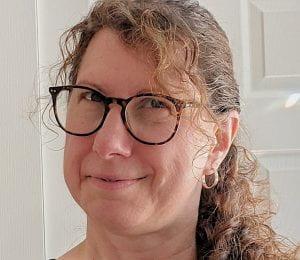
Hello, my name is Maria DiDanieli (she/her) and I am a 2nd year PhD student in the SOPR program, a retired allied health professional and mother of two young adult daughters, whose critical curiousity and kindness are out there permeating our complex world as we speak. I am a white settler of European descent. I am a recreational long-distance cyclist and a voracious reader.
I completed my undergraduate degree in Human Biology (emphasis neurosciences) at the University of Toronto while working in clinical applied neurophysiology. Over the years, I mostly served individuals with spinal cord injuries, acquired brain injuries and neurodevelopmental conditions. Although this emerging field was interesting, I felt that our reductionist technical ethic of practice precluded us from understanding, and caring for, our patients holistically, or even appropriately. As I listened to their stories, I began to see how the ableist healthcare environment embodies, and contributes to, the host of structural factors that disempower people with disabilities daily, inside and outside the clinic, removing their self-determination over their bodies and their lives. I also began to learn about, and appreciate, their understandings of their bodies and the richness of their affirming goals for their lives. I began to see my role differently and to adjust my commitments…and I also wanted to explore the human issues that healthcare is ensconced in further through academic work. And so, in 2015, I entered a Masters of Science program in Medical Bioethics from the Alden March Bioethics Institute at Albany Medical School in New York. Then, in 2024, I completed a Master of Laws in Medical Law and Ethics from the University of Edinburgh – my thesis project in the latter involved a human rights-based critical disability theory analysis of medical assistance in dying legislation and its growing focus on disability as an indication for accessing physician assisted suicide. This was eye-opening work!
I had transitioned my career to patient/system navigation, where I served individuals with cognitive diversity due to brain injury in accessing legal support and housing justice when facing threat of eviction. As a platform for learning and advocacy, I initiated a Community of Practice for system navigators in Halton and Hamilton. I also worked closely with community legal clinics to support these inividuals in accessing housing and (housing related) human rights justice within Ontario tribunals and courts. I found the outcomes for these people at the hands of our housing justice structures disappointing, to say the least. As a result, I found myself on a mission to enter into full-time academic work in order to critically explore, contribute to knowledge in and advance advocacy for, disability rights and disability justice in the context of housing frameworks. It was in seeking a way to do so that I discovered the interdisplinary and innovative SOPR program. Although my academic and research work will center individuals whose cognitive/intellectual functionalities comprise diversity and difference, my goal is to explore how housing frameworks and housing justice policy and practices can be transformed to enable pan-disability empowerment and housing stability.