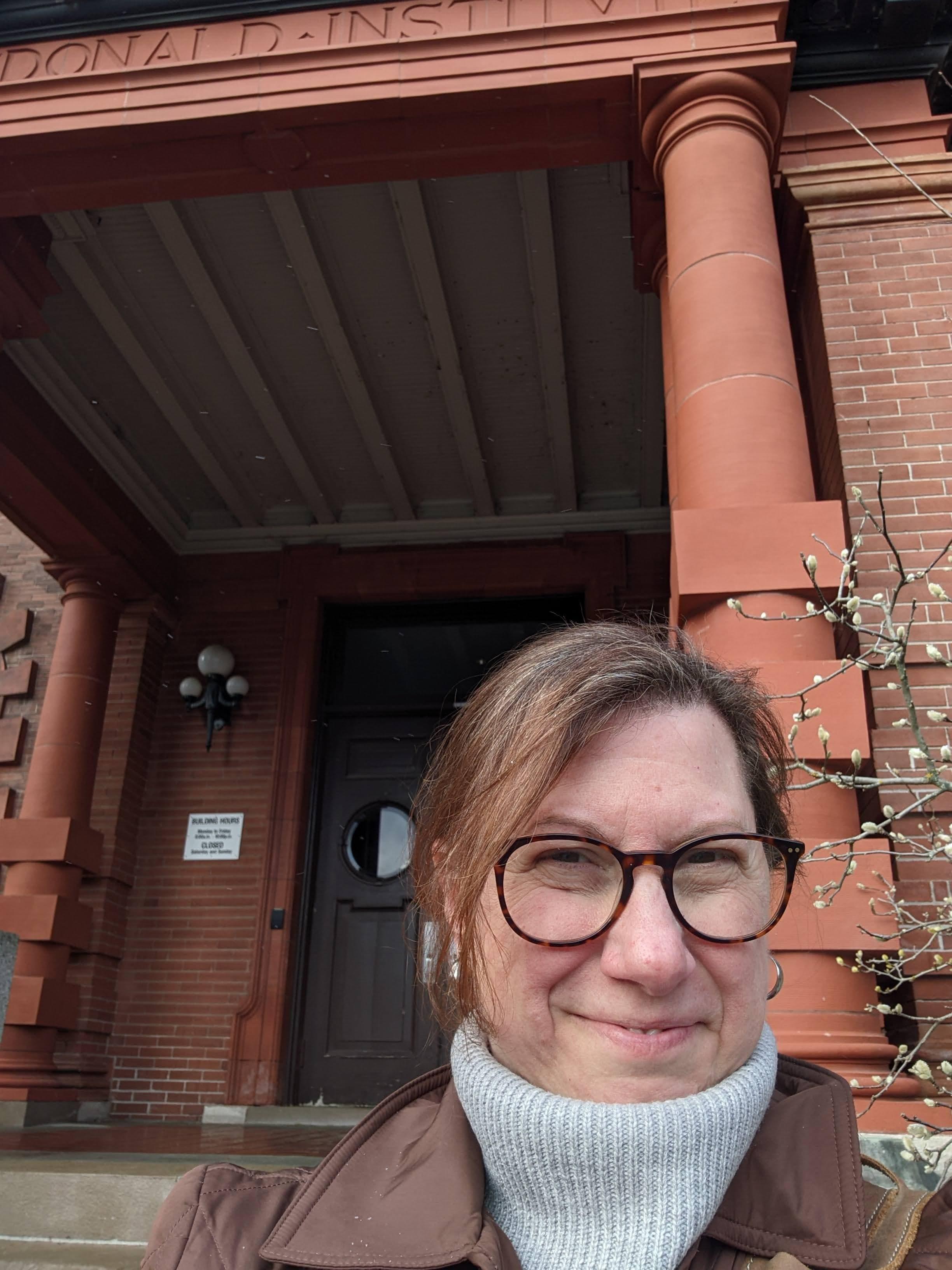
Maria DiDanieli
Social Practice and Transformational Change
College of Social and Applied Human Sciences, Social Practice and Transformational Change
About
Maria DiDanieli (she/her) is a 3rd year PhD candidate in the SOPR program. Her research interests bring together housing justice scholarship and disability justice activism to interrogate the political economy of rental housing policy and legal system dynamics that disproportionately produce housing instability and eviction for individuals with cognitive disabilities in Canada. Maria leverages community-engaged scholarship to explore these issues through the lens of the lived experiences of individuals with cognitive disabilities who have faced eviction hearings at the Landlord and Tenant Board of Ontario (LTB-O).
Maria brings professional experience that has included supporting tenants with cognitive disabilities in eviction hearings at the LTB-O to her research work. As an allied health professional, Maria wanted to understand the politics and social contexts that impacted her patients’ lives both within, and beyond, the clinic setting, with a focus on how these were represented in the housing challenges she repeatedly saw her patients deal with. She was drawn to the Social Practice and Transformational Change doctoral program at the University of Guelph for its interdisciplinary and social justice orientation as well as its emphasis on bridging feminist and other critical theory approaches with transformative praxis through community-engaged research methodologies. The program’s pillars and interdisciplinary structure, as well as the opportunity to study under prominent researchers in her areas of interest, afford Maria a rich context through which to critically engage with, and contribute to, scholarly work that foregrounds the skills and voices of those most impacted by intersecting social and political oppressions – specifically, diverse individuals with cognitive disabilities - in order to support them in challenging structural biases that are framed to justify their marginalization.
Maria is also the mother of two young adult daughters, whose curiosity and kindness are out there permeating our complex world as we speak. She is a white settler of European descent, a recreational long-distance cyclist and a voracious reader.