From the Trades to Cybersecurity: Jacob Drobena's Journey Through the MCTI Program
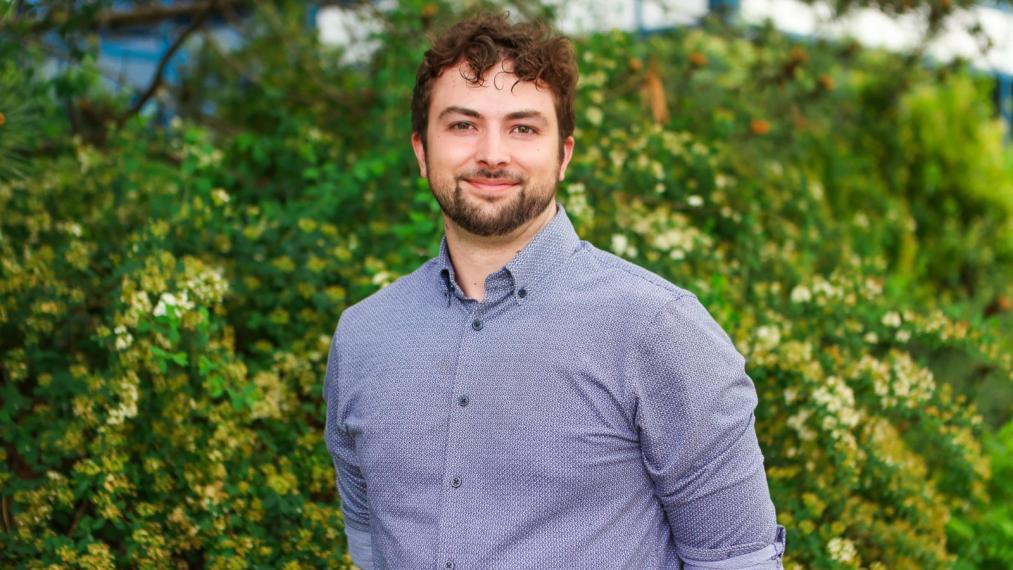
Before pursuing cybersecurity, Jacob Drobena was working as an electrical apprentice. Today, he is preparing to complete the University of Guelph's Master of Cybersecurity and Threat Intelligence (MCTI) program and build a career in one of the world's fastest-evolving industries.
Drobena's path into technology was anything but traditional. His early work with electrical systems, industrial controls, and programmable logic controllers as an electrical apprentice sparked an interest in how complex systems operate.
That curiosity eventually brought him back to the classroom, where he completed a Bachelor of Computer Science with a concentration in Computer Engineering at Brock University in 2025.
Through co-op experiences, he discovered cybersecurity and was drawn to the field's technical challenges and real-world impact across the technology industry.
That interest grew into a career goal.
"When I spoke with alumni from the MCTI program, they highlighted how beneficial it had been for their careers," says Drobena. "That played a significant role in my decision to apply to the program."
Finding a Home in Cybersecurity
Drobena points to the close-knit cohort, supportive faculty and collaborative learning environment as some of the most rewarding aspects of his experience at U of G.
The course content has helped him develop expertise across multiple cybersecurity disciplines, including digital forensics, threat intelligence, risk analysis and security architecture.
At the same time, it has strengthened skills that extend beyond the technical side of the profession.
"Professionally, it has given me the confidence to engage with industry professionals and colleagues at a more meaningful level," he says. "Personally, it has taught me how to manage higher workloads and think more methodically."
Learning Through Real-World Application
Drobena says some of his most memorable experiences in the program have come through applied projects that mirror the issues cybersecurity professionals face every day.
One project involved designing an automated malware analysis pipeline capable of collecting malicious payloads, extracting signatures and classifying advanced persistent threat (APT) malware using machine learning models.
Another, his capstone project, focuses on developing automated incident response workflows in Microsoft Sentinel using Jupyter Notebooks and MSTICPy.
The projects have provided opportunities to combine technical knowledge with practical problem-solving while working on issues that reflect the realities of modern cybersecurity operations.
Connecting Students with Industry
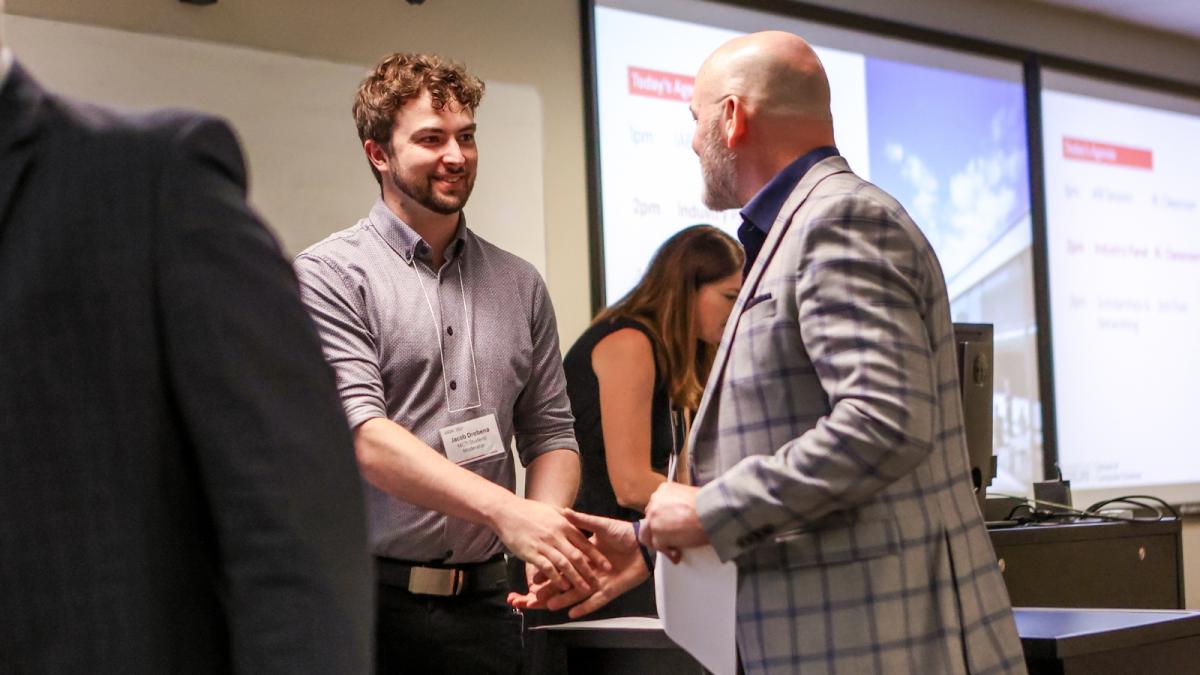
Beyond the classroom, Drobena recently served as a moderator during the MCTI Industry Advisory Board event, helping facilitate conversations between students and cybersecurity leaders.
For someone who describes himself as having stepped outside his comfort zone, the experience proved both challenging and rewarding.
"Moderating the panel was a great opportunity to engage with leaders in the field and strengthen my confidence in public speaking," he says.
The event explored topics including artificial intelligence, emerging cyber threats and mental resilience in cybersecurity.
"The growing role of AI in both cyberattacks and defence really resonated with me," says Drobena. "It highlighted how quickly the landscape is evolving and the speed at which organizations are working to combat emerging threats."
Just as meaningful, he says, were conversations around mental resilience, a topic that is often overlooked despite the pressures associated with cybersecurity work.
"Hearing industry leaders talk about managing stress and maintaining sustainable habits provided a more holistic view of the profession."
The Value of Community
Drobena says one of the greatest strengths of the MCTI program is the opportunity for students to connect directly with industry professionals.
Those conversations help bridge the gap between academic learning and professional practice, providing students with insights that cannot always be found in textbooks or lectures.
He sees those connections as part of a broader sense of community that has defined his experience at the University of Guelph.
"The close ties to industry and alumni make it feel like I'm part of something bigger than myself," he says. "With the academic support and direction provided throughout the program, I feel well prepared for what's next."
As he prepares to graduate, Drobena is focused on continuing to build his expertise in cybersecurity while adapting to an industry that is constantly changing.
He hopes to build on the foundation he has developed in cybersecurity, privacy, compliance, cryptography and threat intelligence while contributing to organizations and communities that rely on secure digital systems.