
MSc Integrative Biology
Degree
- MSc (Master of Science)
Program Type
- Thesis
Delivery
- On-campus
Entry Terms & Application Deadlines
- Fall (September): Ongoing
- Winter (January): Ongoing
- Summer (May): Ongoing
The MSc in Integrative Biology at the University of Guelph is one of the finest master's programs in the country for research, training, and scholarship in both plant and animal sciences.
The Department of Integrative Biology has particular strengths in comparative animal physiology, ecology, and evolutionary biology. Researchers study a wide variety of organisms, from microbes to plants and animals, at multiple levels of organizations, from molecules and cells to ecosystems.
Our graduate students pursue studies in all aspects of biology, from genes to entire ecosystems. Graduate students’ programs are tailored depending on their interests and background.
Degree Details
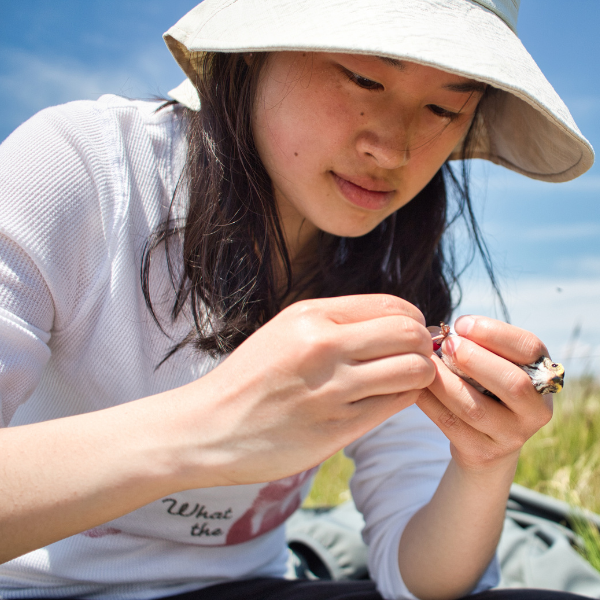
The Master of Science in Integrative Biology is a research-based program. Students take 1.5 credits in coursework and prepare and defend a research-based thesis for their degree (approximately six semesters).
Students can choose to pursue research in one of three areas:
- Ecology
- Evolutionary Biology
- Comparative Animal Physiology
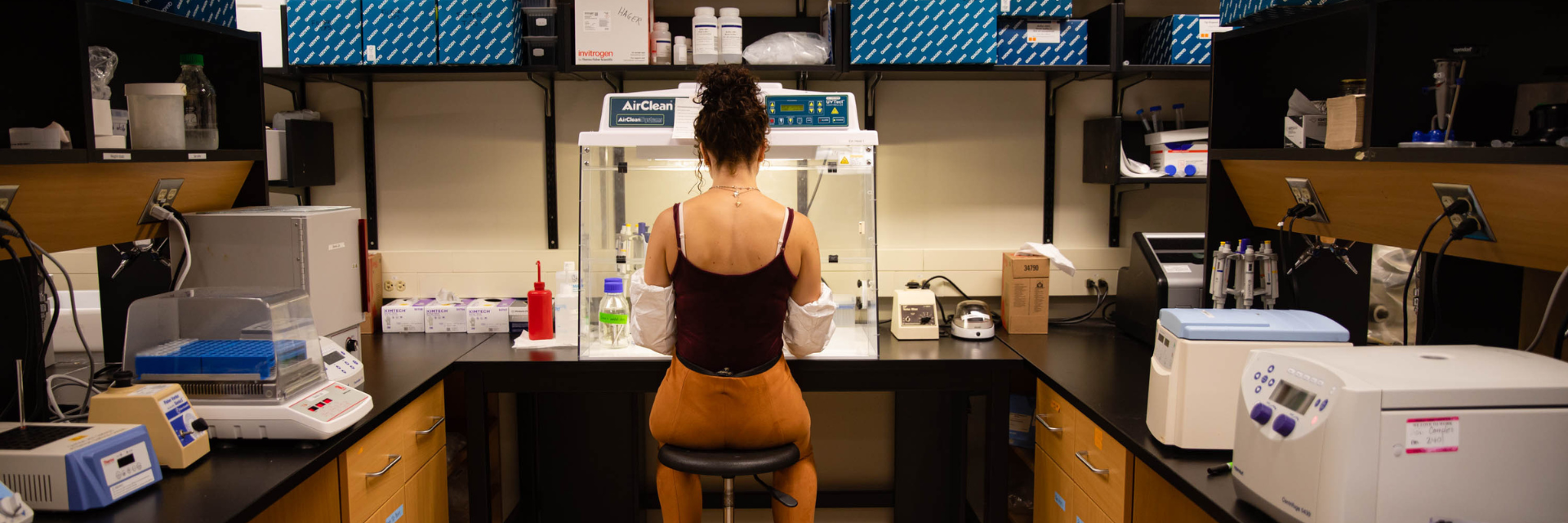
The three areas of emphasis focus on, but are not restricted to, experimental approaches in field and laboratory settings and a strong linkage between theoretical and applied investigations. Learn about the program’s expected learning outcomes. The department encourages students to pursue interdisciplinary research and take advantage of faculty expertise from across campus.
Students with advanced academic and research aptitudes can apply for transfer into the PhD in Integrative Biology program after partial completion of the MSc degree requirements.

Collaborative Specializations
A collaborative specialization is an intra-university graduate field of study that provides an additional multidisciplinary experience for students enrolled in and completing the degree requirements for an Integrative Biology graduate program. Opportunities for collaborative specializations are available in the areas of Neuroscience, Toxicology, and One Health.
Hear from MSc Integrative Biology Graduates

My time in the Department of Integrative Biology provided me with a strong foundation for pursuing research and scientific inquiry. Through my master's, I was given the opportunity to conduct novel laboratory experiments through the Food from Thought research initiative. I greatly appreciated the support of the graduate student community and the many student initiatives they put on as a department. My education in the Integrative Biology department has helped me immensely in my career with the federal government as an aquatic biologist and is a highly respected credential in my field.

Throughout my MSc in Integrative Biology, I was able to focus my academic passions under the guidance of scientists at the edge of their field. With a strong desire to apply my scientific pursuits to the needs of my community, I took a position working in urban forestry for the City of Hamilton. The MSc program honed my hard and soft skills, which allowed me to develop strategic solutions to complicated projects that benefit my community.

From a young age, I have maintained a passion for Species at Risk conservation. The thesis project available to me at the University of Guelph was a perfect fit to pursue this passion along with my developed interests in aquatic biology, while also providing connections with the U.S. Fish and Wildlife Service. I plan to pursue work as a scientific diver and/or biologist where I broaden my interests in kelp forest restoration and species interactions with the environment. The University of Guelph has helped with these goals by allowing me to take the Canadian Scientific Research Diver course as one of the required credits for completion of my program, as well as allowing me to take a semester leave of absence to pursue hands-on work.

I chose graduate studies at Guelph because of the strong network and laboratory skillset that I built in the Hanner Laboratory on campus during my undergraduate degree. The Centre for Biodiversity Genomics is the IB department's best-kept secret, in my opinion! There are endless opportunities available if you take initiative.
Choosing an Advisor
Check out Before You Apply for helpful advice on identifying and reaching out to faculty members.
- Review current graduate student opportunities in the Department of Integrative Biology.
- Visit ReSearch CBS database to search by research topic.
- View full list of graduate faculty or search for faculty by area of research:
MSc applicants require an honours bachelor’s degree (or equivalent) in a related area, including: integrative biology, wildlife biology, ecology, evolution, marine and freshwater biology, and molecular biology and genetics.
To be considered, applicants must meet the requirements of a four-year science degree with a minimum B (75%) average during the final two years (four semesters) of undergraduate study. Each applicant must obtain the support of a faculty member willing to serve as their thesis advisor.
Contact Us
Dr. Cortland Griswold, Graduate Program Coordinator
519-824-4120 ext. 56240
ibgpc@uoguelph.ca
Malvika Khera, Graduate Program Assistant
519-824-4120 ext. 56097
cbsib@uoguelph.ca
Karen White, Graduate Admissions Assistant
519-824-4120 ext. 52730
white@uoguelph.ca