KTT Case Study: Getting the Word Out About New Technology to Improve Dairy Herd Health and Profitability
Summary
This project was developed to increase dairy industry uptake and awareness of High Immune Response (HIR) technology for commercialization. HIR is a testing procedure and management tool with the potential to significantly improve dairy herd health and the quality and safety of dairy products. HIR technology improves herd immunity, enhances disease resistance and reduces antibiotic and disease treatment costs. The project team developed easy-to-use resources and connected with potential commercialization partners and audiences.
“Technology transfer is not an easy thing, knowledge transfer is not an easy thing, because folks need to communicate on both sides and understand each other. Bridging that gap is what’s needed to take what’s on the bench to the marketplace.”
Lauri Wagter-Lesperance, PhD in immunogenetics, project coordinator
Knowledge Translated and Transferred (KTT)
High Immune Response (HIR) is a patented technology developed at the University of Guelph that identifies cattle with superior immunity and enhanced disease resistance. Livestock producers can use HIR to make management decisions to naturally improve herd health, animal well-being and productivity. Through commercialization, HIR technology provides benefits to producers, consumers and animals by reducing use of antibiotics and therapeutic intervention. This KTT project was developed to increase dairy industry awareness and uptake of HIR and to make this product available in the marketplace for producers.
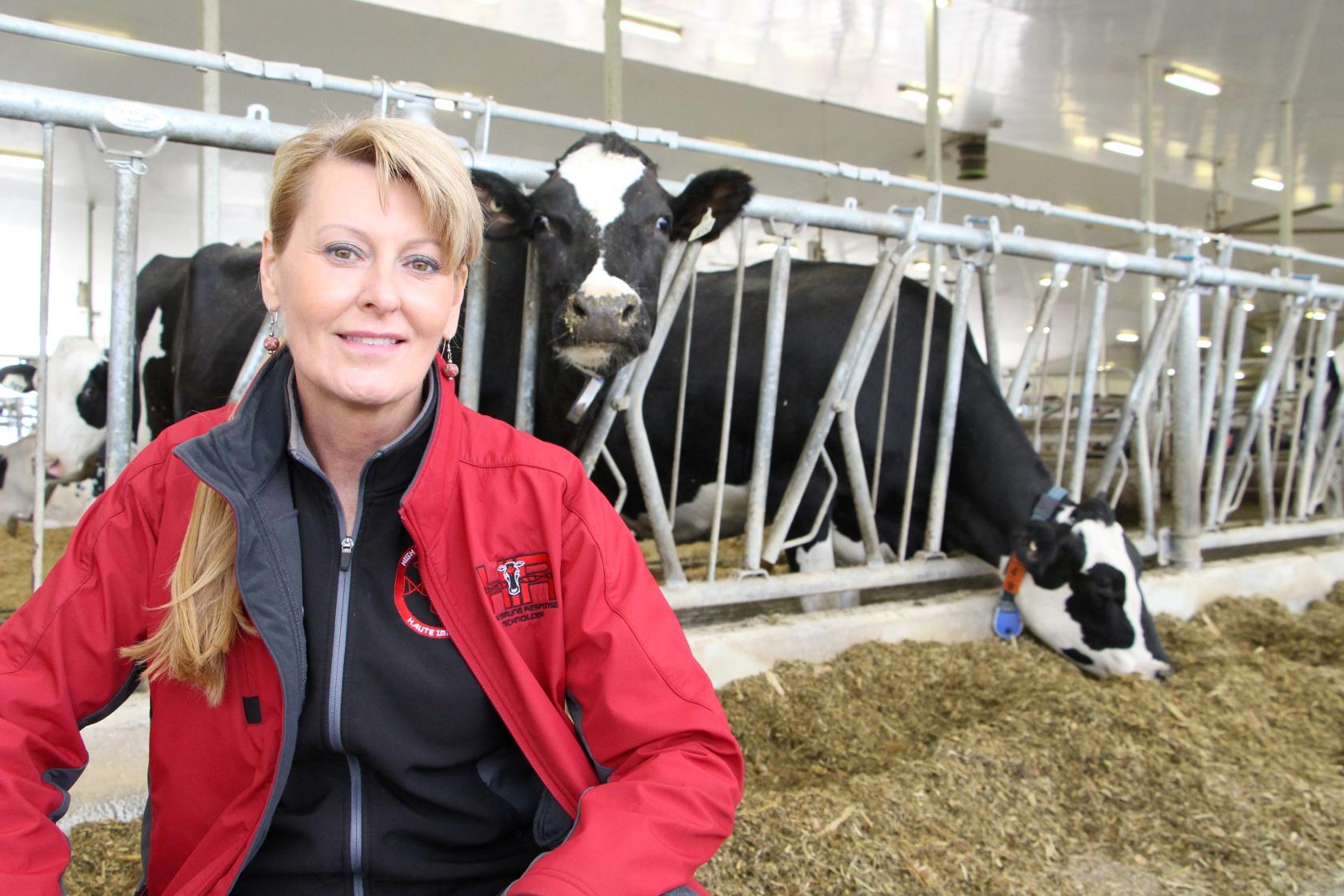
Lead photo: Dr. Bonnie Mallard. Image source: Ontario Veterinary College (OVC), University of Guelph.
Path to impact
How KTT Can Bring a New Technology to Market
Collaborators on this project developed a plan to get the word out to the dairy sector about the patented HIR technology. Areas of focus were: enhancing communication, increasing awareness of the technology and finding a partner for commercialization.
- Have technology ready for adoption. The HIR technology had been tested and validated before this project, making it ready to launch to industry.
- Connect with audiences. This project involved giving potential audiences multiple opportunities and methods to learn about HIR.
- Create targeted communication and marketing resources. Working with the Ontario Ministry of Agriculture, Food and Rural Affairs (OMAFRA) and other interested stakeholders, the project team developed fact sheets and other resources for dairy producers and veterinarians. A presentation and video highlighting HIR technology were created and distributed via DVD and USB at producer and veterinary meetings.
- Promote online and in person. The team designed social media content to direct potential consumers to the University of Guelph and other websites featuring HIR. They also delivered in-person training through workshops with regional producers and veterinarians, and at information booths at targeted regional and national forums.
Worldwide recognition of innovative research-based technology and uptake in 120+ countries
High Immune Response (HIR) technology won a World Dairy Expo innovation award in 2013. In 2017, Prof. Bonnie Mallard received the Governor General’s Award for Innovation and, in 2018, she received the YMCA Women of Distinction Lifetime Achievement Award. In addition, Prof. Mallard received the University of Guelph 2017 Innovation of the Year Award along with co-inventors Jack Dekkers, Lauri Wagter-Lesperance, professor emeritus Bruce Wilkie and Brian Kennedy. HIR technology, marketed as Immunity+, is now available internationally in 120+ countries through commercialization partner Semex Alliance®.
Positive impacts
Dairy Herd Health and Producer Profitability
The success of HIR technology enabled this commercialization success story. The technology helps producers create more sustainable and efficient dairy herds, improving herd health and profitability.
“The Immunity [plus] calves growing up, they don’t get needles. They’re healthier and you never see them sick. If they do get sick they bounce back much quicker than usual.”
Brad Hulshof, dairy producer and HIR tester
KTT Activities Connect Research Technology With Industry Partner
The KTT outreach activities yielded a connection with industry partner Semex Alliance®, Canada’s largest dairy genetics company. Semex now markets HIR technology as Immunity+(TM) across the globe.
“We knew we had to be strategic and it started with talking to producers. We knew about the technology, but you can’t put a technology out there until you [understand the industry’s needs]: “Will this help you? What do you think of this?”
Lauri Wagter-Lesperance, PhD in immunogenetics, project coordinator
The broad sector awareness raised by the KTT project helped Semex in selling Immunity+ to producers. More than 5 years later, Immunity+ is on the market and accessible to producers throughout Ontario and in 120 countries around the world. HIR technology is now being validated for beef cattle herd management.
Highlighting best practices in KTT for agri-food and rural research
Best Practice 1: Stakeholders learn in different ways, so offer multiple options
This project worked because the team created multiple approaches to getting their message out. In-person exhibits and training workshops were combined with fact sheets, videos, presentations and social media engagement. This layered approach allowed multiple opportunities for audiences to learn about the new technology.
Best Practice 2: Know and target stakeholders and influencers
The project team connected with people who influence dairy producers (veterinarians, breeders and other on-farm service suppliers) to inform their clients on HIR best practices. Through targeted workshops and key scientific presentations, producers and veterinarians became more knowledgeable about HIR and were able to share knowledge with others in their network about its benefits. Finally, an industry partnership with Semex Alliance® allowed for broad distribution and marketing in Canada and internationally.
About this report
The Ontario Agri-Food Innovation Alliance is committed to “getting science off the shelf” to support a thriving agri-food sector and vibrant rural communities. This series of reports highlights the impact of research funded through the Alliance and illustrates best practices for enhancing research impact through knowledge translation and transfer (KTT). Many thanks to Dr. Lauri Wagter Lesperance (University of Guelph) and Brad Hulshof (dairy producer) for participating in interviews for this report.
High Immune Response Technology