Building Agri-Food Resilience Through Economic Modelling
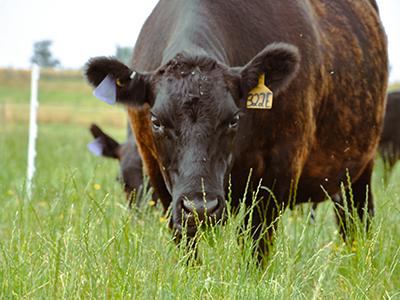
In May 2003 a cow in northern Alberta tested positive for bovine spongiform encephalopathy (BSE), leading 40 countries to restrict imports of Canadian beef cattle and meat. From 2002 to 2003, cattle and calf farm cash receipts dropped by 33 per cent: a loss of $2.5 billion.
Published: July 13, 2026
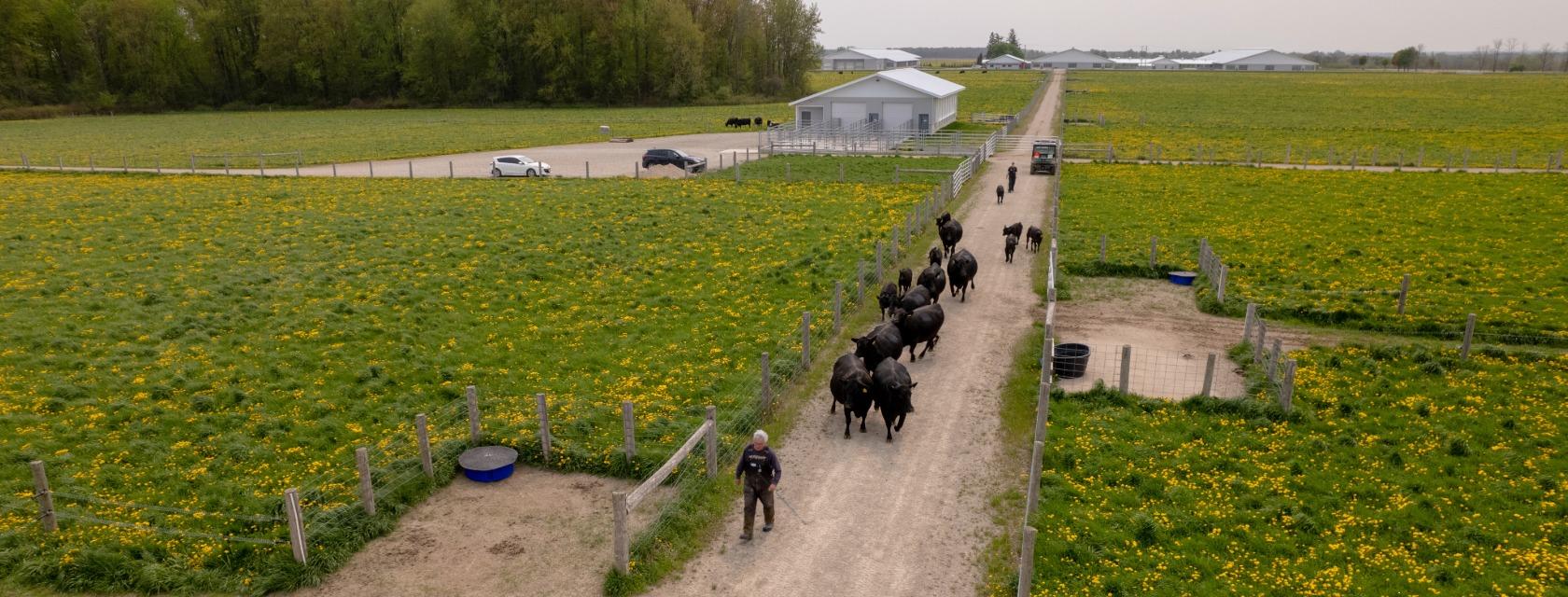
Lead photo: Researchers met extensively with the beef industry to ensure their needs were integrated into the first economic modelling project.
Impact
Economic modelling equips government and the agri-food sector with tools to anticipate risks, assess policy options and respond effectively to disease outbreaks, market disruptions and trade barriers.
Steve Duff, chief economist at the Ontario Ministry of Agriculture, Food and Agribusiness (OMAFA), recalls the BSE crisis and the beef industry’s limited ability to model—and therefore predict—its economic impacts, like price changes. As a former University of Guelph researcher, he knew the value it would provide when it comes to evaluating technical and policy questions.
“It was evident to me, having been an economist who had implemented that type of work within academic and public settings, that we needed to build this capacity,” says Duff. He proposed that the Ministry fund work to help the agri-food sector anticipate risks and understand their consequences.
The result was the first economic modelling project funded through the Ontario Agri-Food Innovation Alliance, a collaboration between the Government of Ontario and the University of Guelph.
Duff and U of G professor Dr. Alan Ker met extensively with the beef industry to ensure their needs were integrated into the first project on foot and mouth disease (FMD). After developing and testing the models, the researchers shared the results back; a process that Duff says has become a “recipe” for additional work with the dairy, pork, poultry and greenhouse sectors. The results help industry and government policymakers anticipate risks, assess policy options and respond effectively to risks like disease outbreaks.
Trade-reliant sectors get top priority
Duff says the sectors that rely the most on trade—dairy, poultry, hogs and beef— are the most valuable to model and are the most important to industry and government policymakers because they help these groups understand geographical impact and the effect of threats on prices and production.
Duff says,
The three times in my career where I've had to present to the Secretary of Cabinet—the head bureaucrat in Ontario—is with results from the models. It says the secretary of cabinet was concerned about an issue. We use that as part of our work to talk about response. That’s pretty big.
Economic models represent predictions that are used to assess trends, craft policy and forecast changes, as well as act as a common starting point for policy discussions.
All this leads into policy decisions and forecasting programs needed to offset challenges, he says.
For example, the Government of Ontario uses the models to understand the impact of trade agreements such as CUSMA on sectors such as dairy, or the impact of animal disease such as foot and mouth disease or African swine fever, he says.
In practice, this means the sector can plan for changes in production, economic and funding programs, and help to guide the response to mitigate the damage—and reduce the impact on trade.
A unique partnership with U of G trains students
According to Duff, the broader agri-food industry has not typically had a strong capacity to model changes to prices and supply management, and he saw the opportunity to partner directly with U of G to fill the gap and support the sector.
“My objective was to develop a modelling process that builds on the research capacity of, in theory, a single faculty member. They, along with grad students, would build the models and then back those models in turn,” says Duff. “The models then facilitate all kinds of different technical and policy questions to be evaluated. That creates a tool that grad students use for PhD and master's theses, to support research associates as well as to develop interaction with industry.”
This work represents just one of many close ties between U of G and OMAFA—including the Ontario Agri-Food Innovation Alliance itself, which is a collaboration between the two parties that supports farmers and the agri-food sector in the province.
"The credibility behind the models is pretty significant,” says Duff, noting they are peer-reviewed and published in scientific journals. “It takes a lot of weight off of government and industry in particular.
From a workforce perspective, it also prepares students and researchers to work in industry, he says.
Building the groundwork for resilience
Duff refers to this economic modelling work as “foundational,” noting it requires long-term capacity, funding and updating, as well as time to develop new models.
In 2026, with trade relationships evolving, Duff says the models remain relevant and work in tandem with global models:
This work gives us the ability to understand what could be at risk and how we might try to adapt to understand the consequence of, for example, a 25 per cent tariff on beef cattle.
Over the past 15 years, Alliance programs have built economic modelling capacity that prepares the agri-food sector for risks and equips government and industry with credible tools that facilitate planning and guide a coordinated response. By investing in this work before another crisis unfolds, the province strengthens its ability to protect producers and their access to export markets and safeguards the strength of each sector as a whole.
Spotlight on African swine fever
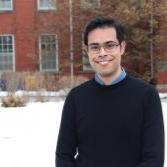
U of G researcher Dr. José Nuño-Ledesma currently leads this economic modelling work. Along with former research associate Scott Biden, Nuño-Ledesma modelled outbreak scenarios for African swine fever—a devastating disease that affects pigs and could decimate the Canadian pork industry should it be found within our borders.
Read more about how these models are answering “what-if” questions to guide preparedness efforts: Safeguarding Ontario’s Pork Industry: How Alliance Experts Are Preparing for African Swine Fever.
Photo: U of G researcher Dr. José Nuño-Ledesma
This work is funded by the Ontario Agri-Food Innovation Alliance, a collaboration between the Government of Ontario and the University of Guelph.