Beyond the Orchard: Apple Trial as a Blueprint for Research Excellence and Real-World Results
Impact
Ontario's approximately 700 apple producers benefit from University of Guelph research that uses new technology to find solutions to horticultural sector challenges. This student-led research is determining how apple growers can successfully incorporate new thinning compounds to manage labour costs and produce better fruit.
Impactful research doesn't happen in isolation. It happens when people bring their unique strengths together to solve complex problems in new ways.
That's exactly what's happening at the Ontario Crops Research Centre in Simcoe, where a University of Guelph apple research project is showing how collaboration can drive innovation and push the boundaries of what's possible in agricultural science.
The Ontario Crops Research Centre is owned by the Government of Ontario through its agency Agricultural Research and Innovation Ontario (ARIO) and is managed by the University of Guelph through the Ontario Agri-Food Innovation Alliance.
Published: September 8, 2025
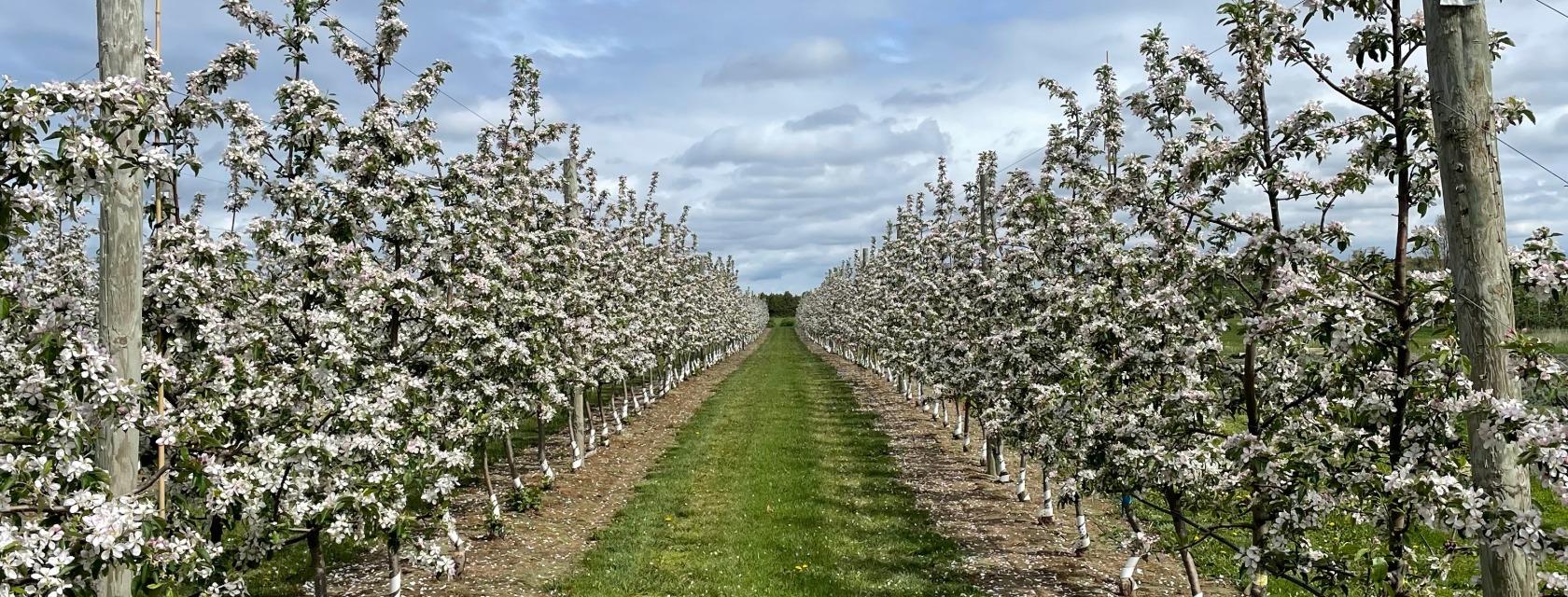
Lead photo: Apple orchard
A Complex Crop, a Big Opportunity
Ontario's apple industry is worth over $400 million, making it the province's leading tree fruit crop, although its production isn't straightforward. The wide variation in soil types, climate, cultivars, rootstocks and training systems creates a unique blend of challenges that require equally unique research solutions.
Owen Rowland, an MSc candidate in U of G’s Department of Plant Agriculture, is supported by a team that brings together deep expertise in fruit science and agricultural technology. His supervisor, Dr. John Cline, specializes in pomology, tree fruit physiology and orchard management. His advisory committee includes Dr. John Sulik, a professor in the Department of Plant Agriculture and a leader in precision agriculture, and Dr. Todd Einhorn, a pomologist at Michigan State University.
Together, they're tackling long-standing issues in apple production: managing crop load for better yield and fruit quality and finding alternatives to labour-intensive methods of hand thinning.
Learn about Dr. John Cline’s testing of a new peach-thinning compound to prepare it for commercial use:
Innovating the Way Research Is Done
The heart of Rowland’s research is crop load management; specifically, how to thin apple trees to produce better fruit year over year. Apple trees naturally produce too many fruits, leading to small, unmarketable apples one season and low yields the next. The solution? Thinning, where some of the “fruitlets” are removed early in the season to balance growth and quality.
While thinning isn't a new practice, Rowland’s work is determining how producers can successfully incorporate a new chemical thinning compound called Metamitron (marketed as Brevis® in other countries.) The company ADAMA is seeking approval for its use in Canada by 2026.
The trial, taking place in a Crimson Gala orchard at the Simcoe research centre, uses a randomized block design, which controls for natural variability like tree size and soil variability. This ensures the results are precise, reliable and applicable to real-world conditions, which will lead to more consistency for grower returns.
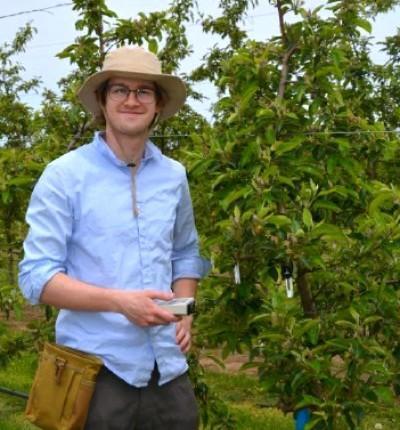
Owen Rowland - MSc Candidate, Plant Agriculture
Elevating Research Through Technology and Teamwork
The heart of Rowland’s research is crop load management; specifically, how to thin apple trees to produce better fruit year over year. Apple trees naturally produce too many fruits, leading to small, unmarketable apples one season and low yields the next. The solution? Thinning, where some of the “fruitlets” are removed early in the season to balance growth and quality.
While thinning isn't a new practice, Rowland’s work is determining how producers can successfully incorporate a new chemical thinning compound called Metamitron (marketed as Brevis® in other countries.) The company ADAMA is seeking approval for its use in Canada by 2026.
The trial, taking place in a Crimson Gala orchard at the Simcoe research centre, uses a randomized block design, which controls for natural variability like tree size and soil variability. This ensures the results are precise, reliable and applicable to real-world conditions, which will lead to more consistency for grower returns.
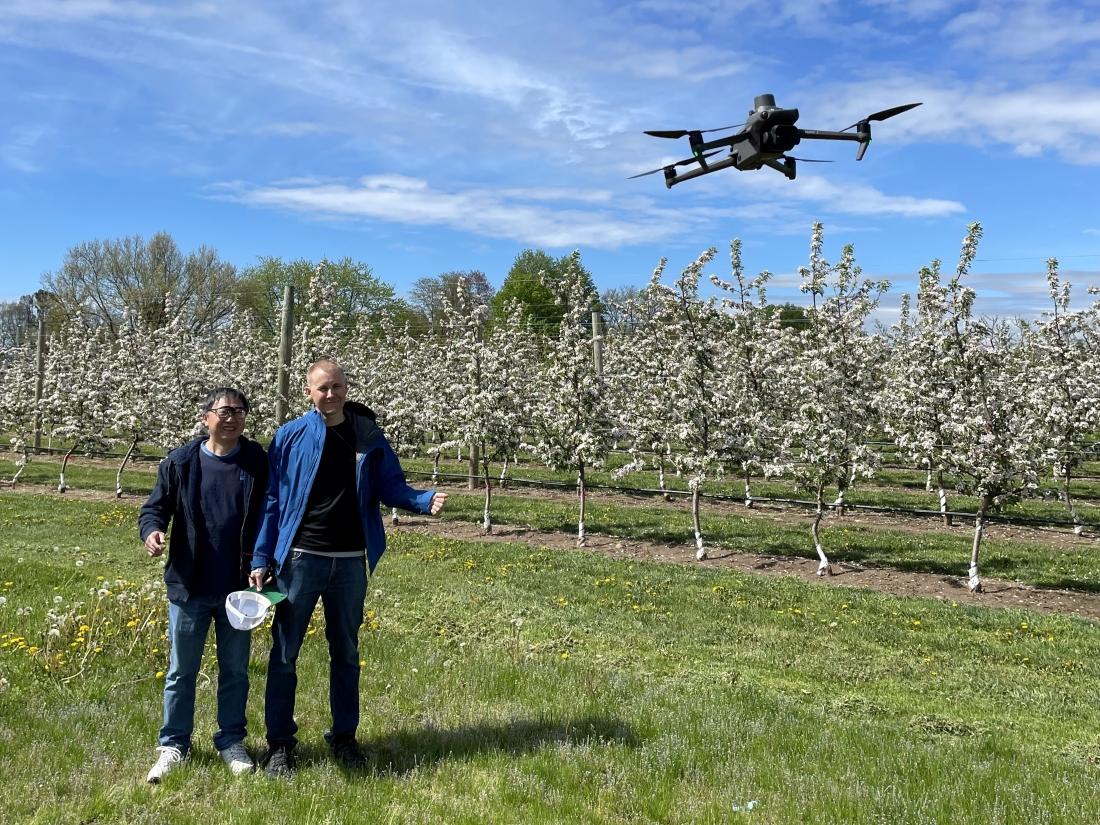
Technician Dr. Shuhua Zhan and Dr. John Sulik demonstrating the drone
A Blueprint for Research Excellence
This project stands out as a model for interdisciplinary research innovation. It's not just about testing a new product, it's about using technology, teamwork and thoughtful design to raise the standard of what agricultural research can look like.
It also reflects a growing culture of researchers helping researchers, where subject matter experts like Dr. Sulik enhance the work of colleagues by contributing tools and methods that make research stronger.
This is just the beginning: Dr. Sulik is eager to collaborate with other researchers across U of G who want to bring similar precision tools into their work.
The Takeaway
This trial at the Ontario Crops Research Centre is a model for how thoughtful research design and collaboration can lead to better tools, data and evidence-based results for growers. It's research with real impact, grounded in science and strengthened by partnership.
Financial support was provided by Fruit and Vegetable Growers Canada; Canadian Agri-Science Cluster for Horticulture 4; Agriculture and Agri-Food Canada’s AgriScience Program, a Sustainable Canadian Agricultural Partnership initiative; the University of Guelph; BC Fruit Growers' Association; Ontario Apple Growers; Adama Canada; Les Producteurs de Pommes du Quebec; Nova Scotia Fruit Growers' Association; and the Ontario Agri-Food Innovation Alliance, a collaboration among the University of Guelph, the Government of Ontario and its agency ARIO.