Growing a Skilled Agri-Food Workforce: Behind Ontario's Regulatory Training Programs
Each year, roughly 7,000 farmers, consultants and contractors step into physical and virtual classrooms to learn how to responsibly manage nutrients like manure, apply pesticides safely and protect the land they depend on.
It’s part of an essential system of regulatory training programs delivered through the University of Guelph’s Ridgetown Campus with funding from the Ontario Agri-Food Innovation Alliance, a collaboration between the Government of Ontario and U of G. And it’s critical for farms, municipalities and communities.
Published: July 13, 2026
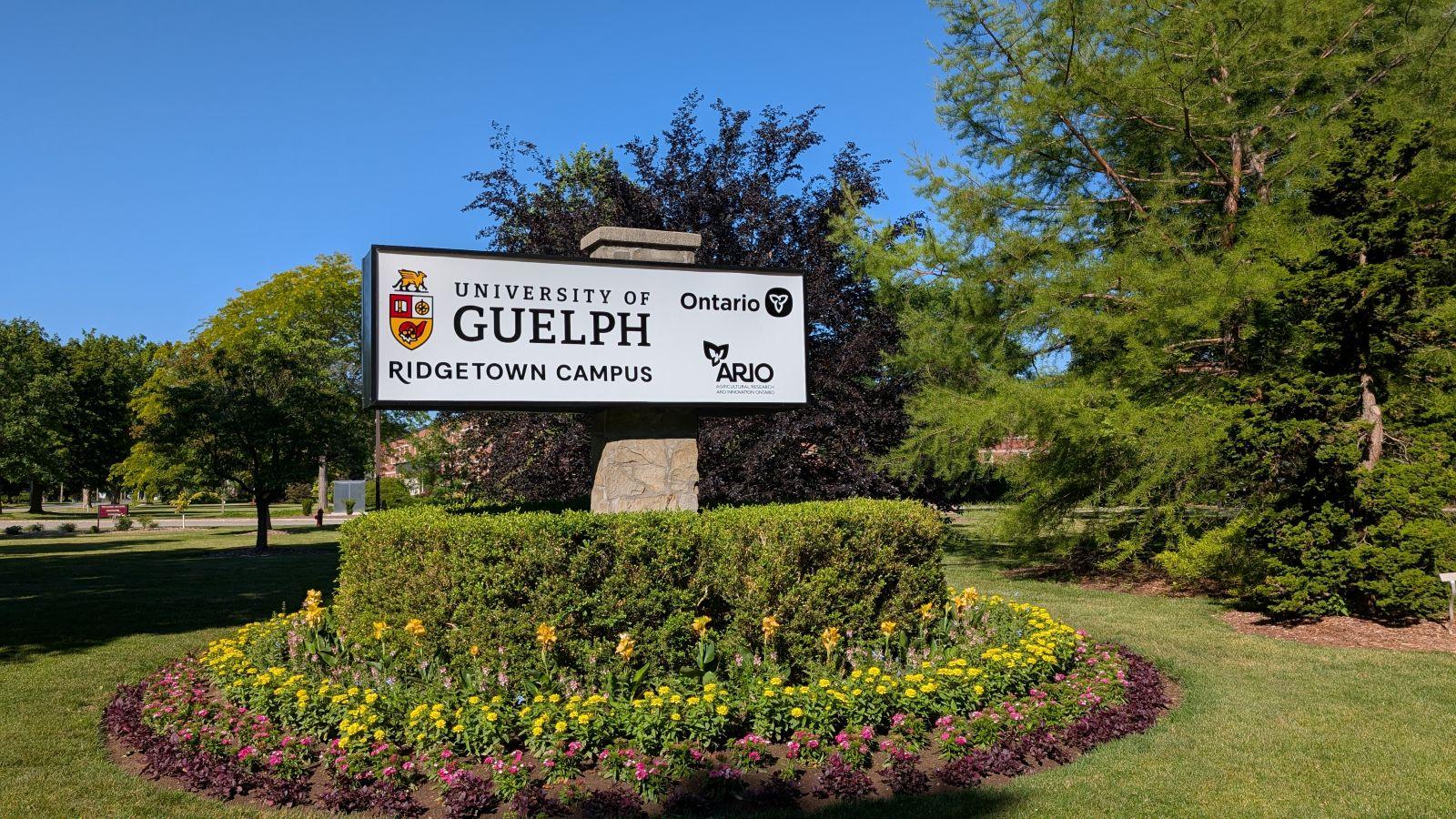
Lead photo: The University of Guelph Ridgetown Campus
Impact
Alliance-funded regulatory training programs provide critical support to Ontario's agri-food sector, protecting the environment, food safety and public health.
There are three categories of training offered: Nutrient management and drainage, the Ontario Pesticide Education Program (OPEP) and agriculture and food online training courses.
Nutrient management and drainage
U of G manages nutrient management training “from beginning to end,” says Dezarae Kemp, who managed the Business Development Centre at Ridgetown Campus from 2022 to 2026. “This is more than professional development: It’s a requirement for farmers to run their business.”
There’s a reason it’s required learning: the Nutrient Management Act, 2002 is Ontario legislation designed to protect water quality and the environment while supporting responsible agricultural practices. It was implemented after the Walkerton tragedy in 2000 and resulting Inquiry recommendations, as a science-backed approach to protecting drinking water.
It focuses on how nutrients, like manure, and other agricultural materials, are stored, handled and applied to land. The goal is to make sure farmers, consultants and contractors know how to use nutrients effectively for crop production while reducing the risk of runoff, spills or contamination of surface and groundwater.
In the field, this certification means farmers can develop their own nutrient management strategy, which would be needed, for example, when they want to build a new barn. Or, they have to hire a trained consultant to provide this service.
- 946 annual participants
- In courses, exams, certifications
- 9 instructors
- Teaching nutrient management
- 4 instructors
- Teaching drainage
Drainage
The Agricultural Tile Drainage Installation Act is Ontario legislation that regulates who can install tile drainage systems on farmland and how that work is carried out.
Tile drainage systems help remove excess water, improving soil conditions and crop production. Because this work affects land, water movement, and neighbouring properties, it needs to be done properly and consistently.
Contractor drainage training ensures agricultural tile drainage systems are installed properly by qualified contractors and operators.
Agricultural tile drainage can outlet to municipal drains. The municipal drainage courses are for municipal staff and the management of municipal drains. Ridgetown Campus does the training while the Ontario Ministry of Agriculture, Food and Agribusiness (OMAFA) oversees the licensing component because there is on-farm training required. “Even in rural settings, tile drainage usually feeds into municipal drains,” Kemp explains. “From an environmental safety perspective, it is all connected.”
Drainage training ensures water is managed effectively, improving crop yields while minimizing downstream impacts.
Ontario Pesticide Education Program
Pesticide training focuses on precise application—avoiding overuse while protecting both workers and consumers.
- 5,856 participants
- Including Ontario farmers and pesticide vendors
- 80 per cent
- Complete this course in person
- 38
- Instructors
"If you are a farmer in the province and you want to purchase certain pesticides and apply them on your farm, you need to be certified," says Kemp. “Vendors who sell those pesticides need to be licensed too.”
She explains that the Ontario Pesticide Education Program (OPEP) is about more than controlling pests. It’s about making sure pesticides are used safely and effectively, which means protecting the applicator and the environment and supporting a safe food production system.
These courses are offered by U of G across the province to ensure accessibility for all who need to take them, including farmers, vendors and on-farm assistants.
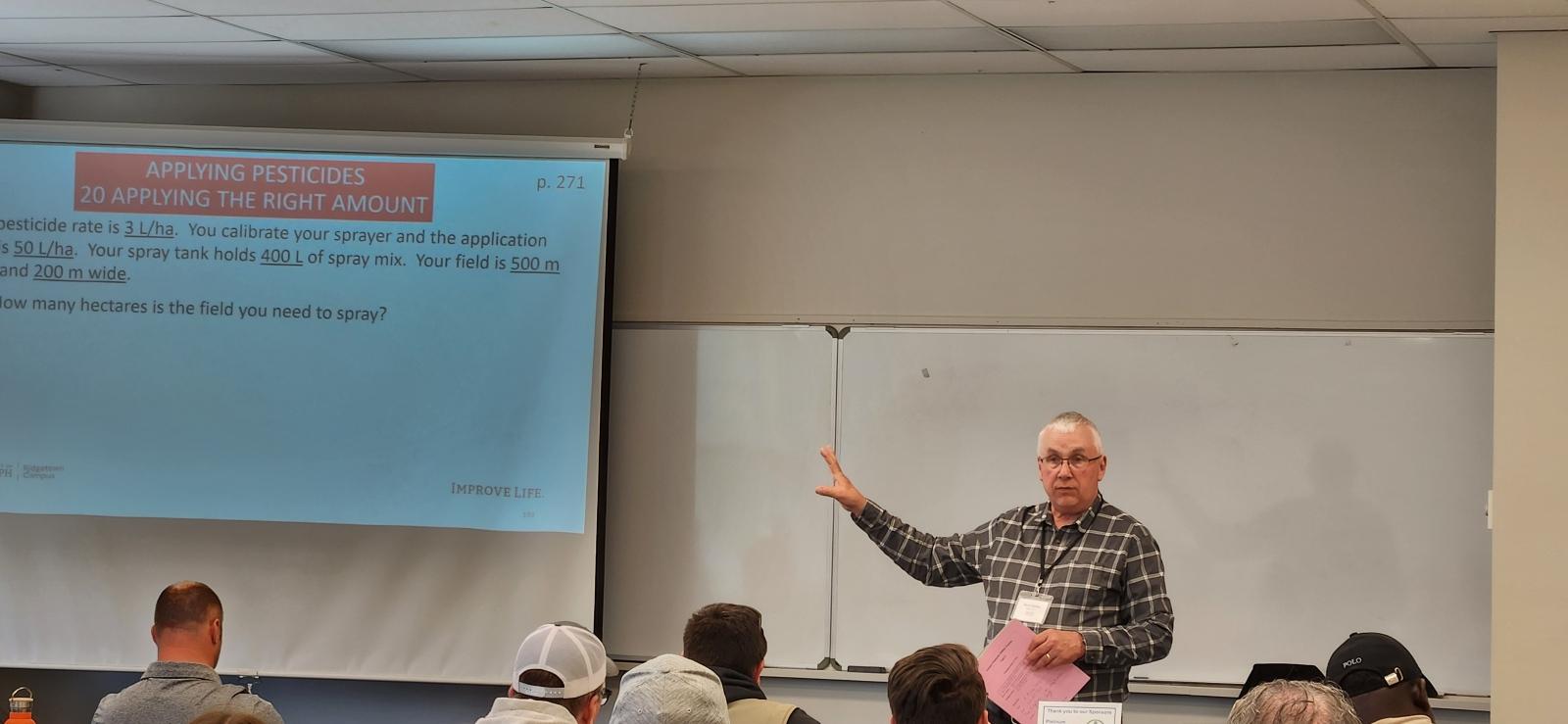
Delivering the Ontario Pesticide Education Program
Ontario Agri-Food Innovation Alliance funding for this program supports course enhancements only.
Free agriculture and food education courses
These online-only courses for producers and food processors were created by OMAFA and are offered through Ridgetown Campus. They cover topics like food safety and traceability, personnel, and sanitation.
- 124
- Participants
Training that underpins the sector
While distinct, the regulatory training programs share a common purpose: helping farmers and industry professionals meet provincial regulations while adopting best management practices, facilitated by experienced instructors.
Ridgetown Campus is the only provider of these programs across Ontario. With decades of experience (pesticide education programs date back to 1987) the system has evolved to combine in-person instruction with online accessibility.
Together, these programs represent a critical investment in Ontario’s agri-food workforce. By equipping thousands of individuals each year with the knowledge and certification they need, they help ensure that agriculture in the province remains productive, resilient and responsible.
“What’s good for the environment is also good for the operation,” Kemp says. “And ultimately, it’s good for the whole industry.”
*Metrics are based on the 2025/26 fiscal year.
The Regulatory Training Program is funded by the Ontario Agri-Food Innovation Alliance, a collaboration between the Government of Ontario and the University of Guelph.