Protecting the Pint: How the Agriculture and Food Lab is Helping Beer, Wine and Beverage Producers Stay Ahead of Spoilage
Impact
Spoilage organisms can compromise the quality of beer and wine. Ontario businesses can protect their beverages and brands with testing from the University of Guelph’s Agriculture and Food Laboratory.
Published: June 8, 2026
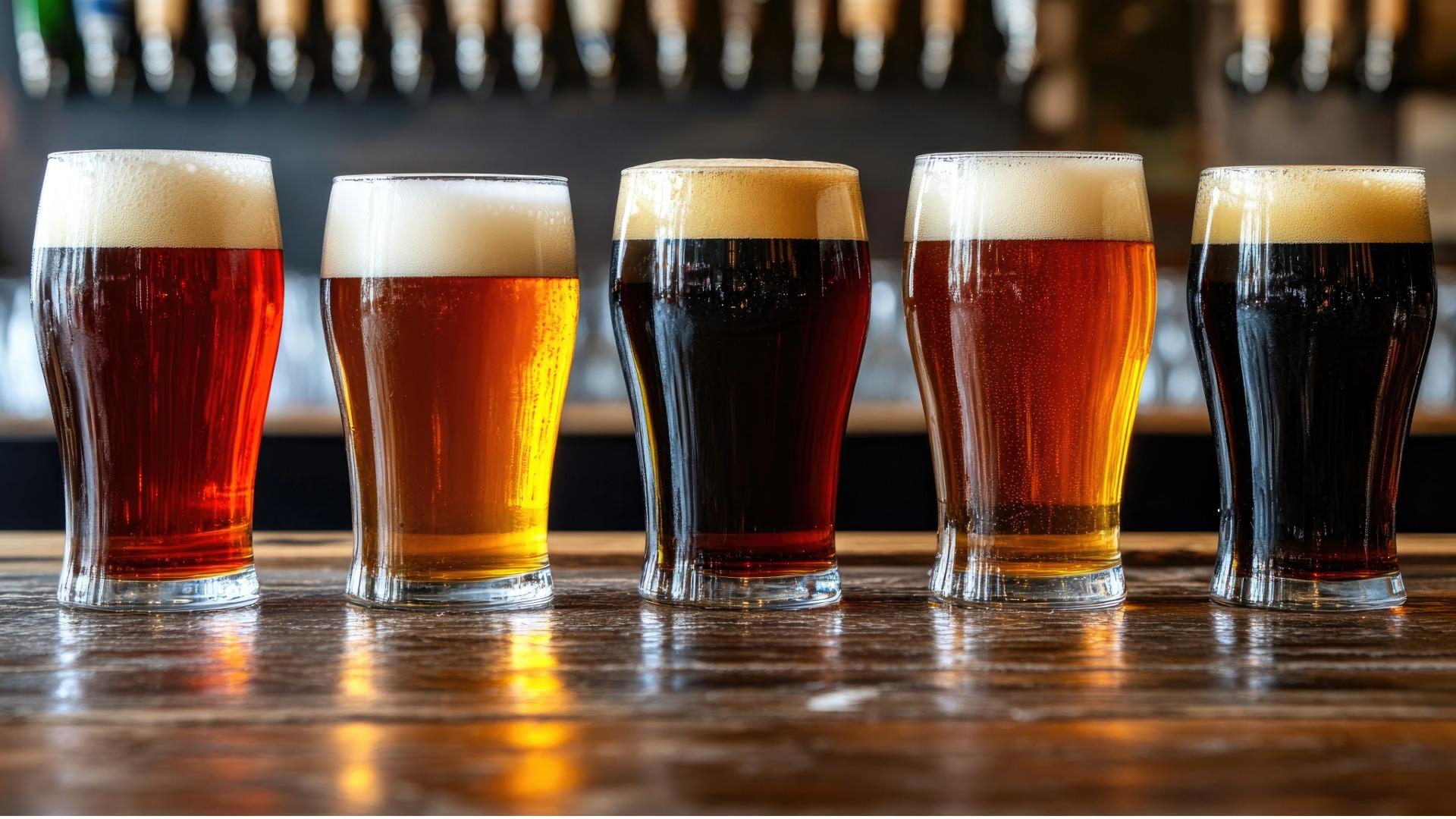
Lead photo: Stock photo
For breweries, wineries and beverage producers, spoilage is far more than some minor inconvenience. It’s an ongoing threat to their product quality and brand reputation.
There is a vast range of spoiler organisms that can cause anything— and everything—from sour or rancid off-flavours to excessive haze, over-carbonation and swollen cans.
As today’s beverage market expands beyond traditional beer and wine into hard seltzers, lower-alcohol cocktails and other fermented drinks, the challenge of identifying spoilage organisms has become even more complex.
But this is exactly where the Agriculture and Food Laboratory (AFL) at the University of Guelph has managed to carve out a special niche.
AFL tests beer and wine products, raw ingredients, water and environmental samples to find contaminants or potential contamination issues. Find out how testing can enhance product quality and protect your brand: Food, Water & Environmental Microbiology
A changing beverage landscape brings new spoilage challenges
The AFL’s beverage spoiler testing program brings together advanced molecular detection techniques with deep microbiological expertise to help breweries, wineries and beverage manufacturers pinpoint contamination risks before they become major issues.
“The beverage industry is always creating new products. And traditionally, if it’s beer you know what handful of organisms to focus on. Wine has another handful of things to look for,” explains Research Scientist Dr. Shu Chen, who is manager of the analytical biology unit at AFL. “But when you start to get into other types of products, the level of complexity increases.”
She adds that low-alcohol beverages, fruit-based fermented drinks and ready-to-drink cocktails often create the ideal conditions for broader range of microorganisms to survive and grow.
Unlike higher-alcohol products, which naturally suppress many contaminants, these newer beverages can be far more vulnerable to spoilage.
Techniques that go beyond conventional testing
While many industry-standard systems target only a narrow list of known organisms, the AFL has developed broader, more customizable methods capable of detecting both expected and unknown contaminants.
Their testing program includes detection for common spoilage organisms such as Lactobacillus, Pediococcus, Brettanomyces, Pectinatus, Megasphaera, Oenococcus and wild yeasts, alongside advanced screening for hop-resistance genes and difficult-to-detect organisms.
But identifying the culprit is rarely straightforward.
“Sometimes, there is so little of the target organism present, that you have to do a lot of filtering through samples to find what you’re looking for,” Dr. Carlos Leon-Velarde, supervisor of the AFL’s Food Microbiology unit explains. “So, we’ve developed methods of enriching organisms to make them more detectable.”
That enrichment process is one of the AFL’s key strengths. Certain spoilage organisms can be notoriously difficult to culture using routine laboratory methods.
So, Leon-Velarde and his team will carefully recreate the conditions that allow those microorganisms to grow before applying PCR testing, DNA sequencing or metagenomic analysis to identify them.
In many cases, the work almost resembles forensic science as much as microbiology.
Troubleshooting the source of contamination
The AFL’s testing and detection methods also allow producers to investigate contamination pathways throughout production.
Leon-Velarde explains that spoilage can occur during fermentation, packaging, bottling or even through shared equipment in contract manufacturing facilities. As more craft beverage producers collaborate and share infrastructure, cross-contamination risks increase substantially.
“Some companies, for example, do bottling under contract,” Leon-Velarde says. “So, you may find organisms that don’t come from your product at all, but from another unrelated product processed in the same plant.”
Working with AFL experts to fine-tune new formulations
Beyond troubleshooting active spoilage events, the AFL also works proactively with beverage developers. The laboratory routinely performs “challenge studies,” intentionally introducing spoilage organisms into experimental products to see how formulations behave under real-world conditions.
“That’s an extension of the expertise of culturing these organisms and detecting them,” Leon-Velarde explains. “We can add elected spoilage microorganisms into some novel products to see how they will behave.”
The result is valuable insight for producers before products ever reach consumers — helping manufacturers fine-tune formulations, sanitation protocols and preservation strategies before launch.
Fully customizable testing
Some clients require comprehensive microbial profiling, while others want targeted screening for specific organisms or genes. The AFL tailors its reporting and testing workflows accordingly.
“What we do is very customizable,” says Chen. “For us, it’s about adapting to what will be the most meaningful and valuable for clients.”
That adaptability is backed by advanced technologies, including PCR, DNA sequencing and next generation metagenomic analysis, all performed in an ISO/IEC 17025 accredited facility.
The AFL also maintains a growing archive of microbial isolates collected from real-world spoilage investigations — a resource that supports future method development and validation.
For breweries, wineries and beverage manufacturers navigating an increasingly innovative and microbiologically complicated marketplace, the AFL offers something invaluable: clarity in an industry where quality is everything.
The Agriculture and Food Laboratory receives funding from the Ontario Agri-Food Innovation Alliance, a collaboration between the Government of Ontario and the University of Guelph.