Growing Knowledge, Growing Trees: Inside the Arboriculture Classroom
Posted on April 24, 2026
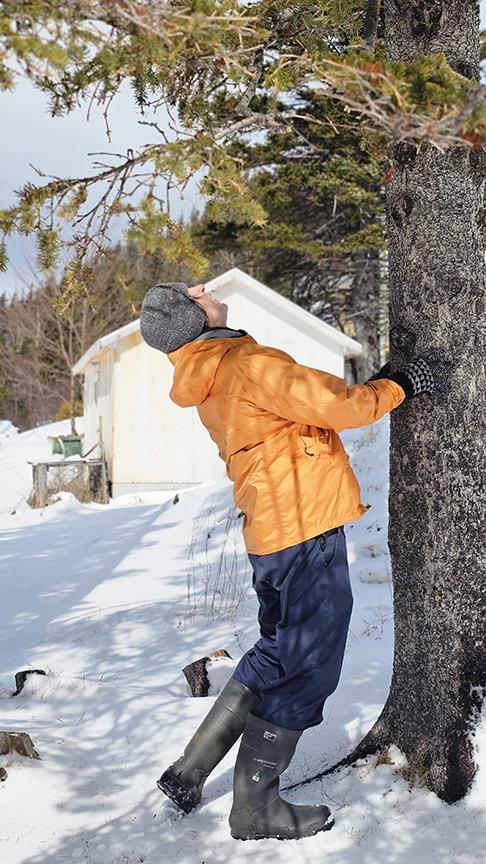
David Ward’s formal working relationship with trees began with a Horticulture Diploma from the University of Guelph, followed by Arborist training with the City of Kitchener Parks Department. “Then teaching opportunities appeared at Guelph, Humber, Fleming College, the College of the North Atlantic,” recalls Ward, “I accepted ‘em all, big or small and I’ve been teaching arboriculture ever since.”
That openness to learning and possibility has helped shape not only his career but the way he teaches. As instructor of Arboriculture—a course within the Horticulture program at the School of Continuing Studies (SCS)—Ward's focus is on connecting with his students and sharing a love for trees.
A Field Full of Good People and a Learning Environment Rooted in Curiosity
When asked what he loves most about the arboriculture industry, Ward shares, “It’s the people I come in contact with—home and property owners, tree care practitioners, volunteers, citizen scientists, and students of all sorts. I find people who value trees are generally just kind, caring people.”
This sentiment also rings true in the horticulture courses at SCS, where students arrive from all backgrounds and experiences. Attracting a wide range of learners—from professionals seeking deeper expertise, to homeowners wanting to understand the trees on their property, to lifelong learners who just love trees and feel drawn to the natural world—the students in this program are united by curiosity and a desire to do better by the landscapes they care for.
One of the instructor’s favourite parts of teaching is watching his students’ curiosity evolve into understanding.
The percentage of people who truly understand proper tree care is a very small number. Seeing students become one of the few, who now know about tree biology, gives me huge hope. Plus, they inspire me to grow as well.
What Students Can Expect
The sense of shared growth is woven into the structure of the course. “First we anchor our mutual love for trees,” explains Ward. From there, students explore and challenge the many harmful myths and misconceptions that persist in the world of tree care. He adds, “And then we learn how to mitigate those tragedies to our trees, to make a positive difference in their world and ours.”
Students leave with fresh knowledge and a renewed perspective on the world around them.
When asked why studying arboriculture is so important, Ward offers many reasons and offers an impactful message: “For a lot of important ecological, environmental, social, cultural, aesthetic, design, economic, climate-related reasons… we’ve got to get better at arboricultural care and communications.”
A Welcoming Invitation
In a world where trees play an increasingly vital role, the opportunity to understand how they grow and how they interact with their environment is a chance to contribute to healthier ecosystems, stronger and more resilient communities, and a better-informed approach to caring for the natural world. The course is designed to be welcoming and engaging, regardless of how much experience you bring from outside the course.
For anyone considering the course, Ward offers reassurance and encouragement:
Nothing to fear, here—we just study and talk about trees for an entire semester. If you want to be part of that process, know that your classmates and I will be pleased that you do.
In other words: come as you are. Bring your curiosity. Bring your love for the natural world. This is your season to grow.
Arboriculture is open for summer registration and begins May 11.
Explore all courses in the Horticulture program and start your learning journey this Summer.