2025 OVC Graduate Student Research Symposium
On July 8th, the 2025 Ontario Veterinary College (OVC) Graduate Research Symposium began with a panel discussion on Combating Social Isolation and Forging Collaborations in Research. This was followed by graduate presentations and poster sessions on large animal health, molecular and cellular research, veterinary medicine, One Health, pathways of disease and human dimensions of animal health.
Combating Social Isolation and Forging Collaborations in Research Panel

The opening panel explored how researchers can combat the isolation that often accompanies academic work by fostering collaboration and human connection. Panelists shared their experiences working both independently and within teams across labs, departments and institutions. While in-person environments were generally preferred for building meaningful relationships, the panel acknowledged the flexibility online work provides for those balancing other responsibilities. Panelists emphasized the importance of connecting beyond academic settings, with Dr. Melissa Horne highlighting her experience volunteering at the YMCA as a way to stay grounded. Whether through seminars, informal conversations, or time away from work, the discussion underscored that building a sense of community can enhance not only well-being, but also productivity and curiosity in research.
Panelists:
Dr. Samuel Workenhe – assistant professor in the Department of Pathobiology at the Ontario Veterinary College, University of Guelph. His research focuses on how innate immune responses influence antiviral and cancer immunity, with the goal of developing new immunotherapies.
Dr. Melissa Horne – OVC’s Advisor of Organizational Culture who leads equity, diversity and inclusion (EDI) initiatives and programs that support organizational well-being and inclusive culture.
Dr. Craig Bailey – associate professor in OVC’s Department of Biomedical Sciences, whose research explores brain development and the neurological basis of disorders like ADHD and autism.
Dr. Luis Arroyo – professor in OVC’s Department of Clinical Studies, who researches equine and bovine gastrointestinal and vascular diseases, including unexplained deaths in racehorses linked to arterial abnormalities.
Oral and Poster Presentations
First and second place winners received a cash prize. First place winners in the oral presentation and poster presentation categories will also be given the opportunity to attend the Canadian Emerging Veterinary Scholar Summit (CEVSS), hosted by the University of Calgary.
"As the interim ADRGS at OVC, I am extremely proud of all the graduate students who showcased their research at the Grad Symposium," says Alice Defarges. "Presenting research results in front of peers and faculty can be intimidating, yet I was truly inspired by the courage and brilliance of this new generation of scientists. Your hard work and dedication are paving the way for future innovations!”
Oral Presentation Winners
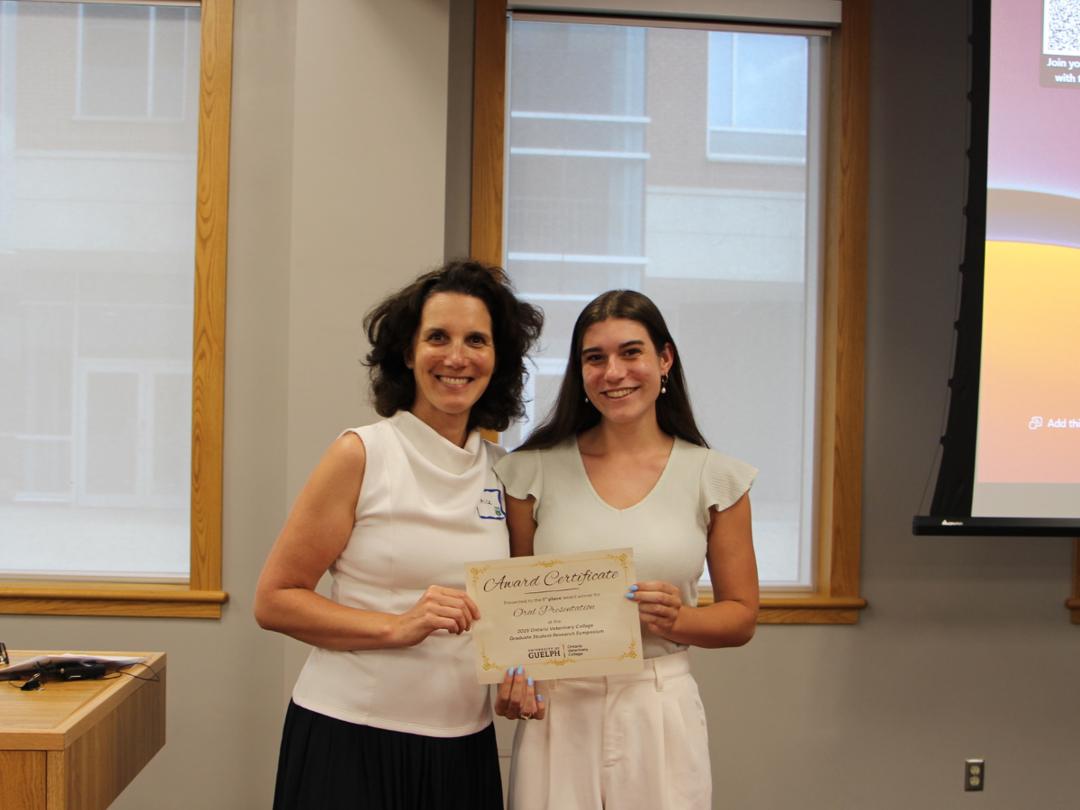
First place: Shannon Wallace, Department of Biomedical Sciences, Advisor: Pavneesh Madan
The effects of 1µm and 0.05µm polystyrene micro- and nanoplastics on bovine preimplantation embryo development
Wallace’s presentation investigated how exposure to micro- and nanoplastics (MNPs) affects early bovine embryo development. Embryos were exposed to 1µm and 0.05µm polystyrene particles during in vitro fertilization, with no significant impact observed on cleavage or blastocyst formation rates. However, confocal imaging revealed that the smaller 0.05µm particles accumulated on and inside embryos, unlike the larger particles. These findings raise important questions about how environmental MNP pollution may impact bovine reproduction and the future of cattle production.
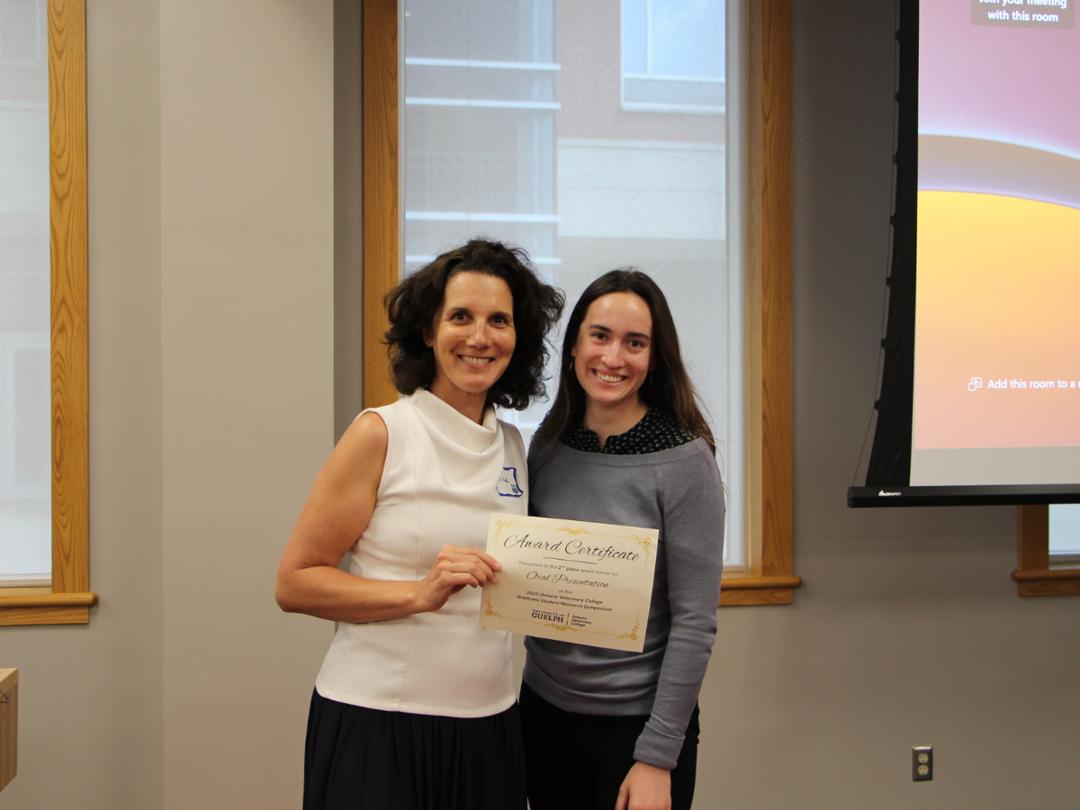
Second place: Olivia Gibson, Department of Population Medicine, Advisor: David Renaud
Factors associated with recovery from neonatal calf diarrhea: A retrospective cohort study
Gibson’s presentation explored factors linked to recovery and antimicrobial use in calves with neonatal diarrhea. The study found that calves who developed diarrhea later in the first two weeks after arrival recovered more quickly. Calves with higher levels of passive immunity, measured by serum total protein, were also less likely to need antimicrobial treatment. Pathogen presence, including rotavirus and Cryptosporidium parvum, was not associated with recovery or treatment, highlighting the greater importance of immunity and timing.
Poster Presentation Winners
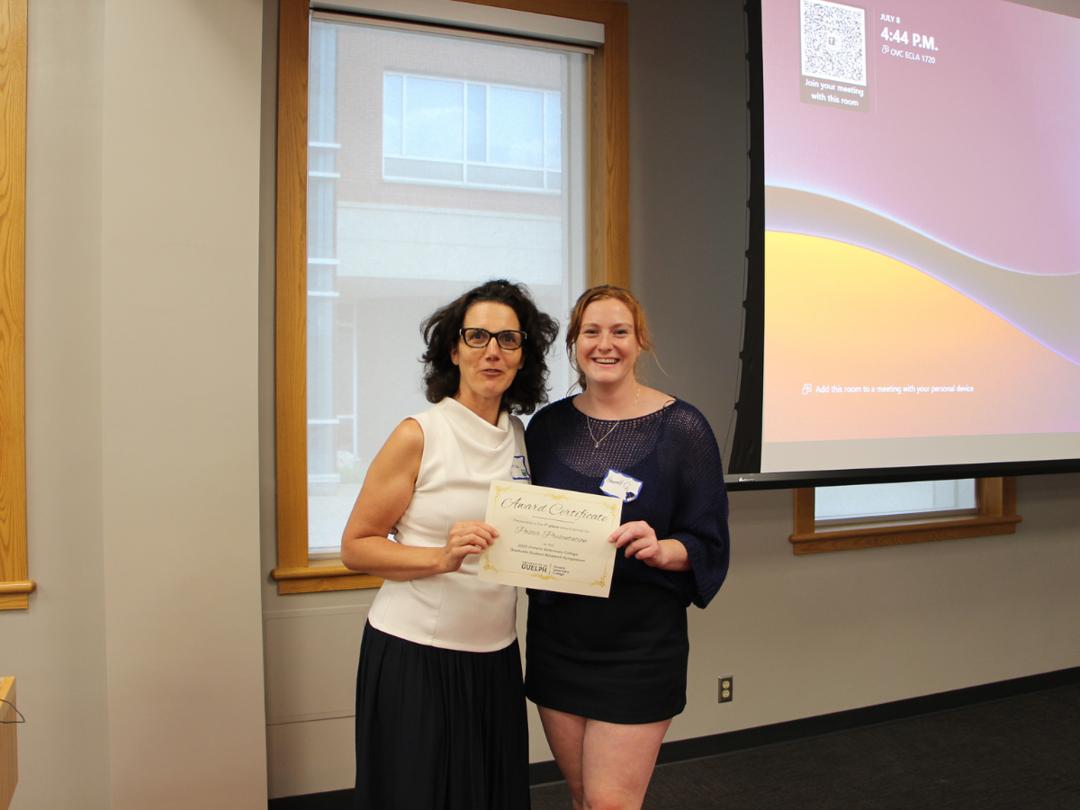
First place: Hannah Godfrey, Department of Biomedical Sciences, Advisor: Adronie Verbrugghe
Dietary macronutrient composition on body composition and post-prandial glucose and insulin response in lean and obese cats
Godfrey’s presentation explored how different dietary macronutrient compositions affect body composition and post-meal glucose and insulin responses in lean and obese cats. Cats were fed low protein, low fat and low carbohydrate diets in a crossover design over four weeks. The low-fat diet was linked to increased lean soft tissue mass and higher post-meal insulin levels, especially in obese cats. These findings suggest dietary fat levels may influence insulin response and muscle maintenance in cats, though further research is needed.
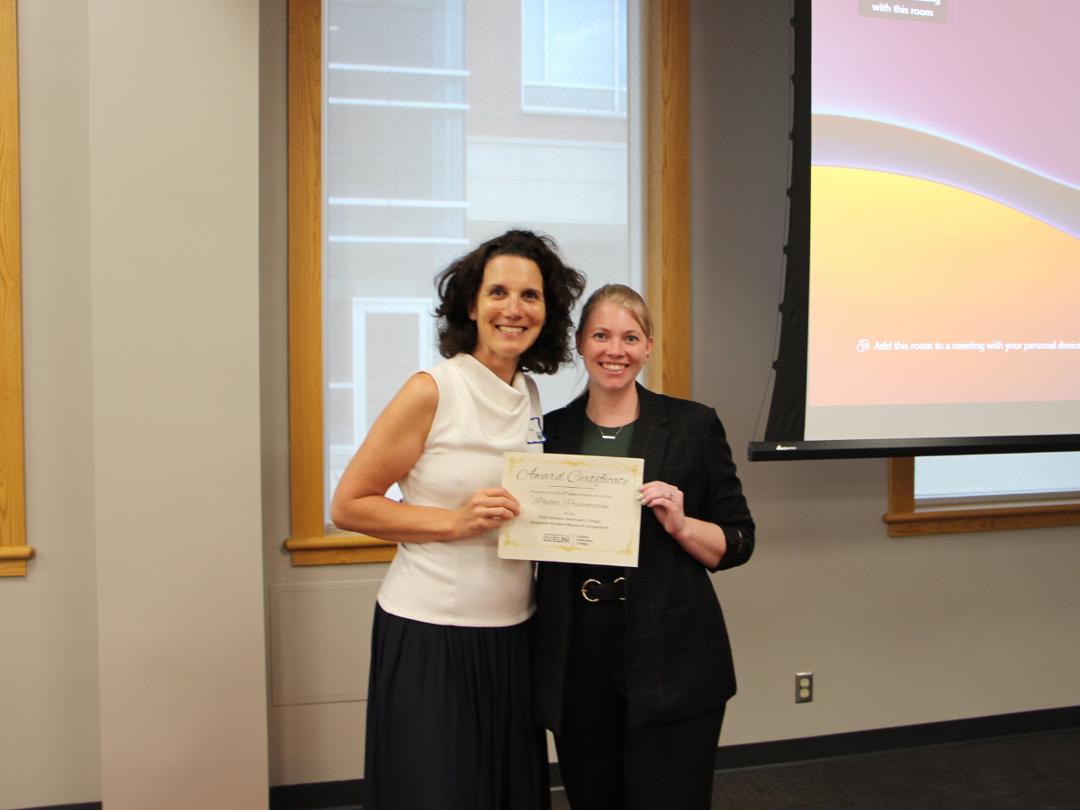
Second place: Kaytlyn Wise, Department of Pathobiology, Advisor: Claire Jardine
Comparison of Canadian Wildlife Health Cooperative wildlife disease surveillance data streams in Ontario
Wise’s presentation compared two wildlife disease surveillance data streams used by the Canadian Wildlife Health Cooperative in Ontario: carcass submissions and online health reports. While both methods captured similar geographic trends and were dominated by bird and mammal reports, carcass submissions showed greater species diversity. Differences in peak reporting times and species categories suggest each method captures unique information. These insights highlight how integrating online reports can enhance wildlife health monitoring and response efforts.
Thank you to everyone who contributed to this event
A heartfelt thank you to all the graduate students, faculty, staff and guests who attended, participated and contributed to the 2025 OVC Graduate Student Research Symposium. Your support, collaboration and enthusiasm made the event a true celebration of research, community and innovation.