The 2025 OVC Legacy Medal is Awarded to Philanthropist and Humanitarian Kim Lang
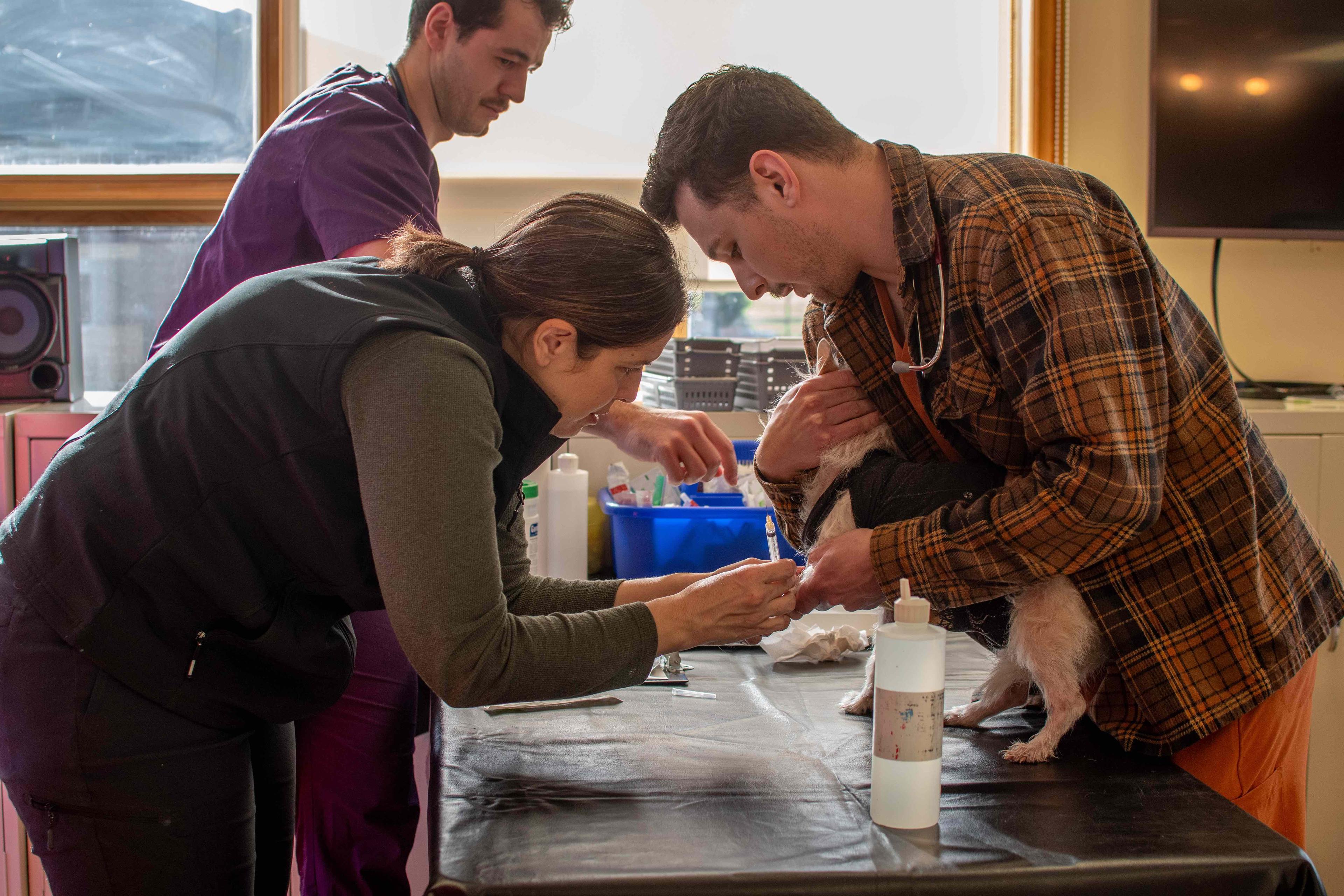
Photo: CHPP Director, Dr. Lynn Henderson, and her team deliver veterinary care to made-vulnerable and underserved communites.
Dr. Jeffrey Wichtel, dean, Ontario Veterinary College (OVC) at the University of Guelph, has announced that Mrs. E. Kim Lang is the 2025 recipient of the OVC Legacy Medal. Dean Wichtel created the award in 2021 to recognize individuals from outside the academic community who have had an extraordinary, positive and enduring impact on the college that will shape the future of the institution.
“As I prepare to leave OVC and look back on my ten years as dean, two of the greatest milestones we’ve achieved as a college have been the introduction of access-to-care training in the veterinary curriculum and the historic increase in the number of students enrolled as part of the plan to enhance access to care in the North,” said Wichtel. “Neither initiative would have been possible without Kim Lang’s strategic engagement. I am delighted to award the OVC Legacy Medal to Kim Lang for her dramatic impact on access to animal health care and the transformational change she has enabled in OVC’s DVM program.”
An avid animal lover, Lang joined the OVC Pet Trust Board in October 2009 and, with her continuing appointment since 2015 as chair of the Marketing Committee, she is one of the longest-serving executives on the Board. Throughout her tenure, Lang has contributed innovative ideas and shared her knowledge, energy and financial resources. She has helped make every fundraising campaign and gala launched by OVC Pet Trust a success.
In September 2018, Lang asked Wichtel about developing a fund for people who could not afford veterinary care. They discussed the state of OVC’s fundraising to support low-cost spay and neuter surgeries for the local humane society and for a rotation to Indigenous communities to provide similar care. Lang had long been engaged with issues facing First Nations and the need to help people pay their veterinary bills in emergencies. She believed that centering the practice of community veterinary medicine in OVC’s curriculum would not only help the animals of underserved communities but also bolster the mental health of the clients served. She challenged the Dean to consider what OVC could do if finances were not a barrier.
One year later, the agreement was struck to launch the Kim and Stu Lang Community Healthcare Partnership Program (CHPP). Generous grants from Kim and Stu Lang’s Angel Gabriel Foundation provided for long-term positions for new research faculty and veterinary staff, and for “Remy’s Fund,” which would support the cost of selected additional services as required by CHPP clients.
Now in its sixth year, CHPP has brought about significant changes in veterinary education at OVC, including new scaffolded coursework focusing on made-vulnerable communities, animal sheltering and the challenges shelters face, as well as socioeconomic factors that are the social determinants of health. This layered approach to instruction enriches the hands-on Phase 4 rotations. CHPP currently transports approximately 100 student veterinarians to First Nations communities each year to provide free or low-cost services to well over a thousand pets.
Learn more about the CHPP Program.
This program has successfully delivered hands-on experience and cultural competency training for OVC’s students, access to veterinary care for First Nations communities, and, through research and teaching, a shift in the culture of veterinary medicine to strengthen support for the spectrum of care approach and community and shelter medicine.
“Students are given lots of hands-on experience to build confidence in their skills within a spectrum-of-care practice environment,” said Dr. Lynn Henderson, CHPP veterinary director, “and we’re delighted to see that they embrace the need to engage in community medicine when they graduate.”
Students are routinely asked for their feedback. This graduate’s sentiments are typical: “The CHPP rotation gave me a taste for shelter and community medicine. I would like to continue volunteering for outreach clinics once I graduate. I really enjoy the challenges that come with it and the opportunities for creative solutions.”
But CHPP is just one of two major programmatic changes at OVC that are largely thanks to Lang’s generosity and vision. The second is the Collaborative Doctor of Veterinary Medicine Program (CDVMP). In partnership with Lakehead University in Thunder Bay, OVC successfully applied to the Ontario Government to approve the first increase in veterinary class size in more than 30 years, from 105 to 125 domestic students. As part of the agreement, OVC committed to recruiting the expansion cohort from the North and offering the initial phase of the DVM program at Lakehead. Like CHPP, the purpose of the CDVMP was to provide more access to veterinary care, specifically for northern, rural, remote and underserved communities, including Indigenous communities. And like CHPP, Kim Lang was excited to support this endeavour.
When Lakehead University identified the need to deliver facilities necessary to accommodate veterinary training, Lang generously supported their construction, ensuring the innovative strategy would move forward. At the same time, OVC recognized that a new Medical and Surgical Learning Centre (MSLC) would be essential to delivering the CDVMP. Last June, Lang provided OVC with funding for the construction of the MSLC, which will also provide a permanent home for CHPP. Thanks to Lang, OVC’s DVM graduating class of 2029 and every class thereafter will include 20 additional graduates from northern Ontario who are eager to return to the North to practice and address veterinary shortages in the region.
“None of this could have been possible without Kim Lang’s commitment, shared vision, partnership and trust,” said Wichtel. “She has led the way in addressing a glaring social inequity—that many Canadians struggle to access basic health care for the animals that share their lives. In so doing, she has saved the lives of countless animals, and in many ways, also the lives of the people for whom these pets are their sole companions.”