Kids’ Health Improves With UV-Treated Well Water
Private wells are unregulated in most of the world, so private well owners are on their own to test and treat their water and there’s poor guidance available on how to do that.
– Dr. Heather Murphy
Ultraviolet (UV) light may be an option for treating contaminated private well water that could be causing significant gastrointestinal and respiratory illnesses in children.
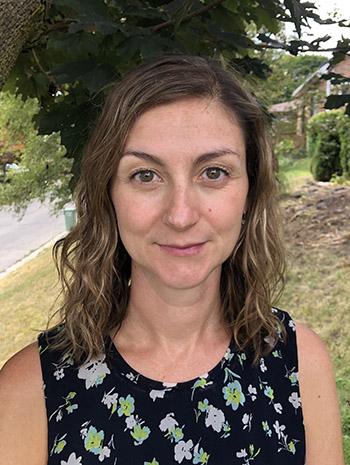
“People have known private wells are a problem for years but it’s something that the water sector has sort of ignored because the policy solutions are complicated,” says Murphy.
In the United States – and indeed in most of the world – private wells are federally unregulated. That means homeowners are responsible for testing and treating their water supply despite unclear guidance on how to do so and clear evidence that groundwater contains harmful pathogens that contribute to illness.
Private wells are not limited to rural areas; they are often used by families in suburban and rural subdivisions. This is not only a challenge in the U.S. but is a problem in Canada and many other countries around the world, added Murphy.
Murphy and her team are facing the problem head-on and focusing on children under five, a highly vulnerable demographic. Murphy is hoping to bring clarity to the problem by collaborating with a pediatrician, Dr. Donna Denno, whose previous work found that children with enteric illnesses were more likely to have a well or septic system. As well, they are working with a microbiologist, Dr. Mark Borchardt, who is the leading global expert in pathogens in groundwater supplies.

The researchers will also be sampling stool and saliva from children and collecting water samples to identify the pathogens in the water supplies that might be causing AGI.
Results from such a large study will provide a strong case for increased well water regulation and increase the understanding of how groundwater contributes to illness and the global disease burden.
Murphy and her team are taking a holistic approach to the problem too, which will only improve potential outcomes. They recognize that the factors in the situation can’t be studied in isolation, an idea that is core to the One Health approach – that is, the recognition of the interconnectedness of human, animal, and environmental health. The animals in the surrounding environment and the landscape’s microbiology are just as important as the symptoms presented in people, says Murphy.
Groundwater can be contaminated from multiple pathways. One relates to humans – from suburbs, septic systems being in close proximity to one another and improper waste management. The other pathway involves animals, such as livestock and agriculture waste being flushed into groundwater.
However, illness transmission of these contaminants tends to follow a single pathway, known as the fecal-oral route. Human or animal feces enter the water supply, people ingest that water, and if those fecal pathogens are waterborne, they will cause illnesses and end up in their feces, perpetuating the cycle further. That means it’s crucial for a holistic One Health approach to be taken to address the complexity of the problem.
“You have to deal with all elements of the problem,” says Murphy, “because if you only deal with one, you haven’t developed a complete solution.”
Funding for the project is provided by the National Institute of Allergy and Infectious Diseases of the National Institutes of Health. The UV devices for the trial were donated by the London-based company, Trojan Technologies.
Learn more about the Wells and Enteric-disease Transmission (WET) Trial project.
*DISCLAIMER* Research reported in this publication was supported by the National Institute Of Allergy And Infectious Diseases of the National Institutes of Health under Award Number R01AI153376. The content is solely the responsibility of the authors and does not necessarily represent the official views of the National Institutes of Health.
This article, written by Marilyn Sheen, was adapted from the One Health Institute’s, University of Guelph webpage for use on the OVC’s website.