Kevin McCann
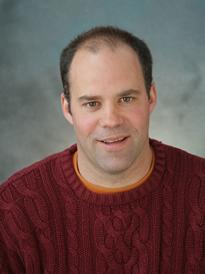
Professor
College of Biological Science, Department of Integrative Biology
Research Areas
- Ecology
Profile
After completing a degree in mathematics at Dartmouth College, I returned to school to pursue an interest in applying math to ecology. I was trained by Dr. Peter Yodzis and Don DeAngelis as a graduate student before going to University of California to work as a post-doctoral researcher with Dr. Alan Hastings. From there I took a faculty position at McGill University where I worked closely with ecosystem ecologist Dr. Joe Rasmussen. In 2003, I returned to Guelph where my lab studies the structure and function of food webs. We employ a range of approaches (theory, lab and field) and although we focus on aquatic systems (currently lakes and seagrass food webs), our approach is quite broad and includes collaborative work with soil, forest and desert food web ecologists
Education
- B.A. - Dartmouth College. Hanover, New Hampshire 1987
- M.Sc. - Guelph 1993
- Ph.D. - Guelph 1996
Research
Our lab focuses on the role biodiversity plays in structuring and governing ecological systems. The scientific approach is broadly based and employs a combination of theory, empirical and experimental analysis that requires a highly collaborative research program. Major breakthroughs in ecological understanding require that ecologists separated by traditional scientific divisions begin to communicate. Many of the systems that ecologists seek to understand do not strictly obey scientific boundaries (e.g., aboveground versus belowground, aquatic versus terrestrial), while many of the phenomena of interest simultaneously merge population, community and ecosystem processes (now all largely disparate areas of ecological research). Taken together, our lab seeks to address three major scientific questions:
- What is the structure that underlies the biotic and abiotic components of ecosystems?;
- Does this structure influence the stability, function and maintenance of diverse assemblages of species? and;
- Does this structure influence the way we manage biological resources?
Developing the answers to these important questions places society in a position to interpret how large-scale human perturbations impact the biodiversity and function of ecological systems. People in this lab range from being very mathematical to very field oriented; however, all overlap in that they are interested in developing conceptual advances in ecology.
Select Publications
- Gellner, Gabriel, Kevin S. McCann, and Alan Hastings. "The duality of stability: towards a stochastic theory of species interactions." Theoretical Ecology (2016): 1-9.
- Gellner, G. and K.S. McCann. 2016. Consistent role of weak and strong interactions in low and high diversity trophic food webs. Nature Communications.
- McCann, K.S., Gellner, G., ., Denik, L.,Hannah, L., Cooperman M., and N. Rooney. 2015. Food webs and the Sustainability of Indiscriminate fisheries.
- McMeans, B. C., K. S. McCann, M. Humpries, N. Rooney, and A. T. Fisk 2015. Food web structure in temporally-forced ecosystems. Trends in Ecology & Evolution. doi: 10.1016/j.tree.2015.09.001
- *McMeans, B. C., K. S. McCann*, T. D. Tunney, A. T. Fisk, A. Muir, N. Lester, B. Shuter, and N. Rooney. 2016. The adaptive capacity of lake food webs: from individuals to ecosystems. Ecological Monographs. 86:4-19.
- Hatton, I., McCann, K.S., Fryxell, J., Davies, J., Smerlak, M., Sinclair, A.R.E., and M. Loreau. 2015. The predator-prey power law: Biomass scaling across aquatic and terrestrial biomes. Science. 349 no. 6252
- DOI: 10.1126/science.aac6284.
- Kadoya, T. and K.S. McCann. 2015. Weak interactions instability cascades. Scientific Reports. 5: DOI:10.11038/srep12652.
- Ward, C., K.S. McCann and N. Rooney. 2015. HSS Revisited: Multi-Channel Processes mediate Trophic Control across a Productivity Gradient. Ecology Letters. DOI: 10.1111/ele.12498.
- McCann, K. 2014. Diversity and Destructive Oscillations: Camerano, Elton and May. Bulletin of the Ecological Society of America. 95:337-340.
- de Long, J. et al. 2015. The body-size dependence of trophic cascades. The American Naturalist. 185:.354-366.
Teaching
- IBIO*4600 - Integrative Marine and Freshwater Research (Fall 2024)
Graduate Students
- Carling Bieg
- Marie Gutgesell
- Chris Greyson-Gaito
- Charlotte Ward
- Zach Schonberger
- Brandon Graham
- Emily Champagne
- Connor Warne