Rethinking Tile Drainage: A Shift to Data-Driven Water Management for Farmers
Ontario farmers rely on tile drainage to manage stormwater and improve productivity on cropland. But new precision agriculture technologies can help collect and treat rainwater more efficiently and effectively, saving farmers money while protecting the environment.
University of Guelph researcher Dr. David McCarthy, a professor in the School of Environmental Sciences, Ontario Agricultural College (OAC) and Canada Excellence Research Chair (CERC) in Waterborne Pathogens, sees great opportunities to help farmers adopt a “smarter” system for water management that can do double duty to keep more stormwater on farms for reuse, and reduce the impact on ecosystems.
He’s leading a four-year research project, funded by the Ontario Agri-Food Innovation Alliance, that’s designed to offer farmers new management practices using low-cost, innovative technologies to monitor, manage and reuse stormwater.
Published: May 11, 2026
Lead photo: Staff from the Upper Thames River Conservation Authority—a project partner—survey a corn field on the Wildwood Demonstration Farm where they captured baseline data on water quality, soil health and crop yield. They’ll add “smart” technologies next season including IoT sensors and green infrastructure to improve stormwater management.
Impact
New, on-farm digital tools to monitor and manage water in real time can lower costs for farmers thanks to more sustainable use of water and nutrients. These precision technologies will help position Canadian agriculture as a leader in water quality and sustainable production.
Towards a more sustainable and cost-effective system
Traditional tile drainage is what McCarthy calls a “passive” system. What he envisions for farmers is a precision agriculture approach that would bring costs savings, improve environmental protection and add to the long-term sustainability of crop production.
“Our hope is to demonstrate the benefits of adding new technologies for stormwater management that translate into lower farming costs through sustainable use of water and nutrients,” says McCarthy.
The technologies they’ll be evaluating include many digital tools McCarthy and his team have already developed, including low-cost Internet of Things (IoT) sensing, sampling and logging hardware. Adopting these tools would give farmers a live picture of their water budget, tighter control over irrigation scheduling, and the ability to capture, treat and recycle tile drainage water to reduce reliance on external water sources.
“You don’t have to choose between a productive farm and a healthy ecosystem,” says McCarthy. “Better monitoring and water data can generate optimal outcomes for both. We believe the tools and strategies we are testing have the potential to make Canadian farmers leaders in agricultural water quality and sustainable production systems.”
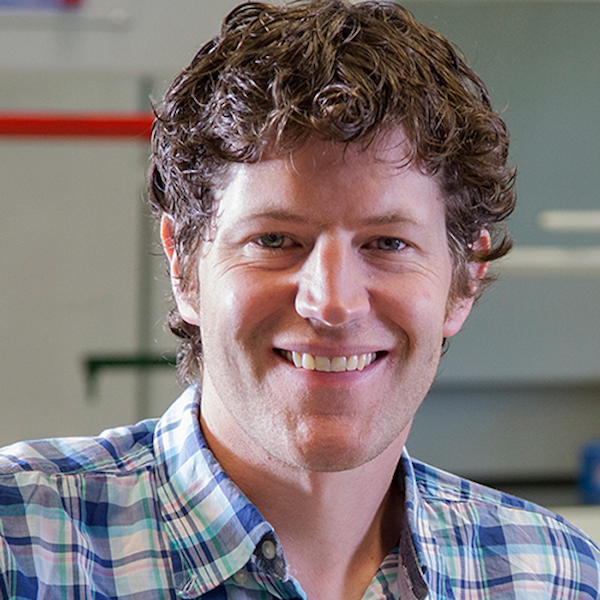
Dr. David McCarthy
Consulting end users
McCarthy knows well the role of digital technology to innovate stormwater management. But change is challenging.
“We really want farmers to lead these changes to water management by telling us what they need and how we can use our smart water management tools and technology to benefit them,” says McCarthy. “That’s why our project started by consulting with farmers, agricultural and drainage consultants, and conservation authorities to understand what barriers there may be to adopting new best management practices.”
The research team has completed the consulting portion and is ready to begin field monitoring to capture baseline “before” data on water quality, soil health and crop yield. Field work is taking place at the Ontario Crops Research Centre in Elora (owned by Agricultural Research and Innovation Ontario), Huronview Demonstration Farm (Ausable Bayfield Conservation Authority) and Wildwood Demonstration Farm (Upper Thames River Conservation Authority).
Next season, they’ll gather similar data after water control and reuse interventions have been introduced into crop fields, including green infrastructure that helps clean water, reduce runoff and store rainwater for future use.
Innovative digital technologies on the field sites will capture in-field water flow and water quality, sensors will monitor soil moisture and health, and camera-sensors will track crop plant health.
“When you combine digital monitoring tools with green infrastructure there is a real possibility that farmers can create a sustainable closed-loop water management system,” says McCarthy.
McCarthy is still actively recruiting graduate students to take part in this project.
This research is funded by the Ontario Agri-Food Innovation Alliance, a collaboration between the Government of Ontario and the University of Guelph and takes place, in part, at the Ontario Crops Research Centre – Elora, which is owned by Agricultural Research and Innovation Ontario, an agency of the Government of Ontario, and managed by U of G through the Alliance.