Soil Health: An Alliance Impact Case Study
Soil Health Research Protects Ontario
Soil health is the key to a productive, profitable and sustainable farming future. Healthy soils hold water, store carbon and deliver nutrients that crops need to thrive, all while improving environmental health and resiliency.
Soil health research funded by the Ontario Agri-Food Innovation Alliance has transformed how we understand, manage and preserve Ontario’s soils.
By investing in people, places and programs to conduct and share soil health research, the Alliance has improved the soils that sustain Ontario, delivering environmental and economic benefits today and the promise of a more sustainable tomorrow.
Read more about this research and its impact on Ontario’s farming and food system in this impact case study.
Land acknowledgment
Alliance soil health research takes place across the province, on the traditional, unceded and treaty lands and territories of First Nations and Métis peoples. We are thankful to the First Nations peoples who have cared for these areas for thousands of years and acknowledge the responsibility to work alongside Indigenous peoples to be respectful stewards of the land and water that we gratefully share. Working together, we can protect the environment for future generations.
Read more about the Alliance’s reconciliation and Indigenization commitments.
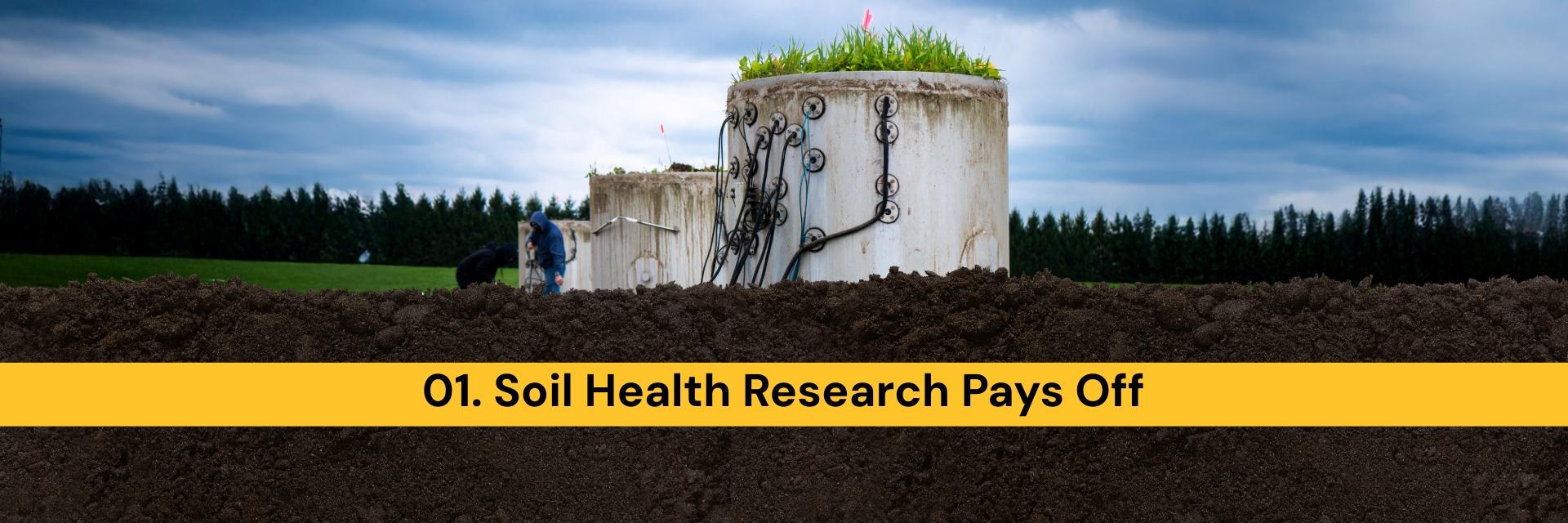
01. Soil Health Research Pays Off
The Ontario Agri-Food Innovation Alliance has a decades-long history of driving soil health research in Ontario.
Over the past 15 years, Alliance research has demonstrated to policymakers and growers that soil health is good not just for the environment. It's also good for food security and for business.
The result has been increased adoption of farming practices tailored to Ontario conditions, returning value to farmers and protecting the province’s soils for future generations.
- 25% Increase in Profit
- After four years of including wheat in a corn-soy rotation, the resulting improvements in soil health boost yields across all crops, increasing expected profits by $52 per acre.
- 20% Increase in Yield
- Applying the 4R Nutrient Stewardship principles in corn production can increase yield by up to 20 per cent while reducing greenhouse gas emissions.
- $14.6M Annual Impact
- Alliance researchers determined the potential economic impact of adopting six evidence-informed practices for promoting soil health on 10 per cent of applicable southern Ontario lands, emphasizing the importance of soil health.

“Soil health is a complex measure of resilience and essential soil functions in a production system, and it can be difficult to measure in a meaningful and cost-effective manner. However, University of Guelph researchers have been at the forefront of improving ways of effectively assessing soil health, and this is important to support the long-term sustainability of Ontario’s grain farms."
Josh Cowan, director, research and innovation, Grain Farmers of Ontario
The Business Case for Soil Health
Alliance-funded research and knowledge translation and transfer help farmers make informed decisions that benefit both their soils and their bottom line. Soil Health: It’s Good for Business, a video series by Soils at Guelph with support from the Alliance, demonstrates how Ontario growers have created real value on their farms by putting research into practice. By supporting projects like this series, the Alliance helps to promote the economic and environmental value of soil health.

Real-World Impact, Backed by Research
University of Guelph researchers shape policy and economic thinking with studies that highlight the value of soil health practices. Explore key papers that bring these insights to life:
- The Environmental and Economic Efficacy of On-Farm Beneficial Management Practices for Mitigating Soil-Related Greenhouse Gas Emissions in Ontario, Canada integrated findings from Alliance studies led by Dr. Alfons Weersink and Dr. Claudia Wagner-Riddle.
- Findings from the above paper informed the development of the federal Agricultural Climate Solutions – On-Farm Climate Action Fund, a five-year, Canada-wide cost-share funding program with a $719-million federal investment helping farmers adopt cover cropping and other soil health practices to capture carbon and reduce greenhouse gas emissions.

“Improving soil health across the country will provide many benefits. Through shifts in farm practices, we can sustain farm incomes, strengthen food security, stabilize water cycles, contribute to human health, and conserve biodiversity.”
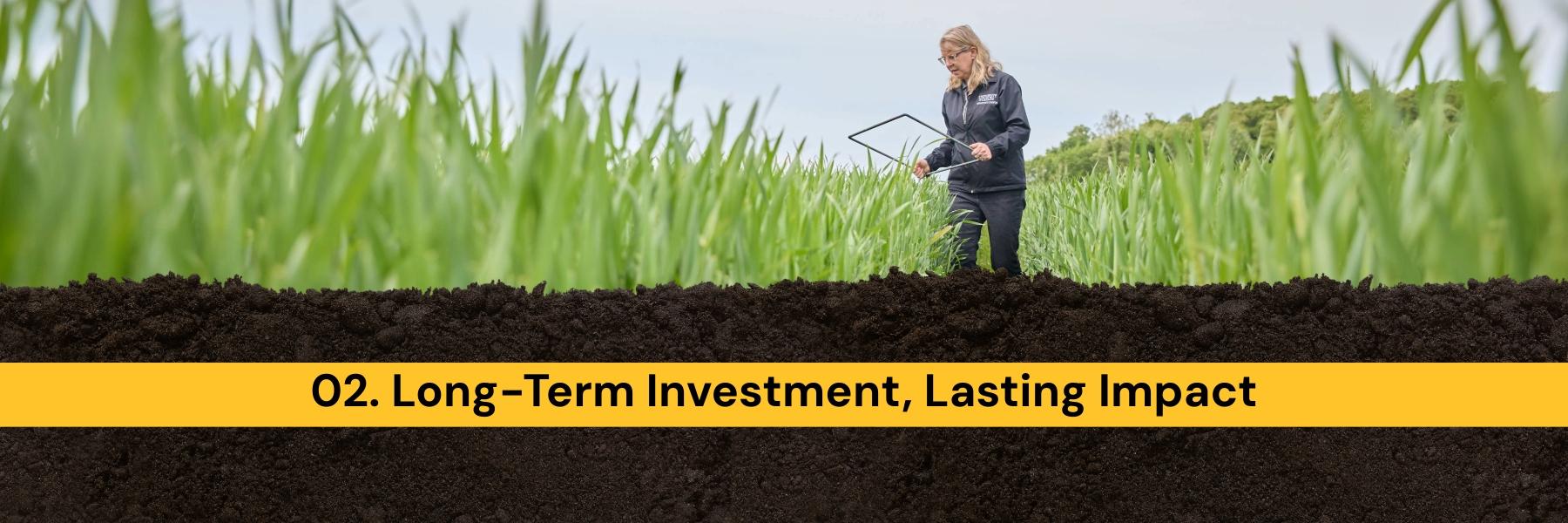
02. Long-Term Investment, Lasting Impact: Alliance Research Delivers Healthier Soils for Ontario
Improving soil health takes time—and the Alliance’s long-term strategic investment is producing real results for Ontario.
By supporting sustained research, the Alliance has facilitated work to track meaningful changes in soil structure, organic matter and nutrient cycling. This commitment has laid the groundwork for innovation, allowing researchers to ask more probing questions and build on years of progress.
The outcome is Ontario-specific data that informs best practices and strengthens the province’s agri-food sector.
But the impact doesn’t stop there.
The Alliance funds a wide range of programs—from discovery science to commercialization—moving research from the lab to the field. These projects also train the next generation of skilled workers, preparing students to thrive in Ontario’s innovation economy.
- $14.3M Invested
- The Alliance provided direct operating funding for soil health research projects. The Alliance also contributed subsidized access to research centres, technical support and long-term trial investments.
- 127 Research Projects
- This case study includes research conducted between 2008 and 2023 with demonstrated medium- or long-term impact.
- 320+ Students Trained
- Undergraduate, master’s and PhD students contributed to soil health research projects, as did 40 post-doctoral scholars.
Long-Term Trials: The Foundation of Ontario's Soil Health Knowledge
Soil health doesn’t change overnight—and neither does the science behind it.
That’s why the Alliance supports long-term research plots at the Ontario Crops Research Centre sites in Elora and Ridgetown, which have been generating Ontario-specific data for 45 and 30 years, respectively. These sites—owned by the Government of Ontario through its agency Agricultural Research and Innovation Ontario (ARIO)—are more than just research fields: they’re living laboratories that help farmers make informed decisions for healthier soils, higher yields and greater profits.
For farmers, testing new crop rotations or soil management practices on their own can be risky and time-consuming. These long-term trials relieve the burden by offering trusted, research-backed insights that are ready to be applied on the farm.
These trials have become cornerstones of outreach and engagement, connecting researchers with the farming community and turning science into action.

What’s next for the Elora long-term trials? Find out more.
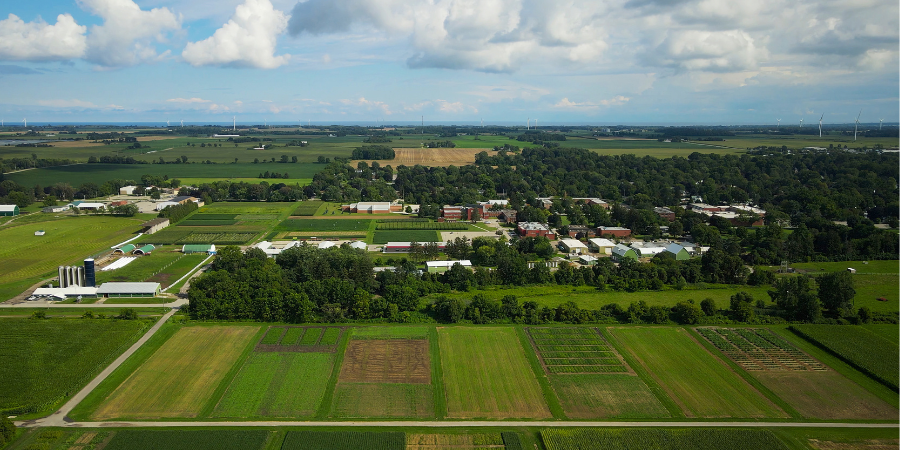
"You can’t do long-term soil health and soil organic matter research without long-term sites: end of story. We’ve learned about tillage. We’ve learned about crop rotation. We’ve learned about cover crops.”
Dr. Adam Gillespie, U of G professor and Alliance researcher
Ontario Crops Research Centre
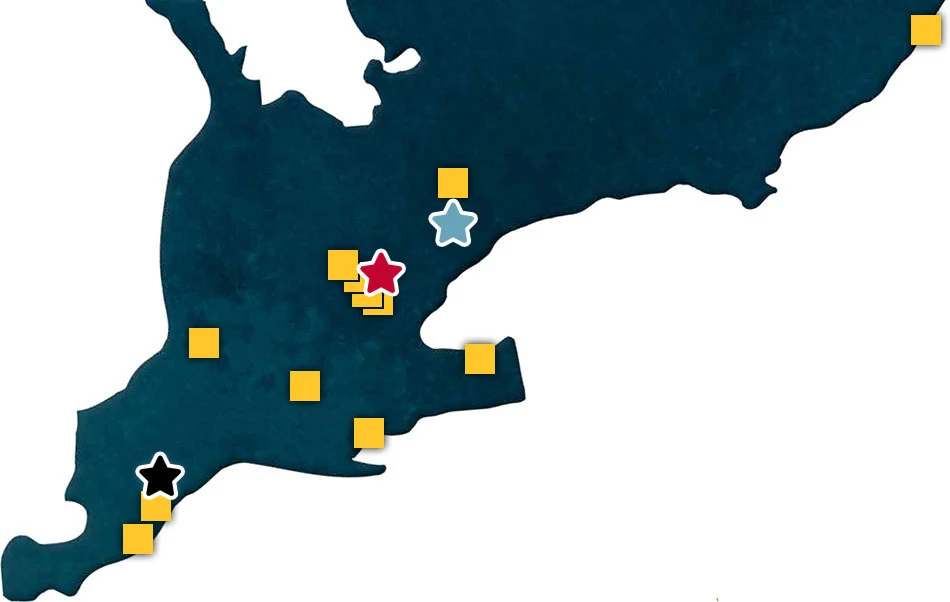
Ridgetown and Elora are two sites of the Ontario Crops Research Centre, a cross-province network of research farms that mimic farmers’ fields. The network's 10 sites across the province reflect a variety of soil types and microclimates, which ensures sector-relevant results.
Agricultural Research and Innovation Ontario (ARIO)
Through its agency Agricultural Research and Innovation Ontario, the Government of Ontario owns and invests in a network of research centres that spans the province.
ARIO provides the spaces where research on soil health can flourish.
Partnering for Healthier Soils in Ontario
The Alliance unites leaders from academia, government and industry to drive innovative solutions that benefit Ontario’s farmers, agri-food businesses and rural communities.
Alliance-funded soil health initiatives have engaged nearly 300 experts from 64 organizations, including Grain Farmers of Ontario (GFO).
Representing 28,000 barley, corn, oat, soybean and wheat farmers, GFO has been a key funder of soil health research. The Alliance and GFO work together toward shared goals of economic growth and agricultural sustainability, keeping Ontario’s grain sector productive, resilient and environmentally responsible.
"EFAO has partnered with U of G researchers on three soil health projects. The resulting publication on the impacts of farmer-led research in Ontario verified the importance of EFAO's program for supporting farmers to increase adoption of soil health practices. I anticipate the policy recommendations stemming from this work will influence funding for future research, and support soil health best practices in Ontario."
Sarah Larsen, Research & Small Grains Program Director, Ecological Farmers Association of Ontario
Attracting Investment in Technology
Stable, long-term research spaces from ARIO attract additional investment, such as federal grants, that allow new infrastructure to be installed. With the addition of new collaborators and technology, the existing innovation platform becomes stronger, amplifying the impact of soil health research.
 | Eighteen lysimeters at Elora are used to study soil-water-nutrient dynamics. Their 2016 installation was the first of its kind in North America. The lysimeter site:
|
Discover More
The infographic series Crop Rotation Counts was created to celebrate 65 years of long-term crop rotation field research and its major contributions to Ontario’s farming community. See how the long-term trials and lysimeter site have led to evidence-informed practices that sustain the soil and benefit Ontario.


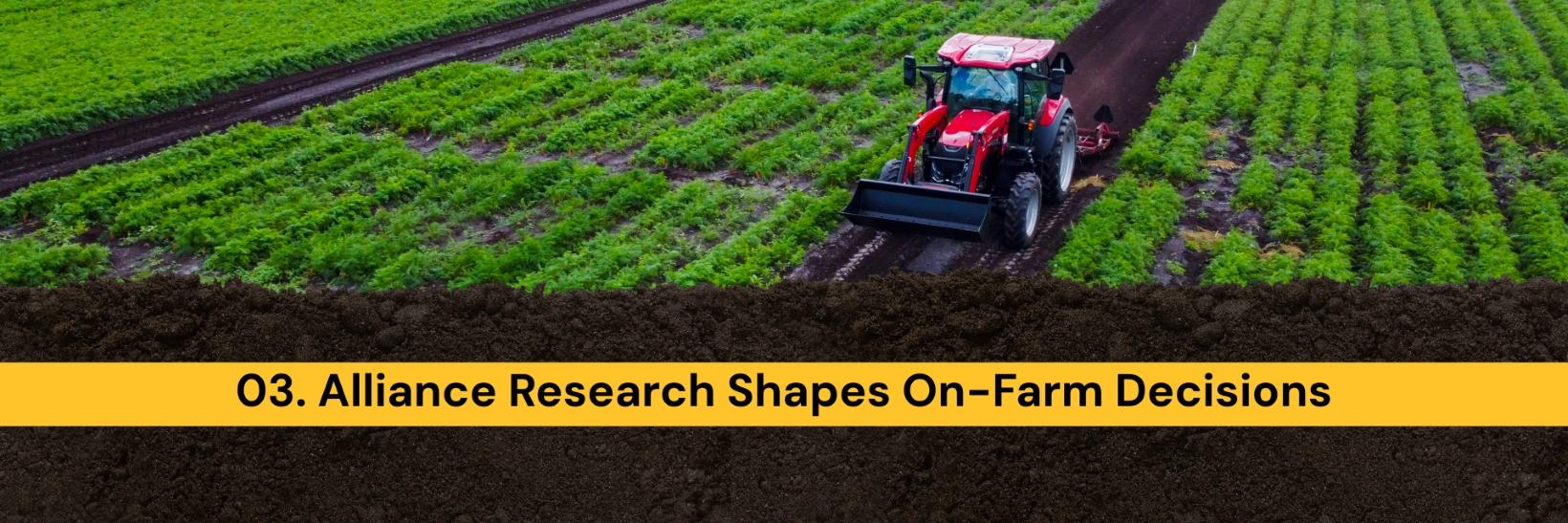
03. Alliance Research Shapes On-Farm Decisions
We farm differently because of Alliance research.
Over the past 25 years, Ontario crop production norms have changed. Thanks in part to Alliance research and knowledge mobilization, many growers now farm specifically for soil health, alongside yield and profit. The shift toward cover cropping, crop rotation, 4R nutrient management and reduced tillage results from years of collaborative research, demonstration trials and knowledge mobilization activities supported by the Alliance.
"I'm able to grow nitrogen, put it into the ground. On the economic side, if I can grow it, then I don't have to buy it."
Patrick Verkely, Middlesex County
State-of-the-art, regionally specific recommendations for crop decision management are incorporated into Ontario Ministry of Agriculture, Food and Agribusiness (OMAFA) guidance documents used by growers and certified crop advisers.
- 60% Less Phosphorus Runoff
- Farmers who adopt 4R Nutrient Stewardship in corn support the environment and save money.
- 67% Reduced Nitrogen Leaching
- Compared to conventional rotations without cover crops, including winter wheat in rotation with corn and soybeans increases nitrogen uptake within the soil profile.
- 15% Increase in Soil Health
- Alliance research shows adopting cover crops benefits the soil.
Soil health improvements are attributed to increases in soil organic carbon, microbial diversity and activity, total nitrogen and yields. U of G researchers found that cover cropping (planting to cover and protect the soil surface) maintained or improved profit margins, improved nitrogen use efficiency and reduced nutrient requirements.
 |
|
Growing Cover Crop Adoption
Yields are going up, going up at a higher pace and erosion is at a near nil.
I don't think the cover crop findings would have ever happened without the long-term research.
In the past, soil health was not typically framed as a core goal in itself. Now, that’s all changed.
04. U of G Expertise Builds Networks and Soil Resilience
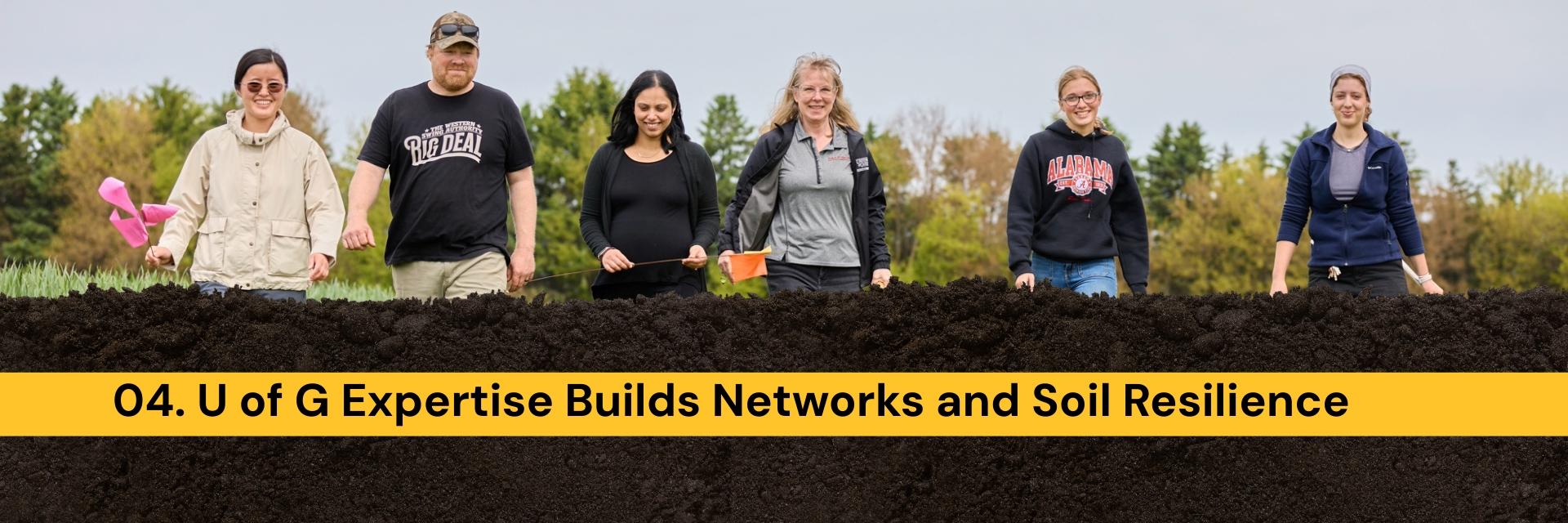
The Alliance delivers impact by leveraging the strength of its collaborators to drive improvements in Ontario agriculture. U of G’s world-class soil health research expertise, OMAFA extension staff and ARIO research spaces combine to support Ontario’s farmers, soils and future.
U of G Is the Go-To Place for Soil Health Expertise
The agriculture sector in Ontario and beyond recognizes the breadth and depth of soil health expertise at U of G.
- 36 Unique Lead Applicants
- U of G faculty members lead Alliance soil health research.
- 50 OMAFA Staff
- Collaboration on soil health research projects strengthens multi-disciplinary teams.
- 780+ Team Members
- Nearly 300 individuals representing 64 organizations engaged with Alliance soil health research projects.

“The close connections between U of G researchers and farmers mean that we are better able to bridge the gap between research and trusted recommendations for Ontario’s farmers.”
Josh Cowan, director, research and innovation, Grain Farmers of Ontario
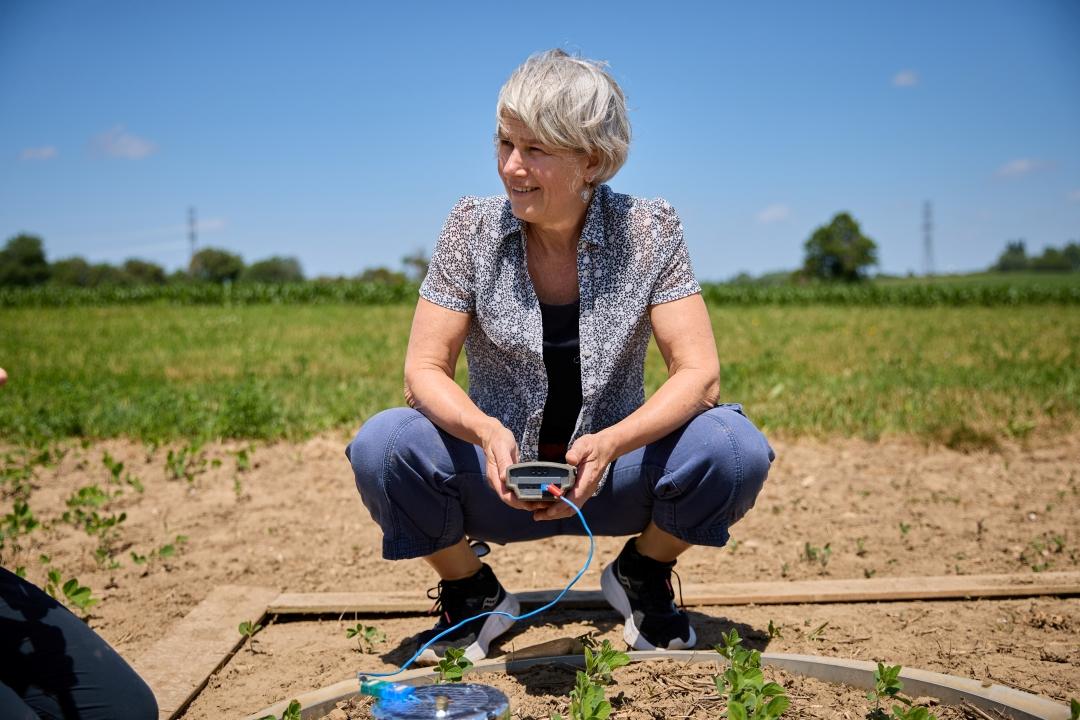 | Recipient of the Norman Borlaug Plant Nutrition Award from the International Fertilizer Association, 2020 “Fertilizer Canada is pleased to honour Dr. Wagner-Riddle as she joins an elite group of researchers who have received this award for her outstanding research accomplishments. Through her novel research, she has gained an esteemed reputation as a soil scientist who is combining innovative technical methods with multidisciplinary collaboration.” –Garth White, president and CEO of Fertilizer Canada, 2020 |
 | Canada Research Chair in Digital Agriculture As a renowned specialist in data-driven sustainable soil management, Asim Biswas won the 2023 Steacie prize. His work on a sustainable agri-food system will increase the productivity and resilience of farms in a warming world. He and his research team are using, modifying and developing new digital tools, such as sensors, to address data collection challenges. Read more about some of his Alliance-funded work. Breaking Ground: In-Field Soil Sensing Is Key to Precision Agriculture |
Soils at Guelph Advances Sustainable Soil Management in Ontario
Soils at Guelph makes research accessible and facilitates knowledge exchange among researchers, farmers, industry, government and the public.
The initiative began with a $500,000 donation from citizen activists with a passion for soil care and conservation to mark World Soil Day in 2018.
The donation was amplified by support from the Government of Ontario through the Ontario Agri-Food Innovation Alliance. Soils at Guelph continues to build new collaborations.
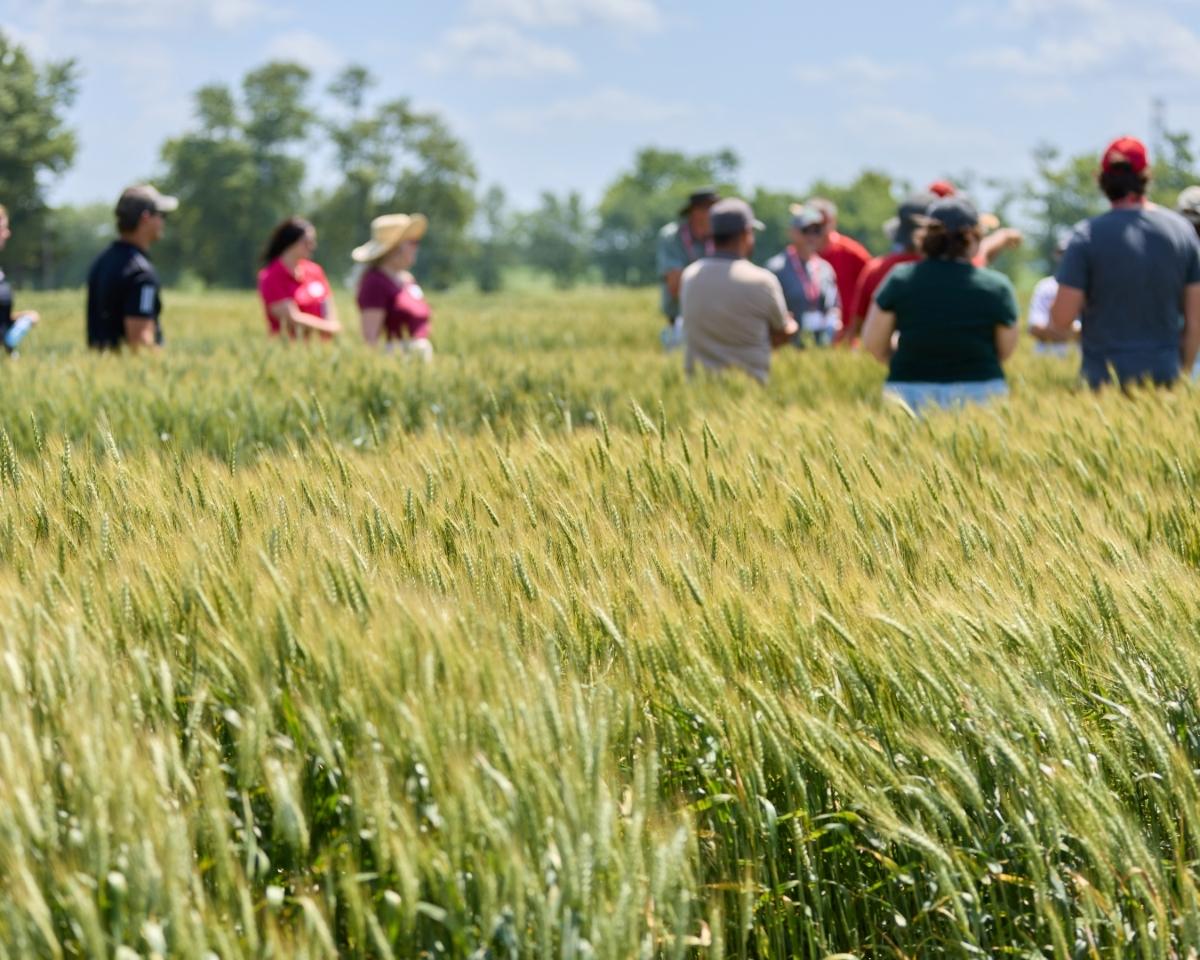
Talking Dirt(y): Alliance-Supported Soil Knowledge Mobilization at University of Guelph Breaks Plenty of New Ground
Soil science knowledge generated by U of G researchers is moving beyond the field.
By leveraging the expertise centralized through the University’s Soils at Guelph initiative, the Ontario Agri-Food Innovation Alliance helps soil health knowledge to reach Ontario producers in new, creative ways.
Dig Deeper: How SHAP Is Transforming Soil Health in Ontario
Ontario needed a soil health test built for its unique conditions, and the Alliance delivered.

Years of collaborative research between the University of Guelph and OMAFA helped develop the Soil Health Assessment and Plan (SHAP), a made-in-Ontario tool that helps farmers and advisers assess, understand and improve soil health.
SHAP combines:
- lab testing of biological, physical and chemical indicators (SHAP Test)
- digital tools to evaluate management practices and risks
With just one soil sample, SHAP provides a comprehensive snapshot of soil health and a roadmap for improvement, both on-farm and for public policy.
SHAP Timeline: From Vision to Impact
Toward a Shared Understanding of Soil Health Benefits
Because of Alliance research, farmers are adopting practices that improve yields, reduce input costs and enhance environmental outcomes. Policymakers have access to Ontario-specific data and tools to guide sustainable agriculture.
U of G has emerged as a national leader in soil health, attracting collaborations and investments. Most importantly, the Alliance’s long-term, strategic investment ensures that Ontario’s agricultural soils will remain productive and resilient for generations to come.