
Master of Supply Chain Management
Degree
- MSCM (Master of Supply Chain Management)
Program Type
- Coursework
Delivery
- On-campus
Entry Terms & Application Deadlines
- Fall (September): January 15
Duration
- Full Time: 10 months
- Part Time: 24 months
Program Overview
The Master of Supply Chain Management (MSCM) is a 10-month, course-based program designed to prepare graduates for leadership in global supply chains.
- Graduates in business, engineering, or related disciplines
- Early-career professionals aiming to advance their careers in supply chain management
Learn from Expert Faculty
MSCM students learn from renowned faculty and industry experts from the Lang School and collaborating departments:
- Cris Bravo Monge, Assistant Professor (Management) – Entrepreneurship, organizational culture, and leadership
- Mark Holmes, Professor (HFTM) – Food service operations, sustainability, and supply chain integration in hospitality
- Kalinga Jagoda, Professor (Management) – Supply chain management, risk management, accounting, and sustainability
- Soha Moussa, Associate Professor (Engineering) – Productivity improvement, optimization, quality control, supply chain technologies
- Sourav Ray, Professor (Marketing and Consumer Studies) – Marketing strategy, distribution channels, pricing, and technology in supply chains
- Davar Rezania, Associate Professor (Management) – Project management, team leadership, sustainable economics, sustainable agriculture
- Kelsey Taylor, Assistant Professor (HFTM) – Sustainable supply chain management, circular economy, social entrepreneurship
- Andreas Boecker, Associate Professor (FARE) – Logistics, distribution, value chain structure, food-related risk management
- Ruben Burga, Assistant Professor (Management) – Corporate social responsibility, project leadership, responsible management
- Fantahun M. Defersha, Associate Professor (Engineering) – Automation, engineering optimization, manufacturing systems, scheduling
- Jamie Gruman, Professor (Management) – Workplace well-being, employee engagement, positive organizational behaviour
- Louise Hayes, Associate Professor (Management) – Financial reporting, accountability, and controls in supply chains
- Brent McKenzie, Professor, (Marketing and Consumer Studies) - Marketing, retail quality and management, international business, Dark tourism
Why it matters for you:
- Learn from leaders in sustainable, digital, and global supply chains
- Receive mentorship and guidance for capstone projects and career planning
- Access industry connections and applied insights

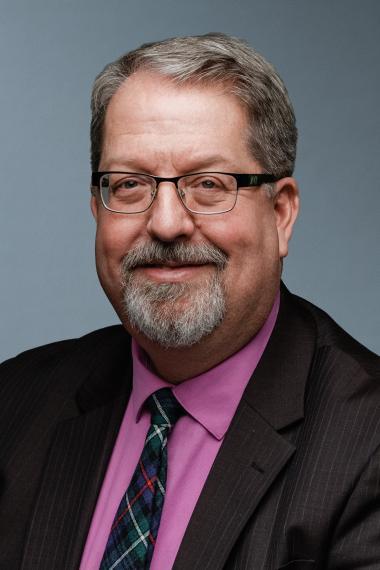
Expert Spotlight
Brent McKenzie, Professor
Dr. McKenzie is a leading expert on marketing (retail sector) and management (dark tourism; transition economies) theory and practice in the Baltic States of Estonia, Latvia, and Lithuania. He has engaged in extensive research fieldwork and conducted numerous academic and industry workshops, presentations, and seminars in the Baltic States, and Central and Eastern Europe. He serves as a regional editor for the "International Journal of Business and Emerging Markets".
Program Timeline
Master of Supply Chain Management Courses
Experiential Learning and Capstone
- Capstone: The Fresh Connection simulation
- Students work in teams to solve a real-world supply chain challenge
- Evaluation includes simulation performance + written reflection on decisions and outcomes
- Experiential learning is embedded across courses with projects designed for industry relevance
Career Outcomes and Industry Opportunities
Graduates are prepared for high-impact roles across multiple industries:
- Supply Chain Manager
- Operations Planner / Analyst
- Procurement Manager
- Logistics Coordinator
- Risk & Sustainability Analyst
Admission Requirements
Tuition and Program Fees
Pending Senate Approval.