Landscape Architecture at SEDRD
What is Landscape Architecture?
Landscape architecture is a profession that combines art and science to design attractive, functional and sustainable outdoor spaces. Landscape architects work collaboratively with other professionals to plan, design and manage public spaces such as urban plazas, parks, conservation areas, residential developments, gardens, cemeteries, commercial centres, resorts, transportation corridors, golf courses, corporate and institutional centres and waterfront developments etc. They also design and plan the restoration of natural places disturbed by humans such as wetlands, stream corridors, mined areas and forested land. Landscape Architects balance human use and enjoyment with environmental health to conserve our outdoor spaces for generations to come.
SEDRD's faculty and associated professionals are recognized internationally for their contributions to teaching, research, writing, practice, and professional service and bring a broad range of experiences to the learning environment. Both BLA & MLA programs are fully accredited by the Canadian Society of Landscape Architects and fully recognized by the American Society of Landscape Architects. The programs facilitate membership in Landscape Architecture professional associations across North America
Accredited by

Landscape Architecture Programs in SEDRD
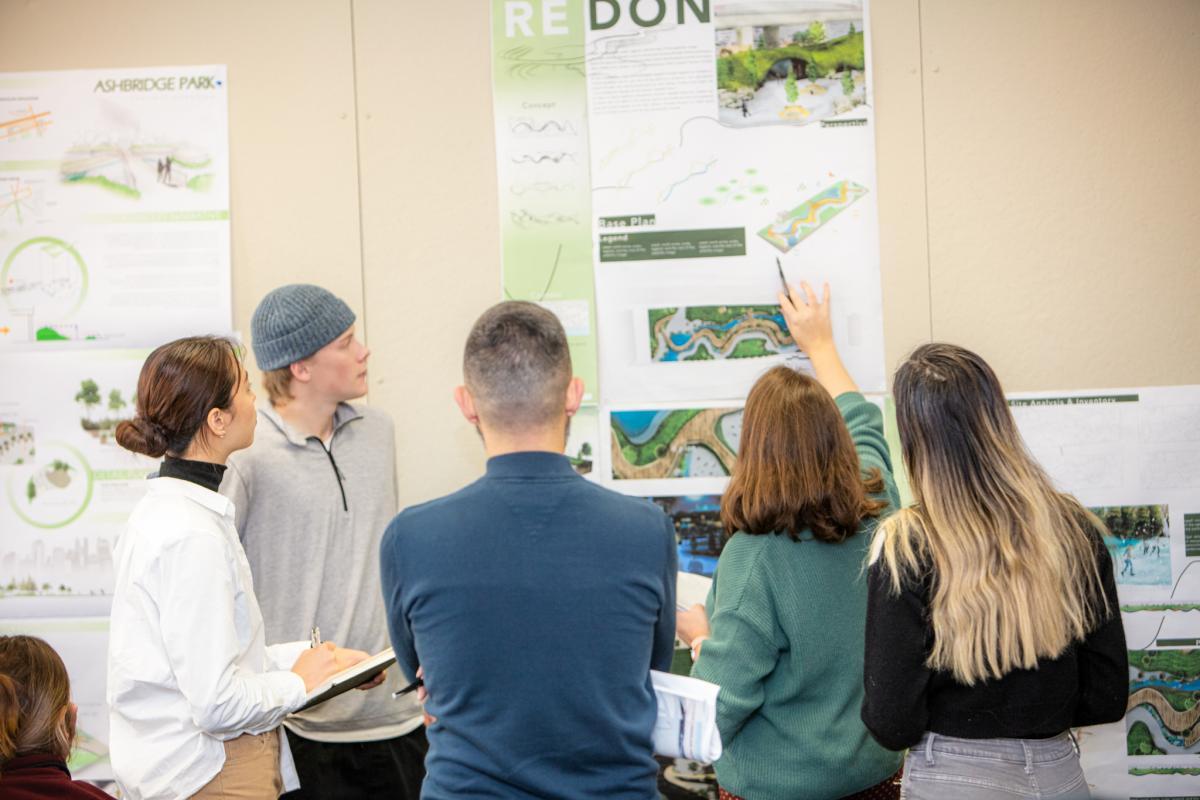
Bachelor of Landscape Architecture

Master of Landscape Architecture
Landscape Architecture: A Recognized STEM Discipline in Canada
SEDRD is very proud to have accredited graduate and undergraduate programs in Landscape Architecture recognized as a STEM discipline in Canada. STEM stands for Science, Technology, Engineering, and Mathematics. It represents a collection of disciplines pivotal to innovation, problem-solving, and societal advancement. STEM fields are dedicated to understanding the natural world, leveraging technology, tackling complex challenges, and applying mathematical principles in practical scenarios.
More than an honorary title, it reflects the comprehensive blend of expertise landscape architects contribute. This designation highlights the value of scientific, technological, engineering, and mathematical underpinnings of the profession – and has informed our curricula development for decades, our continued curiosities and wonderment, and the efforts our students and faculty routinely undertake at Guelph; we endeavour to train "stewards of both natural and built environments." Our students have always sought to explore and employ an understanding of ecological systems, design that is sustainable, and create designed spaces that aid community well-being, enhance our biodiversity, and meet the challenges posed by climate change.
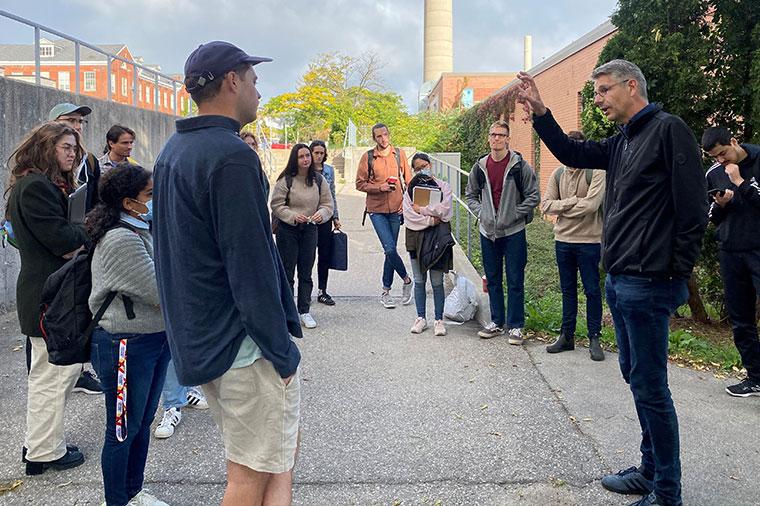
University of Guelph's Landscape Architecture Mission Statement
To excel at comprehensive and evidence-based education, innovation and scholarship in the art and science of landscape architecture and to prepare graduates to lead professional practice into the future.
Get Involved!
Landscape Architecture Student Society
The Landscape Architecture Student Society (LASS) enhances all aspects of student life in the BLA program. LASS works with fellow students and the faculty to coordinate both educational, social events and other activities. LASS is made up of a council with representatives from each class of the undergraduate program so that all aspects are communicated to the entire student body. In addition to class representatives, there is a full executive plus various committee members.
Frequently Asked Questions
Hear From Our Students

Landscape architecture beautifully combines creative problem solving through the design process with that of environmental stewardship. I love representing and designing for the needs of Ontario's natural heritage systems.

I decided to study at U of G because of the amazing landscape architecture program! I loved that it combines science and design, as well as being the only accredited undergraduate landscape architecture program in Canada. I had only heard good things about the community and culture here at Guelph.

I have always loved the outdoors and found construction and design very interesting. I was looking into architecture programs when a friend recommended I check out the landscape architecture program at the University of Guelph. From that day on, I was fascinated by the career and the program. The idea of being able to combine my passion for the outdoors and design to create outdoor spaces sounded like a dream job.

The Human Kinetics program has given me opportunities to explore career paths and gain hands-on experience in athletic therapy, strength and conditioning, physiotherapy, and chiropractic. The required courses include seminars and labs that allow you to interact and collaborate with your peers, which has been a vital part of my undergrad experience and enhanced my time at the University of Guelph. This program was the right choice for me. Human Kinetics has provided me with a well-rounded education and unique experience.

Only you can experience the joy of discovering who you are as a person, but you may need to take the risk of learning who you're not. The three-year MLA program gives you the time and the team to support you in this journey.

Location and program reputation were influential in my decision to study at the University of Guelph. The City of Guelph offers a comfortable environment that balances the calmness I need to focus on my studies and the vibrancy of a city in terms of culture, relationships, and exploration

I will be focusing my research on ecological grief and the role landscape architects can play in helping people cope with and move forward after such losses. Oddly, this work really lights me up! This research pulls together things that I never expected were possible in landscape architecture. From emotional and cultural sensitivity to questions about our relationship to nonhuman life and what sustainability means, many pieces are needed.

Guelph is a much smaller school than my previous university, and the MLA program accepts roughly 17 students per year. I love the intimate setting, and I’m grateful for the close bonds I was able to build with my classmates and professors.
