  • OVC
  • Work
  • Collaborate
  • News Hub
  • Accreditation
  • Bovine Education Trust
  • About
  • Contact OVC
  • Leadership
  • Strategic Initiatives
  • Our Experts
  • OVC People
  • Departments and Centres
  • History
  • The Crest
  • Programs
  • Doctor of Veterinary Medicine (DVM)
  • Graduate Programs
  • Research Training and Graduate Opportunities
  • Campus Life
  • Financial Aid
  • Research
  • Departments & Centres
  • Research Areas
  • Our Experts
  • Graduate Studies
  • Clinical Trials
  • Research Fellows & Associates
  • Summer Research Studentship
  • The Chappel Memorial Lecture Series
  • The Schofield Memorial Lecture Series
  • Hospital
  • Health Science Centre
  • Referring Veterinarians
  • Clients
  • Our Hospitals
  • Alumni
  • Connect
  • OVC Alumni Association Awards
  • Award Nominations
  • Annual Report
  • OVCAA Board of Directors
  • Support our Students
  • Give
  • Connect With Us
  • Donate Now
  • Essential Hospital Equipment
  • Legacy
  • Making a Gift in Your Will
  • OVC Pet Trust
  • Passion-Fuelled Giving
  • Supporting OVC Students
  • THE CRAFT OF THE VETERINARIAN IS FOR THE GOOD OF THE NATION: Supporting Every Animal, Everywhere.
  • Why the Ontario Veterinary College?
  • Your Questions Answered
  • OVC Pet Trust
Intranet
  1. U of G Homepage
  2. Research
  3. Our Experts
  4. Department of Biomedical Sciences Faculty
  5. Nuria Daviu

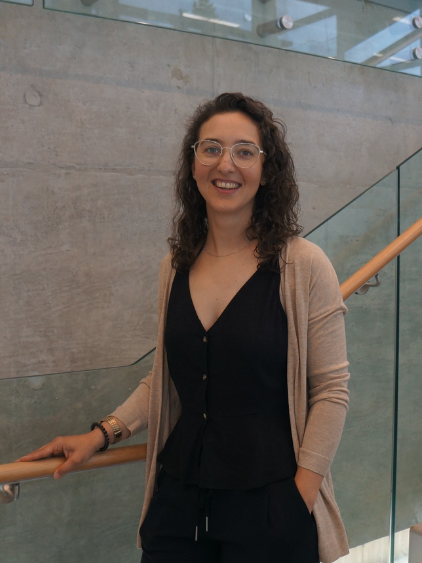
Nuria Daviu

Nuria Daviu

Assistant Professor

Ontario Veterinary College, Department of Biomedical Sciences

ndaviuab@uoguelph.ca
(519) 824-4120, Ext. 54239
Office:OVC Main Animal Holding, Room 2608E
Lab: OVC BioMed 2160
519-824-4120 Ext. 54239

BA, MSc, PhD (Barcelona)

Research Interests

  • Neurobiology of stress
  • Animal models of trauma and stress-related disorders
  • Investigation of how the brain processes stress and resilience
  • Innate stress coping mechanisms and their impact on mental health

My lab explores natural processes during stress exposure, such as the perception of control, which inherently provides resilience to stress. The research focuses on determining, at circuit, functional and behavioral levels, the therapeutic impact of perceived control during a stressful event. This knowledge will be leveraged to alleviate the negative consequences of trauma.

The methods employed in my lab include behavioral approaches, in vivo calcium recordings in freely moving animals, and optogenetic/chemogenetic manipulations. When combined with computational approaches, these methods contribute to the long-term goal of identifying new behavior-based therapeutic targets for mood and stress-related disorders.

Current Graduate Students

  • Grace Cordova - PhD
  • Maryam Khan - MBS
  • Emily Marinko - MBS
  • Kassem Nizam - MBS