Dr. Andrew Bendall
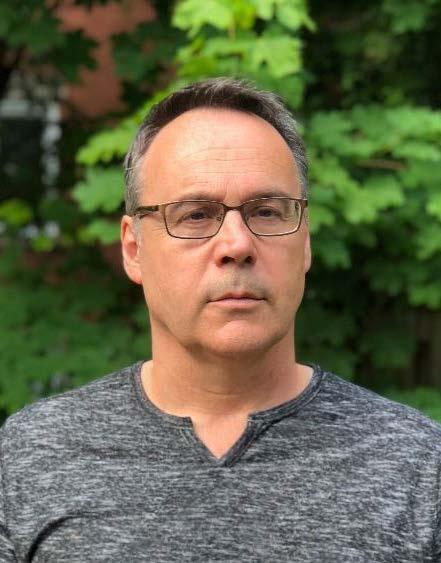
Associate Professor
College of Biological Science, Department of Molecular and Cellular Biology
Profile
Captivated by natural history from an early age, my professional interest in biology was first kindled as an undergraduate in Australia's bush capital, taking upper level courses in biochemistry, molecular biology, and zoology. An early grounding in molecular biology followed as an honours student at the John Curtin School of Medical Research at the ANU. My Ph.D. training at the CSIRO Laboratory of Biomolecular Engineering in Sydney, was in the transcriptional control of eukaryotic gene expression, with emphasis on the DNA binding specificity of mammalian transcription factors. I then moved to the United States where I applied my knowledge of gene regulatory mechanisms to the developing vertebrate embryo. With a postdoctoral award from the American Heart Association, I developed strategies for misexpression of regulatory genes in the chicken embryo as an invivo model system in which to study the regulation of gene expression, cell differentiation, and tissue patterning during vertebrate embryogenesis. My laboratory continues to use this experimental strategy, among others, to investigate the molecular mechanisms of animal development.
Education
- B.Sc. Australian National University
- Ph.D. Macquarie University (Sydney)
Research
Homeobox genes encode a large and vitally important family of embryonically expressed transcription factors that regulate the essential processes of development. We are currently investigating the Dlx gene family during chick and mouse development. Unravelling the functions and mechanisms of action of this multi-member homeobox family promises to reveal larger truths about the cell-type specificity of protein function, the nature of functional redundancy, the acquisition of novel protein functions, and the evolution of animal bodies.
The chicken embryo has a distinguished history in developmental biology as a model vertebrate organism for the ability of investigators to manipulate embryonic tissues and, more recently, levels of gene activity. For us, the chicken embryo holds a central position in our attempts to decipher the mechanisms that regulate gene expression, cell fate, and morphogenesis. We combine in vivo experiments like retroviral-mediated transgenesis in chicken embryos with in vitro and cellular studies that, together, define the biochemical basis for biological functions.
Current projects include:
- Investigating Dlx-mediated craniofacial patterning
- Structure-function analyses of Dlx-mediated transcription
- New approaches for the manipulation of gene function in the chick embryo
Selected Publications
- Sohail, A., Nicoll, O. & Bendall, A.J. (2025) Assessing candidate DLX-regulated genes in the first pharyngeal arch of chick embryos. Dev. Dyn. 254(7): 865-878
- Zhu, H. & Bendall, A.J. (2024) Measuring transcription factor function through cell type-specific somatic transgenesis in chicken embryos. Dev. Biol. 508: 1-7
- Sohail, A. & Bendall, A.J. (2023) DLX gene expression in the developing chick pharyngeal arches and relationship to endothelin signaling and avian jaw patterning. Dev. Dyn. 253(2): 255-271, doi.org/10.1002/dvdy.653
- Sohail, A. & Bendall, A.J. (2022) The insufficiency of Dlx5 for ventral patterning in post-migratory neural crest cells reveals a loss of plasticity in early jaw-forming tissue. Biochem. Biophys. Res. Comm. 631: 110-114
- MacKenzie, R.K., Ravi Sankar, P. & Bendall, A.J. (2019) Dlx5 and Dlx6 can antagonize cell division at the G1/S checkpoint. BMC Mol. Cell Biol. 20:8, doi.org/10.1186/s12860-019-0191-6
Teaching
I have had a long-standing involvement with the teaching of first year biology, including the development and delivery of Introduction to Molecular and Cellular Biology (BIOL1090). I also teach the senior level Genetics and Molecular Biology of Development (MBG*4040/4070) and Laboratory Methods (MBG3350). At any given time, I have one or two undergraduate students studying and training in my laboratory in the fourth year MCB projects course (MCB*4500/4510), some of whom stayed on as graduate students.
Lab Members
- Afshan Sohail (visiting scientist)