Taylor Legge (Bachelor of Science in Agriculture '25), a recent graduate of U of G’s Ontario Agricultural College, is a sales agronomist with Holmes Agro where she works alongside farmers to help them grow better crops and make the most of the land they have. Her work takes her into fields and onto farms, where she helps growers make decisions about crop rotations, soil fertility, pests, crop protection and yield.
“I like to be an active partner in the operation. We are looking at their goals individually on how they're going to grow the best crop possible,” Taylor Legge.
That work is becoming increasingly important as Canada looks to build a resilient food system. Ontario has a finite amount of farmland, meaning farmers need to find ways to produce more efficiently while protecting the soil and resources they depend on for the future.
“We continually have to innovate and be creative with the land we have,” Taylor says.
That innovation is increasingly driven by science and technology. Farmers are testing soil and monitoring nutrients, using digital tools and predictive models, and making more precise decisions about weather, genetics and crop inputs. Taylor is at the heart of this work.
Taylor’s own path into agriculture began growing up on a farm in mid-western Ontario. At the University of Guelph, she initially studied environmental science before discovering opportunities in crop science. Internships and connections with industry gave her practical experience and helped connect her with Holmes Agro, where she had a job lined up before graduating.
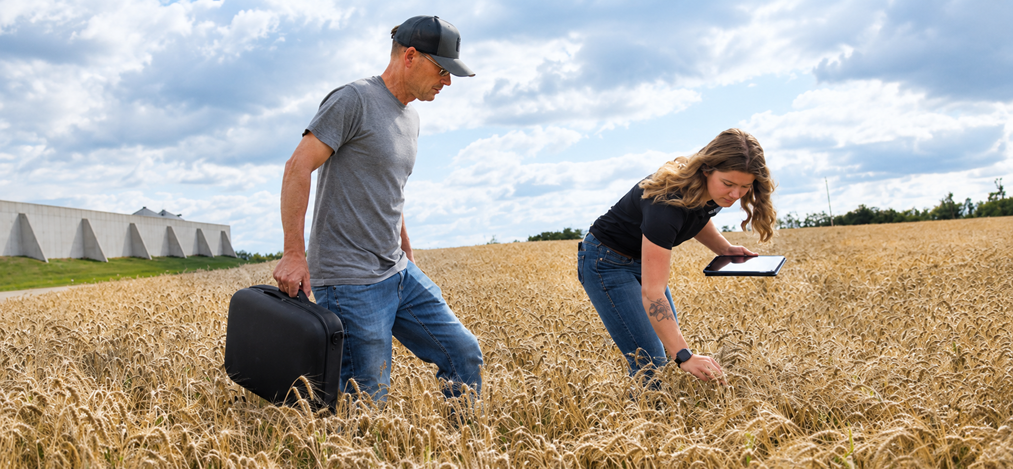
For Taylor, that connection between education, industry and hands-on experience is one of the things that makes OAC unique.
“It’s not just a place of learning and an institution,” she says. “They’re a hub and an intersection for the industry in general.”
Today, Taylor is putting that knowledge to work alongside farmers, helping them respond to challenges, embrace innovation and get the most from the resources they have.
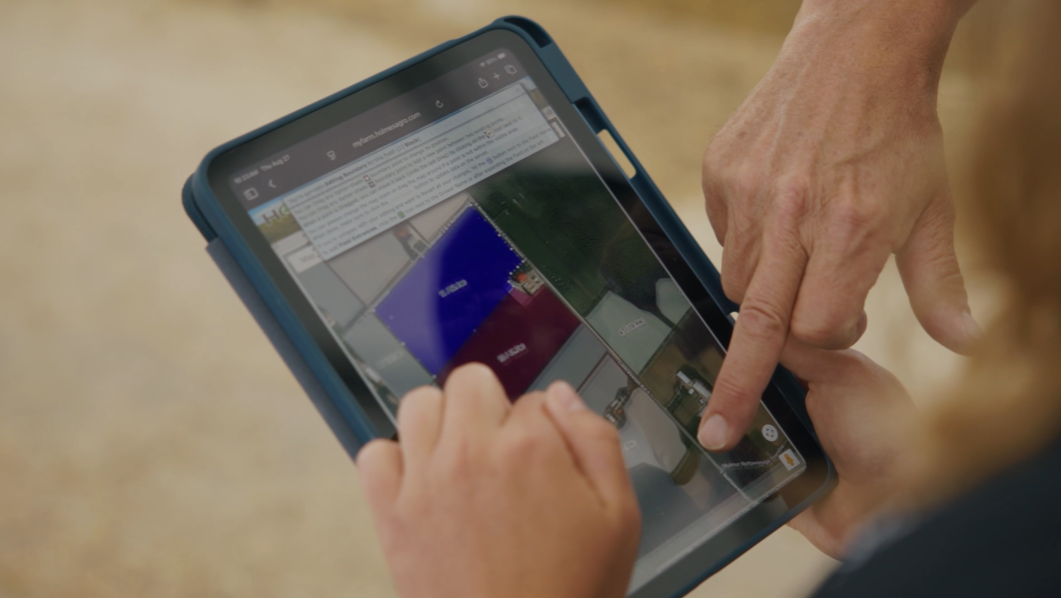
“Agriculture really is a science. We're using digital tools in ways we haven't before. We're using predictive modeling to look at our weather and our genetics,” Taylor Legge.
Take the next step
Interested in studying food, animals, agriculture, plants or the environment? Discover undergraduate programs from U of G's Ontario Agricultural College.
OAC's NextGen Newsletter
Highlighting the people and innovation making an impact across the agri-food sector.